

Putin’s war in Ukraine has been described by many as the first live-streamed war, and tuning into Twitter or other social media it certainly feels that way. While we have earlier seen embedded journalists get close access to combat units, this time the journalists – both local and foreign ones showing great courage by choosing to report from Ukraine right now – have received company by any number of Ukrainian civilians sharing images, texts, and videos from their neighbourhoods. However, due to this there is an evident risk that people outside of Ukraine (and to some extent inside the country as well) feel that they know exactly how the war is going.
It is easy to step into this trap. The main bias is that reporters, bloggers, and other people who like to hear their own voice have a tendency to tell stories based on things we know – as opposed to describing the unknown. In a war full of remarkable persons and events there are certainly more stories deserving to be told than there is bandwidth. The other bias is that Ukraine has been remarkably effective in shaping the information space. This stems both from the Ukrainian political and military leadership skilfully setting the agenda, as well as from the Ukrainian civilians being surprisingly OPSEC-savvy and not sharing much in the way of images depicting Ukrainian movements or losses. There is also the obvious issue of the fog of war giving us a false picture of events (i.e. we believe we know something that later turn out to be false).
Despite all of this, there is a number of things we recognise that we don’t know, which in my opinion doesn’t get acknowledged enough in the stream of information out there.
So here it comes, a list of important things we don’t know.
The Ukrainian losses
We don’t know the Ukrainian losses with any kind of certainty. While there have been some official figures published by Ukrainian authorities, these are best treated with a grain of salt. The Russian figures for the Ukrainian losses are simply a joke, and the western intelligence agencies and authorities who supply what probably are the most reliable estimates for Russian losses are less keen to discuss the Ukrainian ones.
Naturally, the Ukrainian losses are a key metric when trying to understand how much of their pre-war combat potential Ukraine has left. Speaking of which…
The Russian losses
We don’t really know the full scope of the Russian losses either. The Ukrainian figures published are almost certainly too high. E.g. the US estimate for total number of troops killed – though notably described as a “conservative” estimate – is at half the number. Again, the Russian figures are a bad joke that is disrespectful towards their own soldiers.
At the same time, the best open-source resource which lists equipment losses – the Oryx-blog post kept by Stijn Mitzer and team – and only looks at visually confirmed losses has listed approximately half the number of tanks and a third the number of rocket launchers as the Ukrainians claim. The methodology is obviously set to give a too low number, as it isn’t an estimate per se, but still point to a discrepancy.
At the end of the day, we probably have a better picture of Russian losses than we have of Ukrainians, but even here we don’t have a comprehensive picture. It is rather unclear what it means for the combat capability of individual units or formations.
The Russian capabilities
That Russia has seriously performed below expectation in this war is well-established by now. There is a solid argument to be made that the initiation of the war was made with suboptimal preparations on the side of the Russians, with little to nothing in the way of preparation for the individual soldiers or tactical formations. There is also the argument that morale among the average Russian soldier fighting NATO or a country that isn’t part of the Russian-proclaimed East-Slavic brotherhood would be higher, which might hold water as well.
At the same time, it is also true that this really should be the ideal situation for Russia. Being the sole aggressor, surrounding Ukraine from three sides, and not fearing any other neighbour taking the opportunity to sort out old wrongs, they literally had all the time they wanted to set up this one perfectly. Was the military leadership hamstrung by the whims of Putin? It certainly looks that way, but at the same time once the shooting starts, you can expect something akin of regression towards the mean when it comes to true combat capability once a unit is sent into combat, regardless of the surrounding circumstances. Instead we see presumed elite units such as VDV, the 4th Guards Tank Divsion (Kantemir), and the Arctic units such as the 200th Separate Motor Rifle Brigade do downright stupid stuff and lose equipment through what looks like a combination of disastrous incompetence, poor logistics, and faltering morale.
At the end of the day, we don’t know the combat capability of the Russian forces. They seem to be a mess on many levels (see points above, the word “seem” might be doing a lot of heavy lifting here), but at the same time it still is the Russians and not the Ukrainians that are advancing.
The level of control
But while Russia is advancing, we also see that in many places the Ukrainians aren’t looking like they are trying to hold a solid frontline. We are instead seeing some key locations, mainly urban areas, being defended determinedly, and in the areas not defended we see continuous attacks by small units, indirect fires, as well as drone and potentially air strikes against smaller Russian units and logistics trains. Exactly how much control the Russian units exert over large areas of the land that they have presumably occupied is an open question. It is also notable that the Russian forces available – including the Rosgvardiya – are way too small to be able to occupy and pacify a country of Ukraine’s size and population according to both most academic measures as well as practical experience post-WWII. So how much of the country is really cleared from Ukrainian troops? We don’t know.
The lessons to learn
The tank is dead. As is light infantry on the offensive. Airborne and airmobile forces are also. And not to mention the amphibious landing.
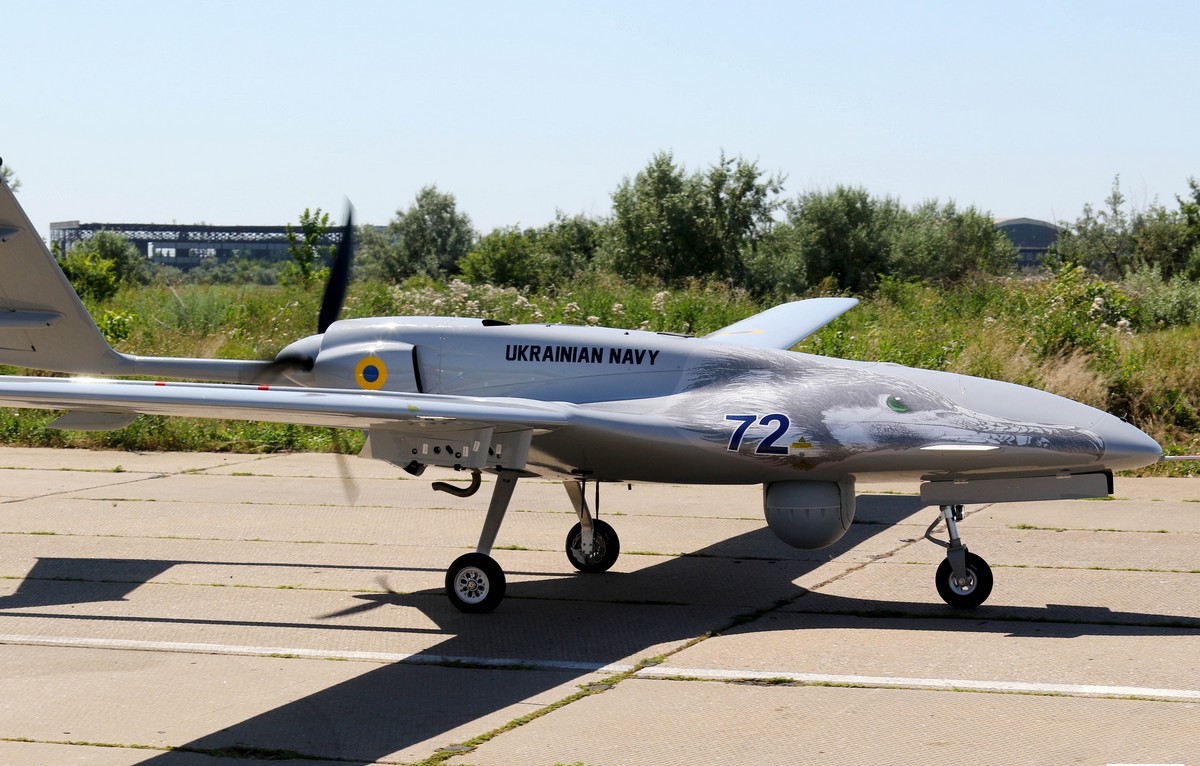
The truth is that we have a very fragmented picture of the operations so far. Some ideas can indeed be said to have been proven to be less than stellar – such as sending tanks unsupported into urban combat, or airborne operations without adequate support. But truth be told these were disproven numerous times earlier as well. There are some interesting things to note, such as the issue Russia has with establishing air superiority, including stopping the relatively limited force of Ukrainian Bayraktar TB2s (36 vehicles and two fuel trains confirmed hit by the Bayraktars on the Oryx blog so far). However, these are still early days, and we don’t have the full picture of e.g. which weapons have been responsible for the spectacular images of some of Russia’s most modern armoured vehicles being reduced to burnt-out scrap metal.
Again, to some extent we are fed a curated version of the war by the Ukrainians, and it will only be in the years after the conflict when veterans and eyewitnesses on all levels are interviewed that we will start to be able to get a truly comprehensive picture of what worked and what didn’t in Putin’s latest war (and then we can start arguing about which lessons are general and which were due to the particular circumstances of this war). As such, for now we don’t quite know which lessons to learn.
 Corporal Frisk
As usual, an immensely well thought out read… One style note. In the lessons learned section I had to read it twice to make sure you were not advocating that tanks, airborne, amphib etc were obsolete. Instead your point was we don’t know enough yet to say anything definitive
Good overall analysis. I’d liked to have heard your thoughts on mobilising the Ukrainian reserves and their expected impact.
I’d guess that the reserves do not directly affect that much as they are probable not suitable for complex offensive operations, but perhaps allows regular troops to leave supply line harassment to reserve units, and thus give a bit more freedom to counter operations.
I bet this war confirms usability and importance of all king of drones al loitering munitions. Even guerillas behind enemy lines can use drones. It is much safer to fly small drone to fuel truck windscreen than blow it with side mine (kylkimiina).
On drones and small unit tactics it will be interesting to see how effective the US supplied “kamikaze” switchblade drones will be. Those are single use drones that crash into the target and are portable by light infantry (entire kit is said to be 2.5kg). There an anti tank version as well but is heavier (and relatively new). i dont know what version ukraine is getting. They are only getting 100 though so it’s not going to be a major contribution unless more are delivered
Is it 100 drones, or launchers?
According to web, Switchblade comes in launchers that have 6 drones.
UA had a kamikaze drones before start of the war with warheads comparable to the switchblade. Biger range, penetration 200-240mm. Bigger footprint too. Those drones also have other types of warheads. For the time being it is not known how many they had and how effective they were/are. Problem could be the same though – how many attacks will the UA decide to share.
Correction those drones were 180mm RHA not 240. It has meaning if they try to use it agains MBT especially with those improvised cages. It could be the only thing the cages are good against.
Syria was(is) very heavily “live online war”, but didn’t get much attention in the West. Libya was also on social media but less than Syria.
In the analysis, I would expect the analyst should not take the side and they should uncover the truth to get the credibility. However I don’t see it in much articles and here also I can see the same.
I’d say a preliminary lesson would be anti-missile defense on all vehicles, including loggie vehicles.
Second lesson: a cheap AA autonomous turret is a needed on most vehicles.
If you don’t invade any country you don’t need anti-missile at all in rear area vehicles.
If you want to do an Ukraine, Iran, Cuba, Venezuela, etc probably you will need soon.
I’m honestly a little surprised by how LOW 100% confirmed tank losses are. Oryx only has the equivalent of one division’s worth of tanks confirmed by his standards, and Russia began with the equivalent of a lot more than that.
Following up on loitering munitions, it looks like the initial batch of switchblades the US is sending are the original versions, 2.5kg backpack portable Not the new, heavier anti armor version, nor the configuration that has multiple drones per launcher (which is also a new thing and im not sure if that is even fielded yet by US forces)
But I think this article describes this area better than my limited comment-space can: https://breakingdefense.com/2022/03/ukraine-is-getting-switchblade-it-should-be-just-the-first-wave-of-loitering-munitions-for-kyiv/
It is true that we do not know any real numbers on any of the sides. Propaganda and psyops full in work. OSINT people are trying with but not only they also make mistakes (all of them even oryx) but they just do not have the info. I often see the “first summary of Ukrainian war and conclusions” articles. Frankly some of them are just silly. After the war the only people who will have the info will be the Ukrainians. Additionally, only in the areas that are still under their control. Plus military intel (not always correct) and some of the pictures. Russians will also know some only some as they communications seam to suck big time. They do learn sometimes.
I have a small suggestion. Watch what UA and RU will buy, change, keep, restructure after the war. That stuff probably worked. Although that will also not be correct because you should prepare for future war not the past or current one.
However, I do predict even more pressure for R&D in many countries to make/improve antimissile systems and active protection systems etc.
If the political climate changes as the war continues, it will be informative how 5th generation sensor/stealth capabilities impact conventional thinking on no fly zone enforcement, peacekeeping operations (a la the Polish proposal), or other operations.
I do note how no fly zone challenges are described using past operations… no one is discussing or asking how 5th gen will make things different (which means to me that it WOULD be different so HOW it will be different is being kept an operational surprise/secret). It’s also interesting to note that there are a good number of non-US F35 planes operational within NATO air forces. Even in limited numbers I would expect the F35 to be impactful.
@Mark
I don’t believe a second that Russia would stand idly by if the west would establish a no fly zone. No matter the equipment used, enforcing a no fly zone would mean shooting down Russian planes and destroying their surface to air systems.
If Russia had no nukes, I don’t think we would be having this conversation. The west would have already acted, at least to enforce humanitarian corridors and supply cities like Mariupol.
To be fair, since the war begun the west has done much better I could have ever dreamed. The mistakes were done long before that; in 2014 and 2015. At that time stopping Russia would have been relatively cheap. Now the costs are soaring and unfortunately, it is mostly Ukrainians who are paying the highest price.
In my humble opinion, the west should give Ukraine all the equipment, ammo and training they need. No limits whatsoever. Russia **must** loose this war and loose it big time. And the west should make absolutely sure that happens. The price of failing to do that will be even higher than this time. To put it another way: if Russia is in a position to make any demands when the fighting stops, the west will probably make the same mistakes (of 2014) again (trying to appease by lifting sanctions, etc.) and sooner or later we will face yet another Russian aggression somewhere else.
Fully agree that Russia would not stand idly by, that 2014 would have been a cheaper stand, and going further… that some stronger actions after Georgia in 2008 would have been good as well
This war is rapidly evolving — that is one of the more interesting things, and I don’t want to speculate too much, since in the next few days things can look completely different (positively or negatively).
I think public opinion in the west is still evolving as well. As a baseline there is a surprisingly broad consensus that Putin really cannot be allowed to get away with this and the West is willing to pay the price to ensure that. <– I think what price the west is willing to pay will be influenced by the events we see in Ukraine.
The nuclear threat is a real issue, but the choices around that have been game planned since the beginning of the atomic age. So Putin's blackmail "escalation to de-escalate" threats are a known issue, with known options to respond. It's a real conundrum that politicians and the public(s) may have to decide if the continued level of Ukrainian support does not achieve the desired goal.
Finally I should note that increased support to Ukraine can still come in a many different ways short of active intervention, the responses available to the west are not a binary choice (supply arms only vs become active participants)
@Mark
Besides the appeasement in the past, the one thing the west shouldn’t have done is to tell Russia what it won’t do. The west should have said publicly that “all options are on the table” when it comes to helping Ukraine militarily. Or if that would sound too much like a promise to Ukrainian ears, the west could have simply said “no comments”, and leave Russia guessing what the west might do and wondering if there are any red lines they should not cross.
I agree there are many ways to help without a direct intervention. Passing real-time intel and transferring MIGs and S-300 systems from the eastern European countries would be quick and “easy” ways to do that.
Long range artillery (for example MGM-140 ATACMS or something similar) would also make a big difference. That would require training, though, so the war maybe over before systems like this would be ready for action. Then again, we don’t know how long the war will last, so IMO we should still give systems like ATACMS and Patriot (or other air defense missile systems).
Not sure ‘the tank is dead’. Tanks are certainty dead, but that does not of itself invalidate the concept. Note that the bomber did not always get through.
I think a fair estimate is that the visually confirmed kills are half of the actual kills. Only if you control the site after the battle so will there be a chance to take pictures and confirm the kills.
I don’t think the Tank is dead, but bad tanks are. It’s not worth the logistics and crew to man old tanks. Old tanks lack active defences and also lack the armor to repel shoulder launched weapons. This hurts Russia as it have massive numbers of old tanks stockpiled.