
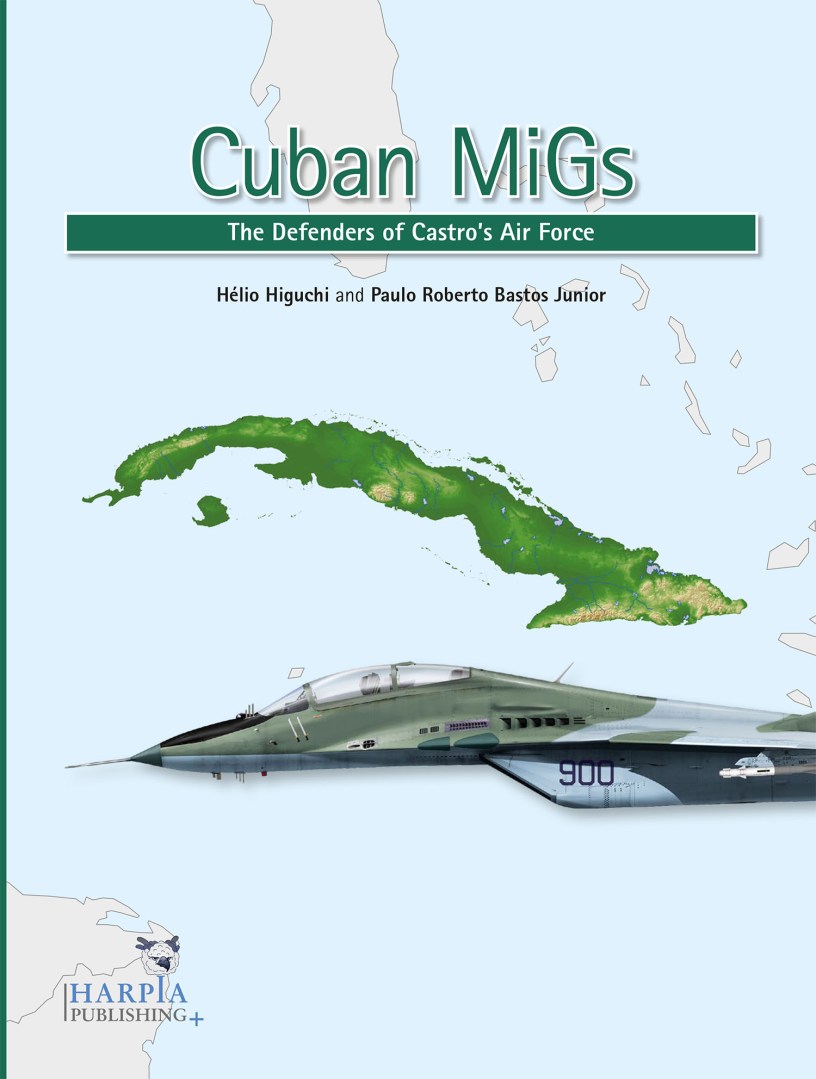
While Cuba obviously played a major part during the Cold War, most notably with its very own crisis, books about the armed forces of the communist bastion in the Western hemisphere aren’t overly common. Harpia Publishing recently did their part to solve this issue, with a book dealing with the different MiGs of Fuerza Aérea Revolucionaria by Hélio Higuchi and Paulo Roberto Bastos Junior.
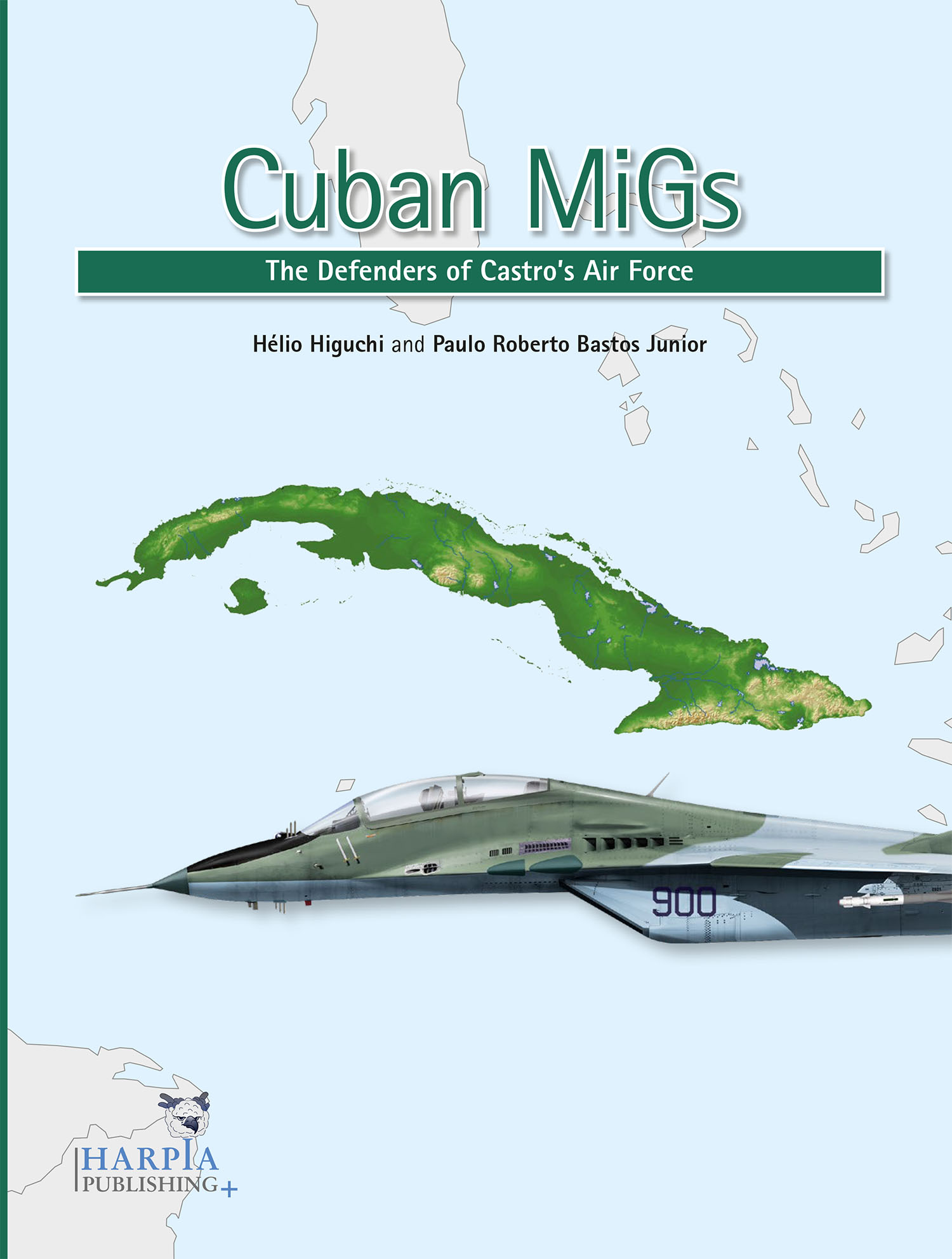
While the title (ISBN 978-1-950394-09-8) does sound rather specific, it should be noted that the book kicks off with a short walk-through of the early years of Cuban military aviation, before discussing the collection of combat aircraft that made up the first air force of the communist regime. The air operations of the Bay of Pigs/Playa Girón operation also gets described in some detail, despite the obvious lack of MiGs among the B-26s, Sea Furies, and T-33s that flew around in the skies of this strange incident. However, by 1961 the first MiG-15 arrive, and from there up until the present day different MiGs represent the fast jets of Cuba, meaning the book in fact does give a rather good overview of the combat operations and equipment of the tactical fixed-wing aircraft of Cuba (including the Missile Crisis).
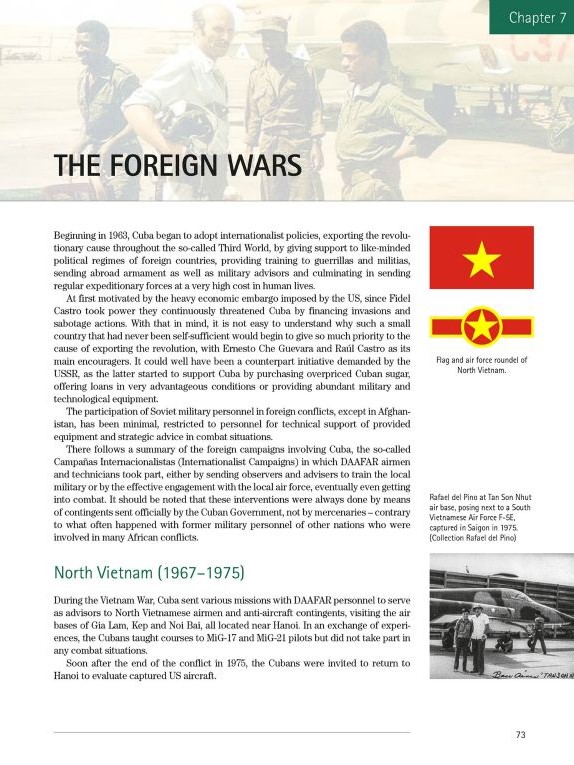
As is usual with these kinds of books by Harpia, the text flows well and manages to go into a surprising amount of detail despite the relatively limited page count (126 pages including prefaces and appendices). What certainly adds interest to the story is that the Soviets were happy to supply Cuba with a large amount of different variants and fighters, including the MiG-15, MiG-17, MiG-19, MiG-21, MiG-23, and MiG-29. Most were found in numerous versions – the MiG-21 in particular being delivered in a bewildering number of single- and two-seater versions – and the Cuban experience with different fighters was quite varied, with some enjoying long and popular careers, while others barely got into service before they got kicked out again. The other interesting aspect is the Cuban enthusiasm for foreign adventures during the height of the Cold War, which included a number of different operations. The most famous is probably the Cuban expeditionary force that took part in the Angolan Civil War – a conflict which saw Cuban MiGs clash with South African Mirages. This recounting of operations great and small is a fascinating snapshot of the global nature of the Cold War.
However, the book continues up to the current day, and in keeping with the theme of mirroring global events, the fall of the Soviet Union leaves the once mighty air force to struggle on, eventually being reduced to a shadow of it former self, with the main events of these latter years being attempts to clandestinely export fighters to North Korea and shooting down unarmed Cessnas flown by political dissidents. This day few MiGs are serviceable, and the number doesn’t shown signs of increasing.
I will admit I was somewhat sceptical of the book when it first arrived at my doorstep – Cuban aviation isn’t among my particular fields of interests. But the book did quickly grab my interest, and the flowing story of how Cuban military aviation came from almost nothing to becoming an international player only to be reduced back to next to nothing is a fascinating tale, and the engineer in my got excited by the vast number of different MiGs coming and going throughout the story (any book to mention unconfirmed reports of exported MiG-17PF will automatically get a gold star from me).
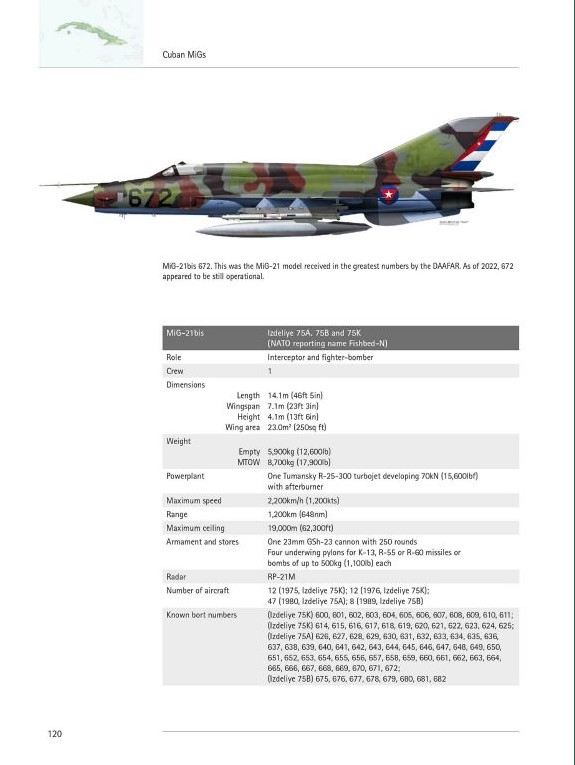
The book also feature the usual goodies when it comes to Harpia’s books, including colour profiles and a host of pictures in both black-and-white and colour, as well as a number of appendices. In case it hasn’t been clear, I do recommend this for anyone interested in Latin American military aviation, Soviets handing out MiGs left and right, or Cold War interventions in Africa.
The book was received free of charge for review purposes.
 Corporal Frisk