

The Finnish Air Force has a tendency to do things their own way. This is in part due to Finland up until very recently having drawn up the doctrine of the defence forces around the need of always being able to go at it alone if the need arises coupled with the geography of a long border with Russia and limited depth. However, in part it also stems from Finland actually being very far north. We are so used to it that we sometimes forget how remarkable it is, but the fact of the matter is that even our southern coast is far enough north (approximately 60°N) to make Helsinki the northernmost metropolis with over a million inhabitants, and even supposedly Arctic countries like Canada and Russia see the absolute majority of their population live way further south (notable is that almost the whole of Canada’s Labrador peninsula is south of 60°N). Combined, these conditions have created a set of requirements for a true-all weather force able to fight a numerically superior enemy from bases within reach of enemy long-range fires.
Some of the answers to these requirements are well-known – such as dispersed operations and a focus modern equipment and tactical prowess – but less well-understood is how these answers are developed, evaluated, and refined. To get insight into this crucial process I headed to Tampere-Pirkkala Air Force Base and the wing stationed there.
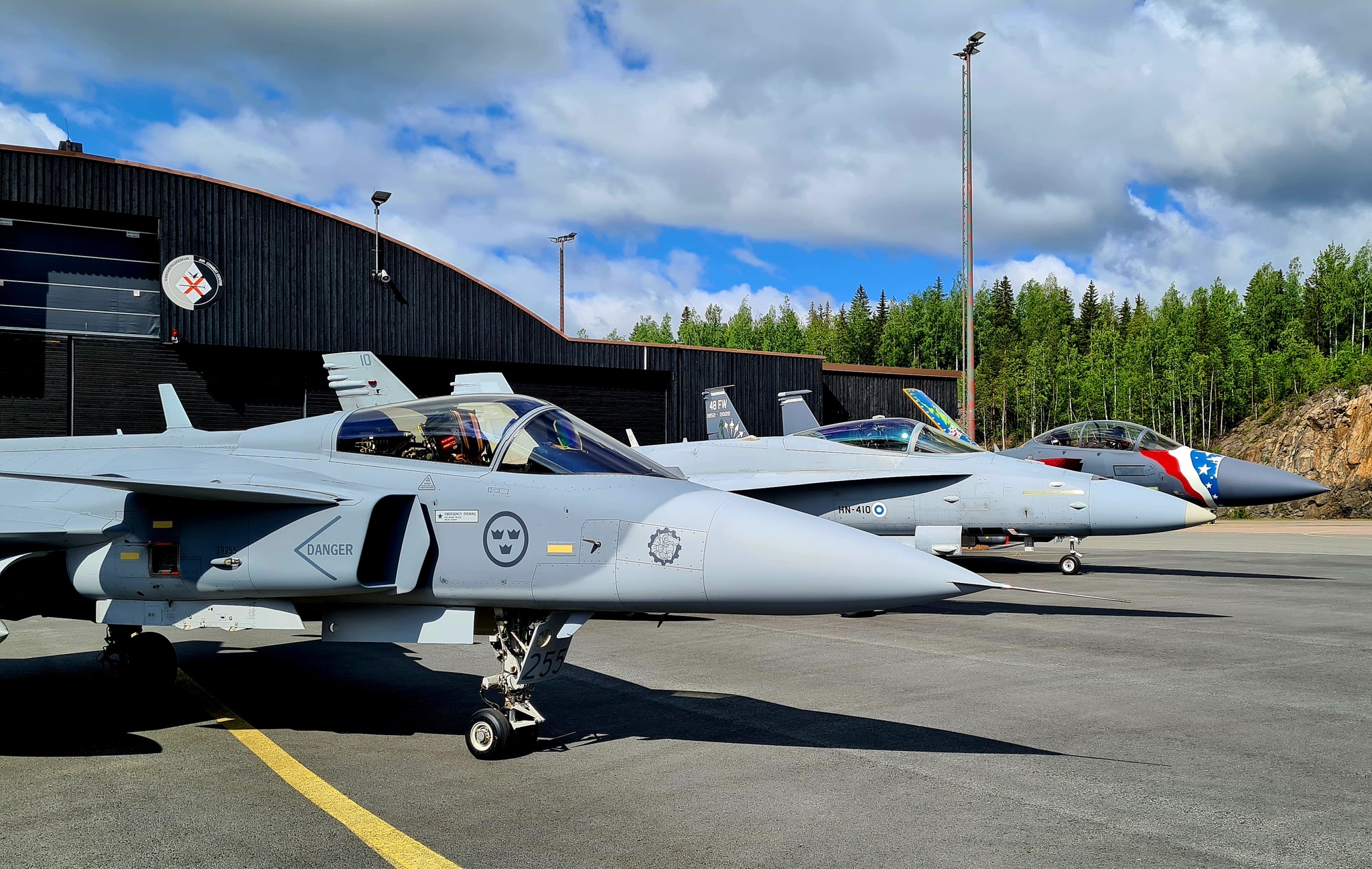
Of the four flying units of the Finnish Air Force, Satakunta Air Command is almost certainly the most obscure to the average aviation geek. Lapland and Karelia are the two Hornet wings, while the role of the Air Force Academy is largely self-explanatory. In the light of this, you are excused if you get the feeling that Satakunta is made up of whatever was left over. And while you wouldn’t be completely wrong, there’s some really interesting bits in that mix.
Satakunta Air Command consists of a Supporting Air Operations Squadron which operate the transport and logistics aircraft of the Air Force, a number of supporting ground units such as the command’s Aircraft Maintenance Squadron, headquarters, Logistics Flight, Communications Flight, and Force Protection Squadron (which reportedly is also something of an unofficial national center of excellence for the force protection mission). However, in addition to these the unit hold the Air Combat Center, or Ilmataistelukeskus in Finnish, which was to play host to my visit.
The Air Combat Center, ACC, is made up of two distinct but still connected parts – the research and development section and the flight test division. Needless to say, the flight test division is home to the flight test pilots and flight test engineers of the Finnish Air Force, which obviously raises the question why a country that has long since stopped building domestic aircraft needs test pilots to begin with? The answer is simple – unless you want to fly the bog-standard version of whatever is being delivered and you trust the manufacturer (or main user) to keep ironing out all the bugs, you really do want to be able to do your own flight tests. Case in point: the Finnish F/A-18C Hornet-fleet.
Air force operations aren’t just about the fast jets, but for the traditionally non-expeditionary Finnish Defence Forces the Hornets are certainly the centerpiece. The Finnish decision to go for the Hornet when half the continent was buying F-16s was a harbinger of things to come, with Finland being ready to do things our own way if we felt it benefitted us. Thirty years down the line, and while this mindset certainly has proved its worth, it has also led to Finland currently having a configuration which is unique among the operators of the Bug.
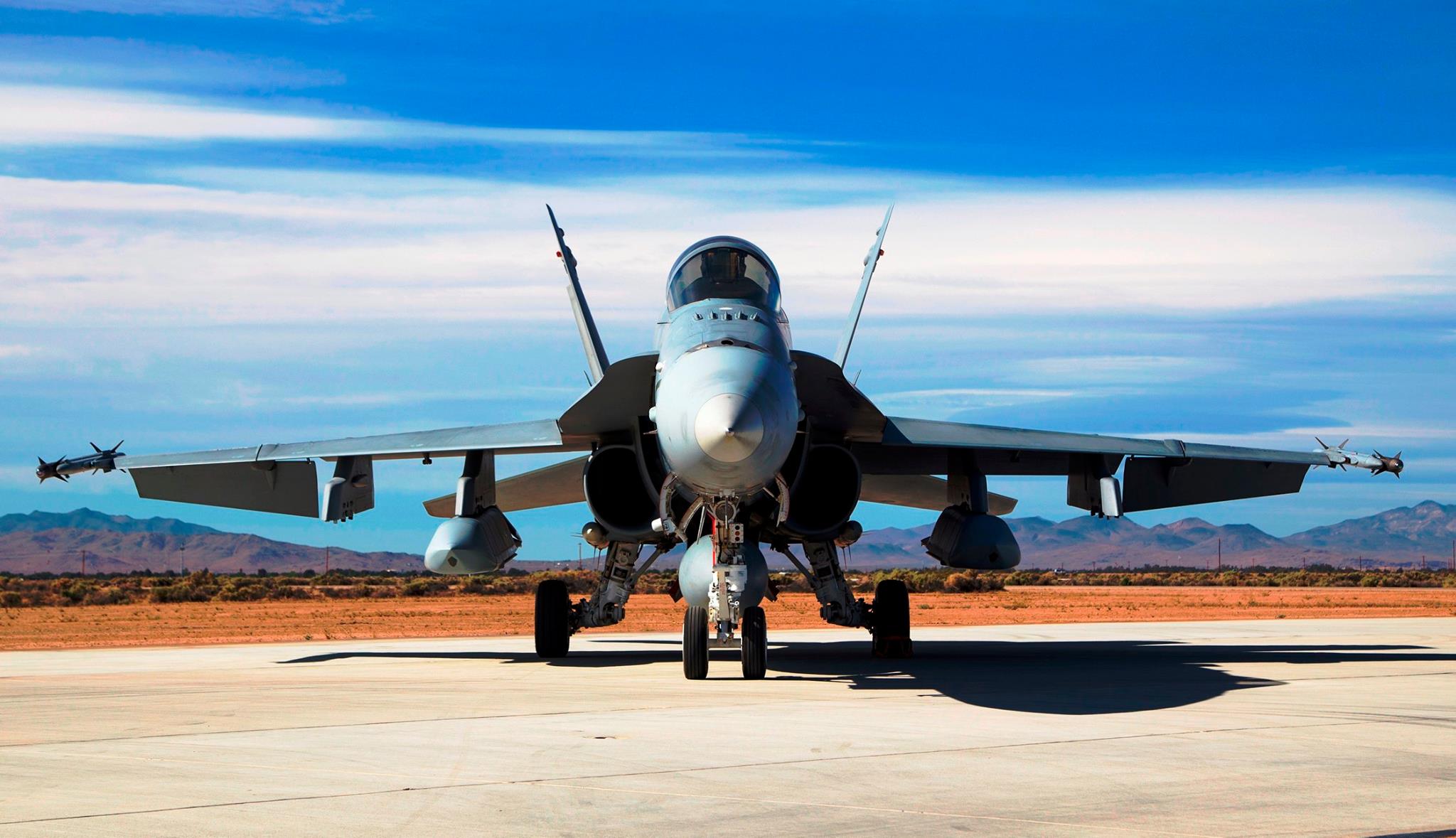
And that means that US Navy doesn’t run the tests on the software coming out from their F/A-18 Advanced Weapons Laboratory in China Lake for Finnish Hornets as there simply isn’t a similarly configured Hornet that side of the Atlantic. Instead the Finnish flight test unit works as the subsupplier of flight tests for the Americans. Similarly, for any local modifications done to other parts of the fleet – including not only software and hardware, but also procedures – flight tests will have to be done in Finland. The alternative is for you to stand in line and wait until it’s your turn (or pay to have the manufacturer do the tests for you). This includes anything from modifying the cockpit ergonomics of the Hawk-fleet to having the fine people from Utti show up with strange packages they want to throw out from perfectly working aircraft, and unless it is covered by the existing paperwork and manufacturing certificates, anything and everything needs to be certified (Utti Jaeger Regiment also has a smaller test flight office, handling similar questions for the rotary winged Army Aviation). To be able to do these kinds of testing the ACC is able to do certain modifications without external authorities thanks to them running their own air worthiness program. In addition to certification and testing, flight testing gathers crucial data for the life-cycle programs of systems, ensuring that maintenance intervals and similar are handled in an efficient manner.
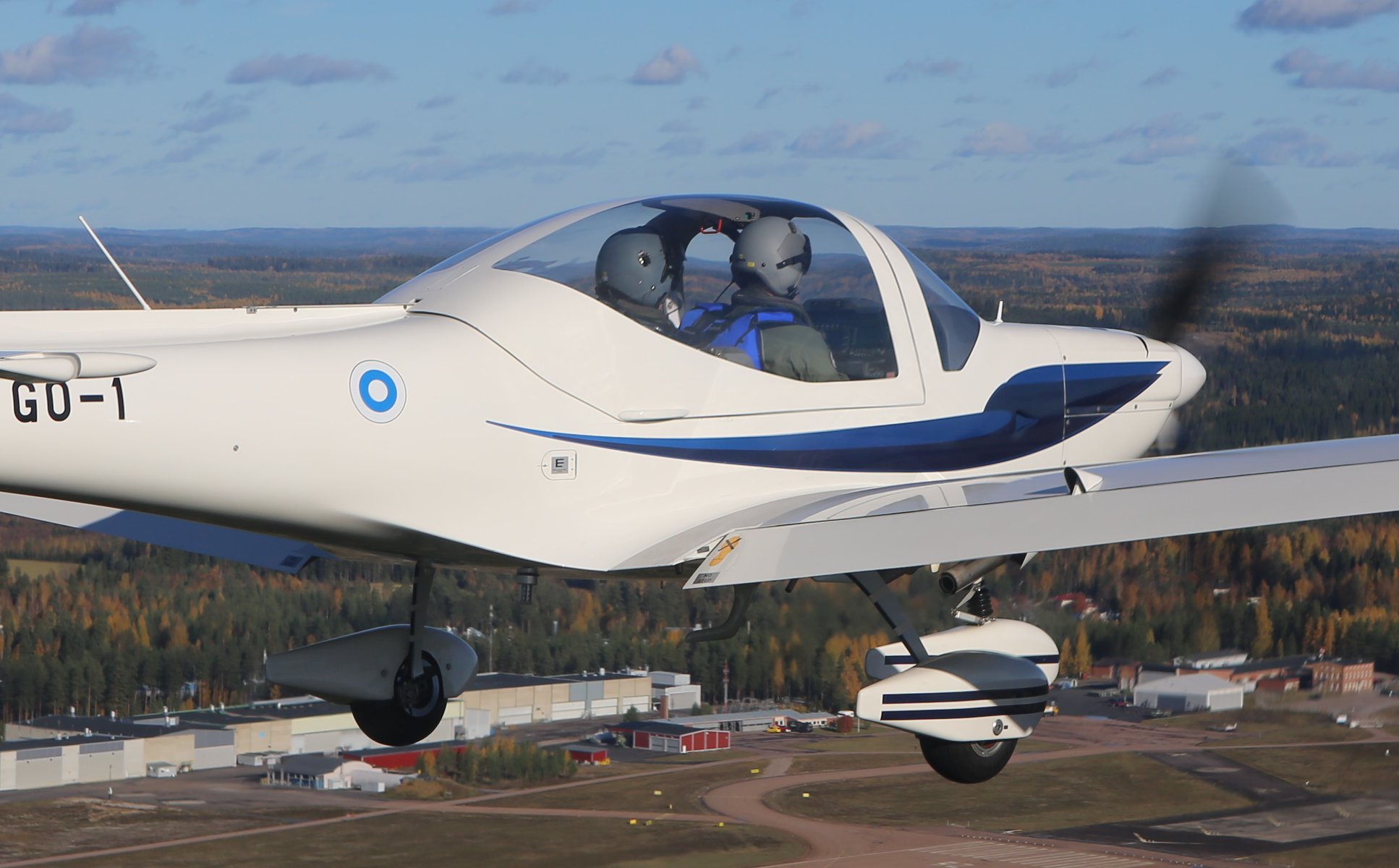
To do so, the Finnish Air Force sports a number of dedicated test pilots and engineers. These have undergone test pilot or test engineer training either abroad or at home, with the key benefit of the domestic course being the cost. It’s not quite an order of a magnitude cheaper to train a test pilot in-country, but it’s close. As opposed to what is standard in many countries, Finnish Air Force test pilots are in essence signing up for that as their specialisation and are unlikely to find themselves rotated back into traditional fighter pilot roles. However, that does not mean that there isn’t a role in flight testing for your regular pilots. On the contrary, the Air Force stresses the importance of pilots in all roles and of all seniorities participating in testing out on their units and constantly analysing and approaching both procedures and doctrines with a healthy dose of open-mindedness and critical thinking. This is particularly useful for the research and development of tactics, techniques, and procedures (TTPs).
TTPs are kept up to date through a cycle in which the research and development – in which the Air Combat Center plays a key part – feed the official documented TTPs. These are in turn employed by the units in training and operations. The practical experiences of everyday operations and exercises are gathered together with foreign experiences (including from foreign wars) and then analysed. The information gathered through these are fed into the R&D part of the cycle, with the speed of the cycle naturally depending upon the scope of the changes. As an example, observing the air war during the early part of the War in Ukraine raised the question if there were tweaks to be made. Going through the stages with closer analysis of the events, revising the documented TTPs, having the operational units adapt and use these new TTPs, and then gathering the experiences for renewed analysis was done in a matter of weeks.
Testing these days isn’t however just a question of flying around in the air (even if we discount the fact that air operations include a lot of things taking place on the ground and in other domains). Rather, these days simulations in the whole spectrum of the Live, Virtual, and Constructive-taxonomy (LVC) plays a key role. In essence, live simulations refer to standard military training. No-one is (hopefully) shooting back at you, making even the best exercises with weapons a simulation in a strict sense. The nice part is that live training events in many ways are the most realistic. You will be wet and miserable if you are crawling around in a ditch, and in an aircraft you will experience the fatigue that comes from air combat maneuvers. Virtual refers to what most people think about when discussing simulations, and sports real people operating simulated systems. Besides the economic incentive (it’s much cheaper to ‘fly’ a simulator than a Hawk, not to mention a Hornet) these allow you to train aspects you do want the enemy to know about. You might e.g. not want to practice large scale strike packages taking off and forming up before they head to a bombing range with strike aircraft and escorts all in their correct positions within range of enemy radars and other sensors. In that case, doing it on simulators allows pilots to train their part away from the prying eyes of the enemy. Constructive in turn removes the pilot from the loop, and constitutes simulated people running simulated systems. This has several benefits in doctrinal research, as you can run scenarios multiple times and at greater scales than either of the first two methods allow for, hopefully ensuring the ‘correct’ (i.e. most likely) outcome of any certain pattern of operations.
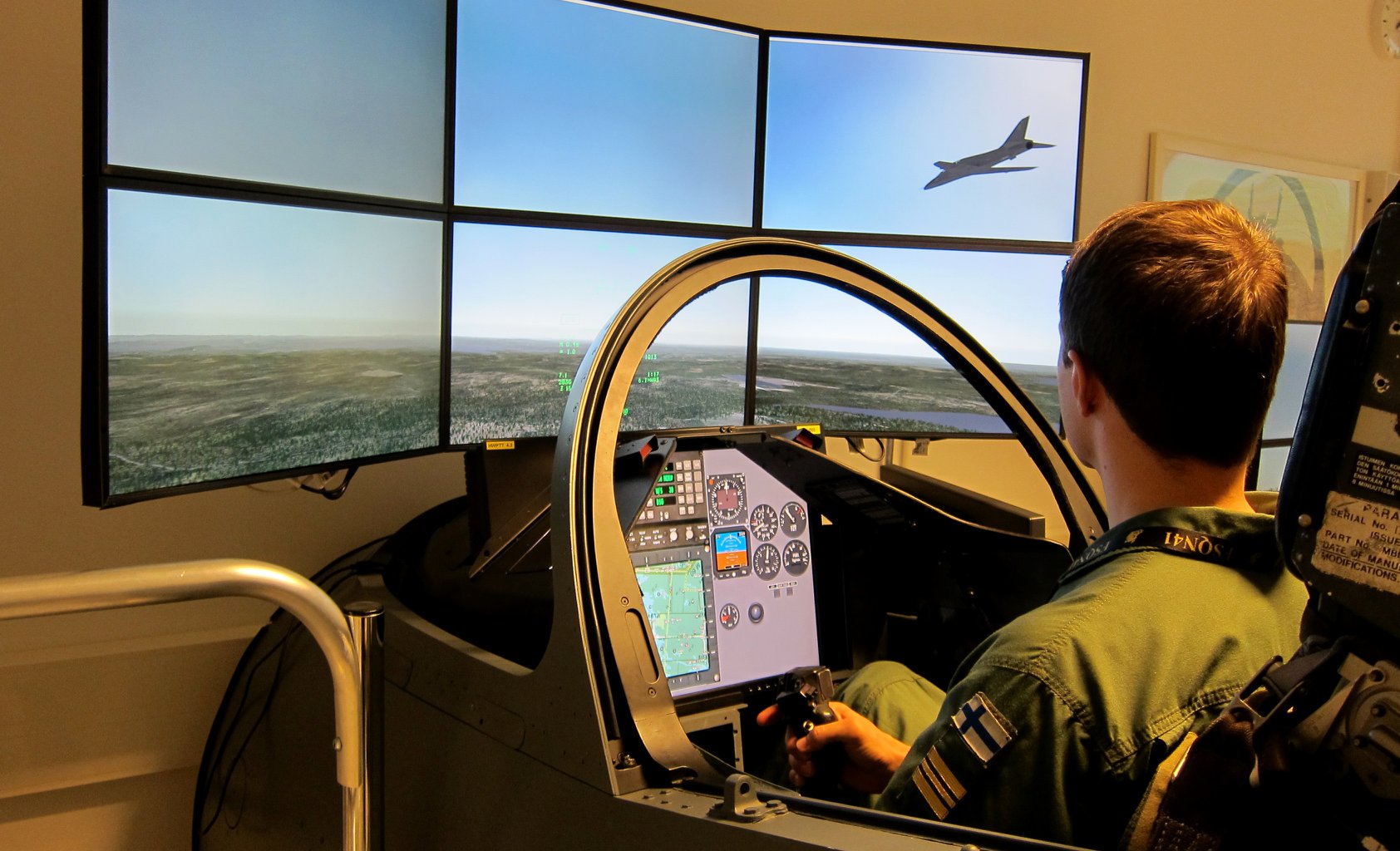
With the huge technology leaps in the field during the last decade it is also possible to efficiently combine these – you can have a four-ship of very real Hornets practicing air-to-ground pounding while they are escorted by another virtual four-ship operated by pilots in simulators on the ground, fighting against a constructive enemy force. To ensure the most accurate outcome much of the programming is done in-house by the FDF or by their partner companies, based on a combination of classified and open intelligence, and including both manufacturers’ figures and independently verified data where available. This ensures not only that the specifications of individual systems are correct, but also that the doctrine of constructive forces match reality. The next step which already is underway is to ensure a truly joint LVC-training environment, where both the Air Force and the Army as well as the Navy all can operate together.
While the idea of a joint high-end environment might still be some way off, it is notable that a number of Finnish companies operate in the field, and not only the usual suspects. For example Varjo’s mixed-reality solutions have stirred up interest, to the extent that they have bagged some rather impressive references. With the F-35 bringing some unique challenges to training when it arrives later this decade – no two-seater for operational conversion, desire not to fly around with wartime radar-cross section during exercises within range of adversary radars, and crucially opening up new roles for the Finnish pilots – and technology opening up new opportunities, the value of LVC as a training tool is surely to rise.
Which brings us to next week’s topic, the future fighter of the Finnish Air Force.
 Corporal Frisk
Happy you are back! 🌲
Agreed, I have been keeping an eye on the site and missed the posts
Very interesting the TTP for the Finnish Hornet development. In some ways, is very close to the Spanish Air Force approach and our F18M fleet: Is there any formal/informal relationship between our CLAEX and your Test Establishment?
Much appreciated and good in depth insight as I like to follow the military (and civilian) affairs in general and then Finland has always been facilitating with its alliance between the Russians and Western Europe and its slow escape from the clutches of Russia (my take) and now the stunning move into NATO.
What I found fascinating about the F-35 decision was it is clearly not a short and or rough field aircraft that requires a full on good runway though a long enough stretch of road would do (it will be interesting to see that angle). Clearly the US designs and builds fighters generally on the basis of secure large bases to fly from (that is changing obviously).
For Finland to go F-35 vs the Grippen E which seemed the logical choice for Finland was a game changer for me in how the F-35 is perceived. That and the Swiss decision clearly puts it into, man, its got capabilities we don’t understand that overcome any of the problems its had (or has).
While I question some of Finland’s armor choices (with all due respect) I also have to accept that they understand their situation and while there are drawbacks I have listed, there is a benefit and rational that also works. Choices like the new combat rifle are not going to decide a war one way or the other, those are almost if not agnostic, armor, artillery and air power are the huge drivers.
Weighing in on Racer comment, I am most curious on what Spain does in regards to their Harriers. Do they give up that capability or buy the F-35B?
And it would seem that the F-35B would really be a better choice for Finaland due to what Fist has listed on the reality of being next to Russia and a lack of depth (though much better with Norway/NATO not to mention what I expect are co ops plans of all 3 with Sweden. France back in the day despite the DeGaule situation was still functional withing NATO and had a place in the order of battle. France is an interesting and equally odd ally.
I will be following the next posts with deep interest. There truly are some Americans that have a wider interest in the world.