

Almost three years ago, back in ye olden days when Finland hadn’t even become a NATO member yet, I wrote a post about the then-commander of the Finnish Air Force having floated the thought that we might need a C-130 Hercules-sized aircraft. The future of that idea, should it come to fruition, seemed rather clear. Norway and Denmark already operated the second-generation C-130J (Super) Hercules, with Sweden having an agreement for 2+2(+2) ex-Italian C-130Js. As such, Finland getting two to four Super Hercs and slotting into a joint-Nordic C-130 training pipeline set up together with our three friends seemed obvious.
Two and a half years on, little of my reasoning above still sound obvious.
To begin with, Sweden suddenly had a change of heart, and late last year announced a decision to acquire four new-built examples of the Brazilian Embraer C-390 Millennium. While the C-390 is by no means a bad alternative – it is slowly building up a serious international user base with Portugal, Hungary, South Korea, the Netherlands, Austria, the Czech Republic, and Slovakia in addition to Sweden having signed up for it – it certainly does look like a deal linked to Brazil moving forward with the stated plans of buying more Gripens. While both Denmark and Norway still fly their Super Hercs, the fact of the matter is that Denmark is looking at a fleet in which the first aircraft already has passed 20 years, with the Norwegian one not much younger. Back in 2022 there would be no reason to have assumed anything but the two air forces keeping their C-130Js up to date and flying for considerable careers, but since then a US president with authoritarian tendencies have repeatedly threatened Denmark with invasion, and the appetite for investing the kind of money needed to keep the airframes flying for another twenty years is far from certain. As such, Finland signing up for the C-130J with an eye to operating jointly with partners that fly aircraft that will be 25+ years old by the time of our first aircraft taking to the skies isn’t necessarily such a brilliant idea as it looked like back in 2022.
However, with a renewed focus on looking at what Europe can offer, there is indeed an aircraft closer to home that might fit the bill. And one which I had the opportunity of getting to experience up close as I was part of the French media tour at Exercise Atlantic Trident 25. The exercise saw the French Air and Space Force deploy one of their A400M Atlas to Finland as part of their contribution, something I discussed in more detail in Monday’s post.
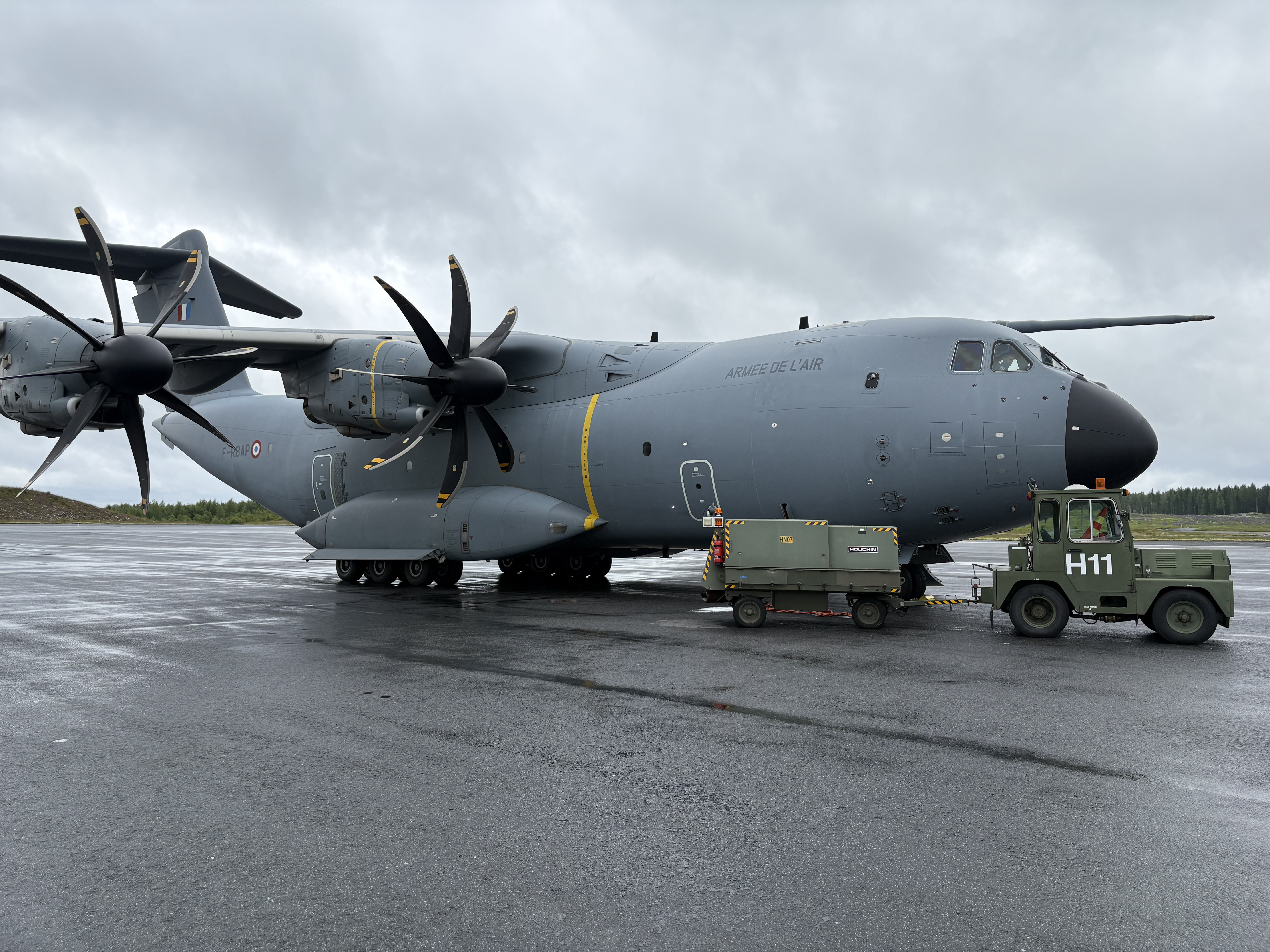
The A400M – like many aircraft born in the immediate post-Cold War era – had a long and somewhat troubled development phase. As such, it has spent the last few decades fighting a reputation of being a troubled hangar queen, offering little in the way of benefits over the C-130 Hercules while being significantly more expensive and trouble-prone. A particular example of this was seen following the British announcement in 2021 that they would retire all C-130J Super Hercules, which during the time raised significant questions as the Atlas C.1 (as the A400M is known in UK service) was not cleared for a number of tasks that the Super Hercs flew with some regularity – in particular the more exotic SOF-related and ‘tactical’ ones. However, now two years after the RAF Super Hercules bowed out after their 24-year career most of the certification work on the Atlas is starting to be finished, as at the end of the day it was not that the aircraft wouldn’t have been as capable, but rather about testing and evaluating the aircraft to get the operating manual in order and ensure that the way things were done were safe and sound.
The aircraft is what you would expect from a modern design, including a full glass cockpit with head-up displays, NVG-capability with augmentation, sidestick fly-by-wire controls in typical Airbus-fashion, and just a three-person crew in normal operations (two pilots and a loadmaster). As we speak the A400M Atlas is the main workhorse in the air forces of the UK, France, Germany, Spain, and Belgium, as well as a single aircraft operated jointly together with the Belgian aircraft being the sole fixed-wing military aircraft of Luxembourg. Turkey has a significant number as well as part of a more varied transport fleet, while three Asian countries have bought limited numbers for their smaller air arms. An interesting detail is that the aircraft can easily be fitted with two refuelling pods under the wings, allowing the aircraft to refuel fixed and rotary wing platforms (including other A400M) via a probe-and-drogue system. But the key mission is still moving people and stuff around the world. This means that the aircraft is employed in two somewhat distinct modes of operations, what the French describe as “tactical” and “logistics”.
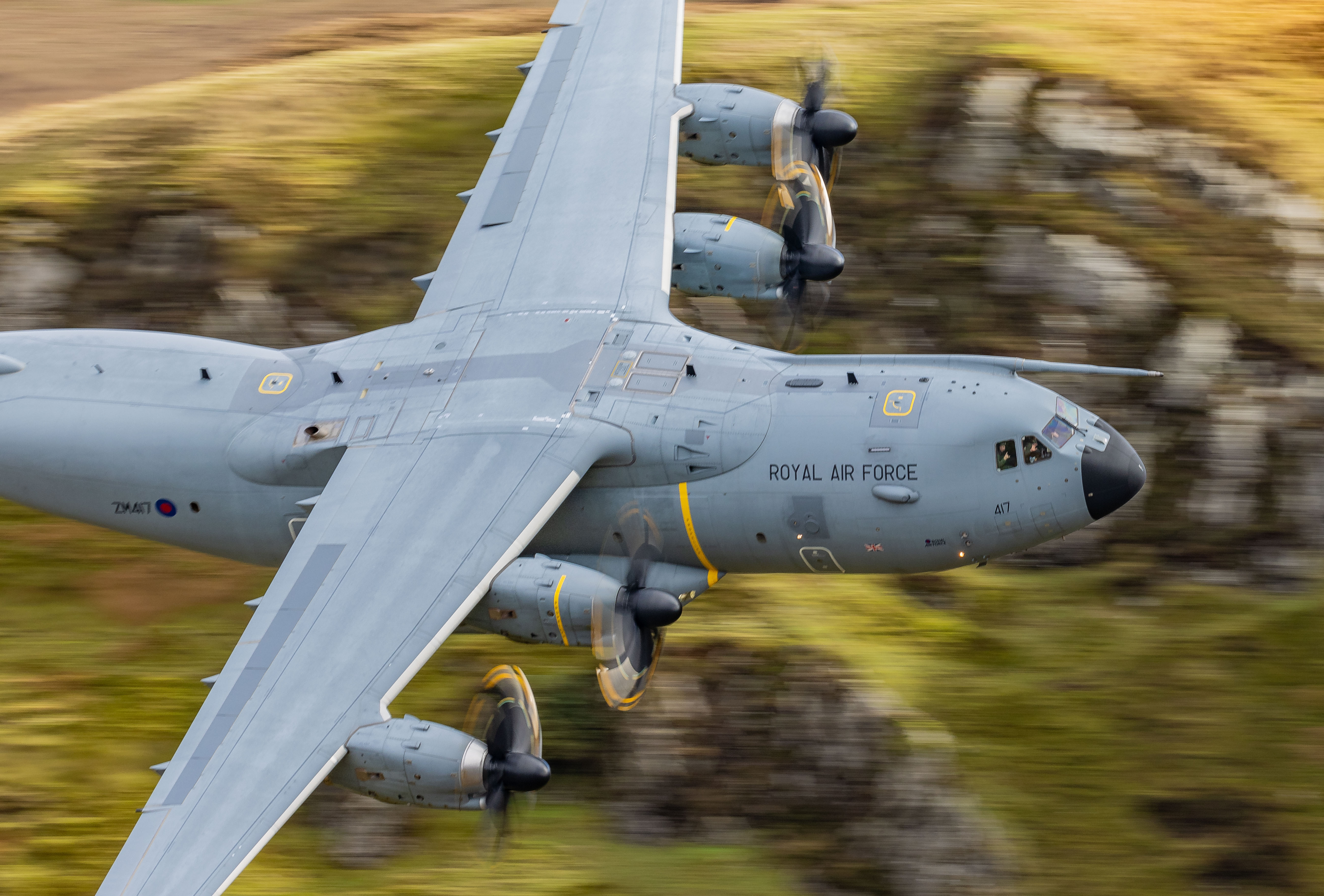
Logistics is where you fly a cargo to where it is needed, the same way that DHL would do it for you. You are usually able to rely on some sort of support for both loading and unloading cargo, and the runways are generally paved and of proper length. The role regularly sees 10 hour flights, and for France a particular interest is the ability to reach the country’s Pacific domains, where natural disasters can suddenly call for an immediate need to quickly move large amounts of goods from France to unexpected locations. The Royal Air Force demonstrated just how versatile the Atlas is with their Exercise Mobility Guardian 23, under which the Atlas flew a record-breaking 22 hour non-stop flight from its homefield at RAF Brize Norton to Guam, with the use of RAF Voyagers for air-to-air refuelling.
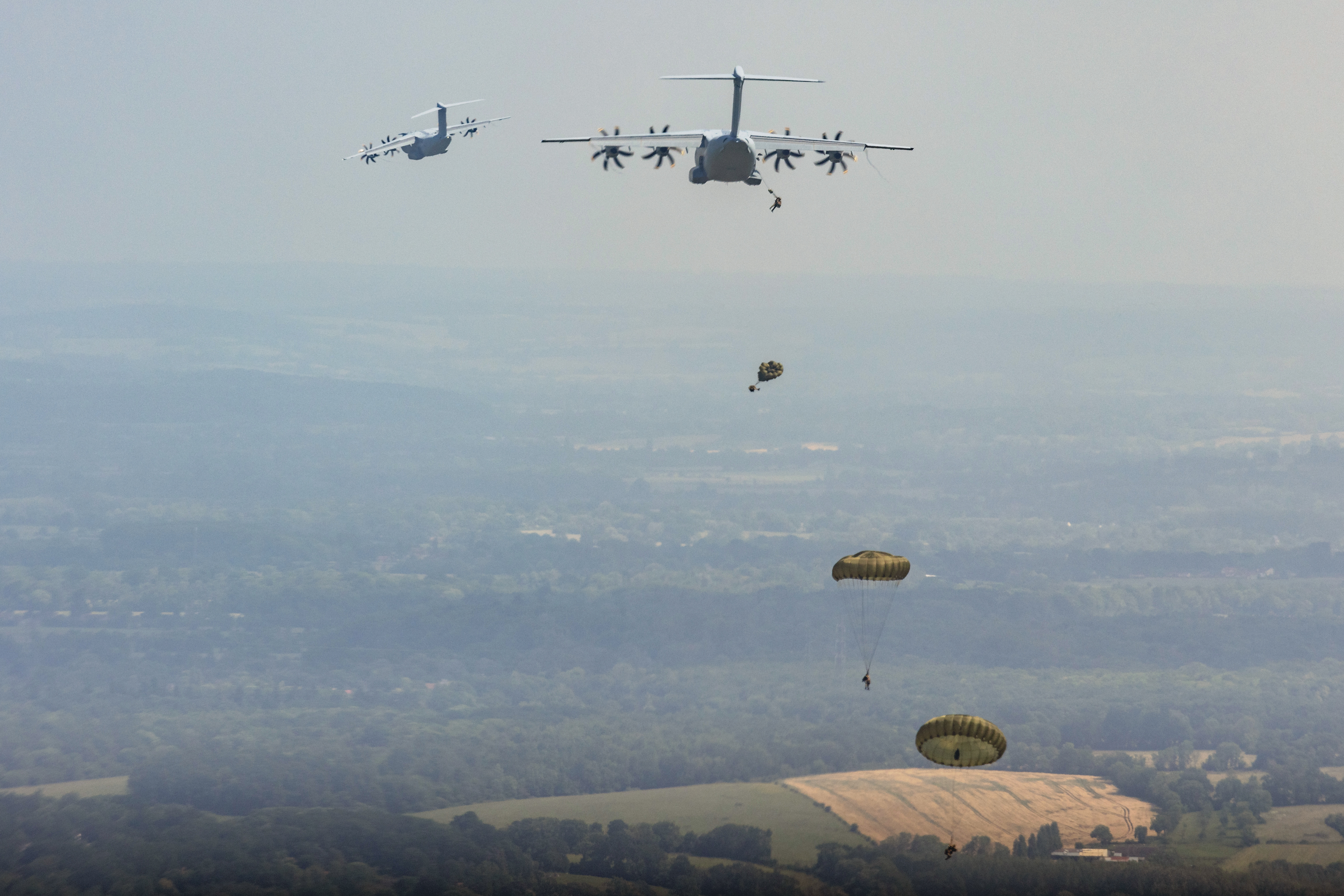
What sets the A400M Atlas apart is however the ‘tactical’ flights, as this is where you can’t call DHL to handle your business. The aircraft is able to go places where you do not go with a civilian airliner, including venturing into high-threat environments where the aircraft’s self-protection suite comes into play and where the flight profiles are more demanding (read: terrain-following at low altitude to avoid radars and air defences). The airfields you touch down on might be unprepared and/or short, and you may not actually get to touch down, but instead you throw your cargo out with a parachute or two. This can include dropping pallets or up to 116 paratroopers, though lieutenant-colonel Stephan, the squadron commander of ET 4/61 Béarn, noted they do prefer to land and unload their cargo if that’s an option. The ability to do extremely short landings and take-offs for an aircraft its size is a key component, with the kind of insertion of a small team that the A400M demonstrated with us onboard during Atlantic Trident normally not taking more than approximately two minutes from wheels on the ground to lift-off. For the evacuation in Kabul, a standard procedure saw the aircraft touching down, loading up with up to approximately 270 passengers seated directly on the floor, and then lifting off within 19 minutes from having touched the ground.

An interesting detail is that Lockheed Martin was originally involved in the work that led to the A400M, but quite quickly moved on to make their own aircraft – the C-130J Super Hercules – and as such one could imagine both aircraft being able to do roughly the same work. However, the A400M is in fact a significantly more capable aircraft with almost twice the payload at 37,000 kg compared to 19,960 kg for the C-130J-30, as well as having a much roomier cargo compartment in general (though due to some quirky measurements, the standardised US air cargo pallet number only goes up by one from eight to nine, provided weight isn’t an issue). Interestingly, this all fits in a platform the footprint of which is surprisingly similar, at 42.2 meters in length and 42.4 meters wingspan for the A400M Atlas compared to 34.3 meters length and a 40.4 meters wingspan for the (stretched) C-130J-30. Unsurprisingly, impressive as the Super Herc is there is a difference that comes from one being a blank sheet design that is well over half a century newer. Much of this is thanks to the wing and powerplant of the A400M, which benefit significantly from advances in technology compared to the Hercules. The advanced wing produces huge amounts of lift, allowing the aircraft to have a much higher practical service ceiling, which is of interest when chasing tailwinds or avoiding weather systems, and creates a significantly larger difference in practical flight time than one might assume based on the max speed alone.
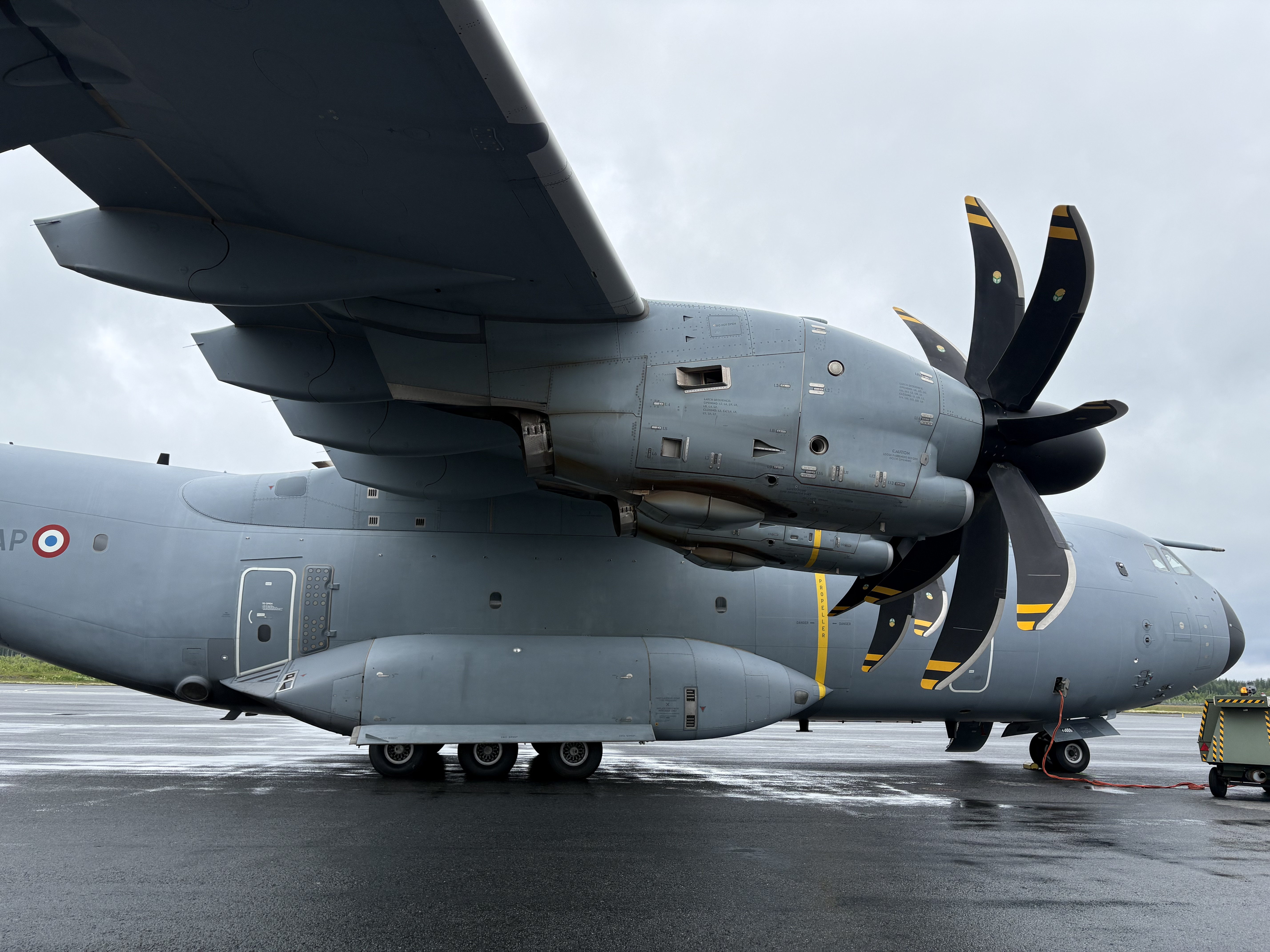
Another key aspect of the A400M Atlas which can’t be looked at separately from the aircraft is the Europrop TP400-D6 engines, developed specifically for the aircraft and based on the M88 core powering the Rafale. The TP400 does feel like the aeroengine version of “Do They Know It’s Christmas?” with all European aeroengine manufacturers having been roped in to design some part of it, and while the choice was controversial – Pratt & Whitney Canada made a serious push which reportedly came with a somewhat better offer – there is little denying that the TP400 in its current form is an impressive piece of kit. Rated at 8,200 kW, it is the most powerful turboprop to enter service in the West, and overall second only to the classic Soviet Kuznetsov NK-12 and Soviet/Ukrainian Progress D-27 – both of which rely on contra-rotating coaxial props rather than the single eight-bladed propellers on the A400M. Interestingly, the aircraft uses a ‘handed’ configuration, under which the engines on either wing operate in pairs rotating in the opposite direction to each other. The huge power of the TP400 allows for a rather spirited take-off when flying light as the aircraft did when I was aboard, a high cruise speed, and a lot of excess power if you would want to take Airbus up on their proposal to build an electronic warfare/stand-off jammer variant of the Atlas. I have seen preciously little to indicate there would be serious interest in this variant, though to be fair large stand-off jammers certainly could be an interesting capability in light of the importance of electronic warfare in the war in Ukraine.
(And if we once more should contrast this to the Super Herc, its Rolls-Royce AE 2100 engines produce 3,460 kW each)
Another difference that isn’t obvious to the casual comparison is the surprising low ground pressure of the A400M Atlas. The aircraft comes equipped with a seemingly ridiculous amount of wheels in its undercarriage, with a twin up front and three pairs on either side for the main undercarriage, for a total of 2+12 wheels. This can be compared to the twin wheels up front and two single ones on either side on the main undercarriage on all Hercs, for a total of 2+4. This, again together with the huge amount of raw power from the TP400 for take-off and breaking, are a key reason for why the Atlas is able to use short and soft airfields that earlier have been off-limits to aircraft of this size.
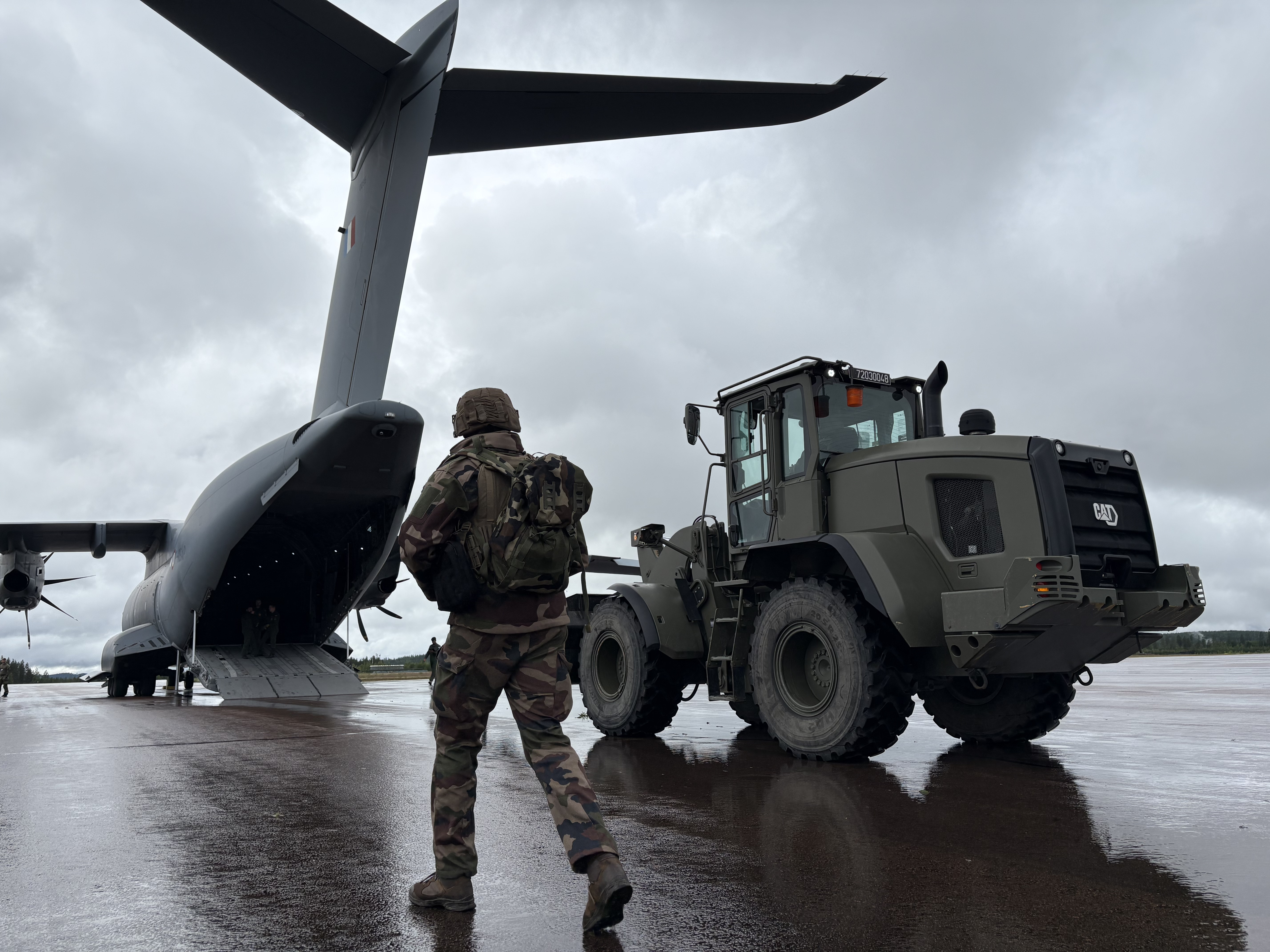
All of this means that the aircraft sits at a somewhat interesting size, between your typical tactical and strategic airlift platforms. The aircraft has the ability to lift a CAESAR self-propelled howitzer, a CH-47 Chinook, or even two VBMR Griffon 6×6 APCs (which presumably also translates into two Patria XA-300). More or less anything below a main battle tank is able to squeeze into the aircraft, giving you serious flexibility when it comes to moving troops and equipment. With that said, even a major operator such as the RAF would struggle to lift more than say a battalion in a single wave. You are able to put a motorised platoon on the ground with just three-four aircraft, or even a light infantry company without vehicles for that matter, but the obvious question is how much equipment you bring along – you can fit almost 350 fully equipped soldiers in three aircraft, but they don’t do much fighting when on the ground if they don’t have anything besides their backpacks and rifles with them. As such, the bulk of your fighting units will have to travel by some other means (or your transports will have to do many roundtrips), but if you really need to put three guns on the ground in the other corner of Europe, three A400M Atlas allows you to do that, while if you are a country relying on the C-130, you have to wait in line for a slot with the C-17s in Papa. And while it isn’t optimal, 300 soldiers with a mortar section and a few hundred rounds each might certainly be enough to make a measurable contribution in many scenarios. So, is it a tactical or a strategic airlifter? The answer is probably that it shines as a tactical airlifter, but for all of us who can’t afford a C-17 Globemaster, the Atlas is able to handle more or less the same role – albeit needing to do a few more roundtrips.
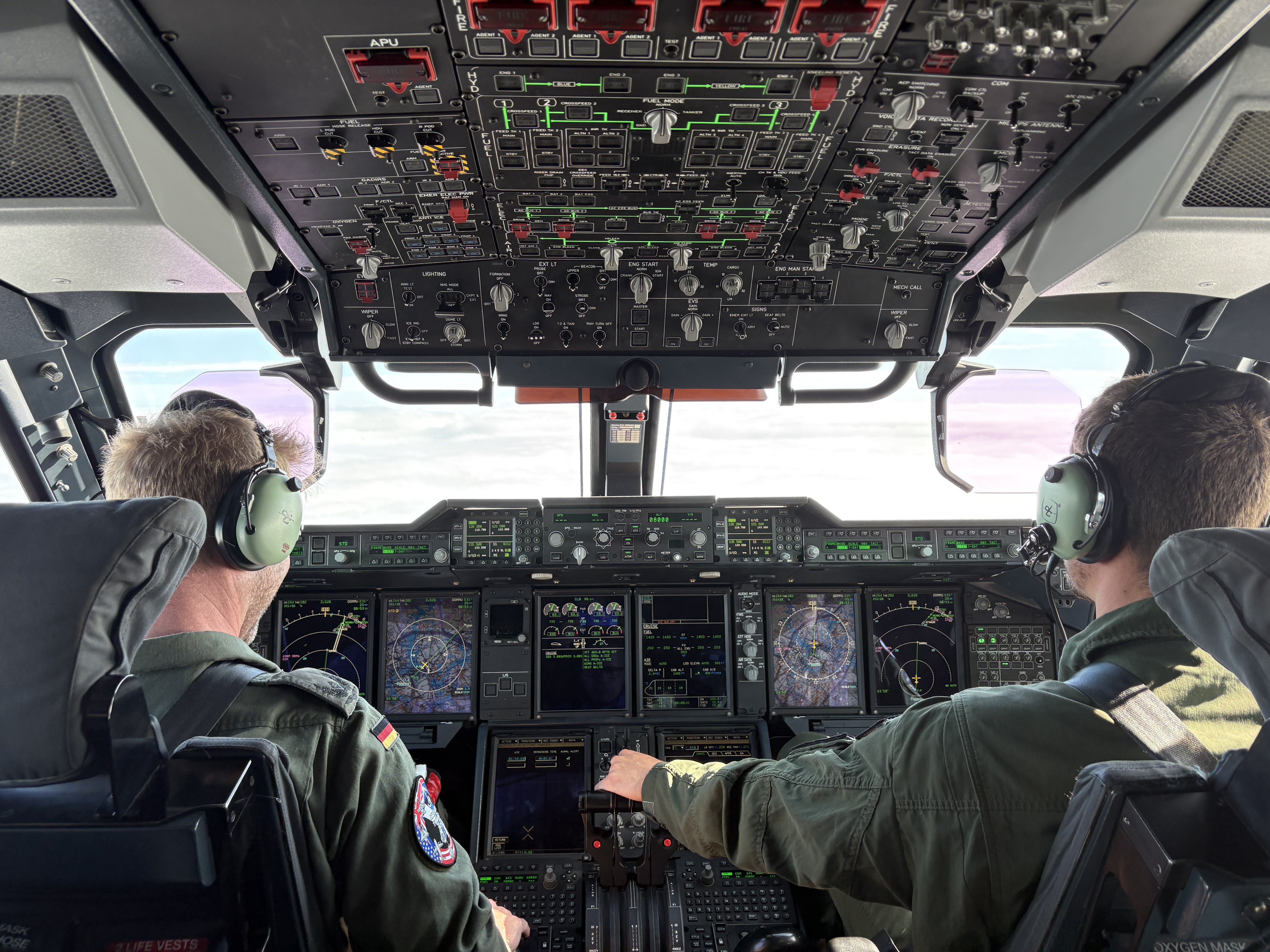
So, could the A400M Atlas ever be a candidate for Finland? At first glance it seems unlikely, but it might deserve digging a bit deeper. It would be a significant step up from the current two Casas, but at the same time that air transport capability was designed for a different time when we weren’t part of NATO and when the defence spending was below 2% of GDP. A number of generals have noted in general terms that the lack of both a sealift and an airlift capability is limiting for Finland, and the Government Defence Report of 2024 had some interesting text on the question:
The air transport (AT) capability of the military component will be reviewed by comparing the risks and benefits of building international and national partnerships. The military component’s heavy AT capability will be safeguarded through international cooperation and agreements. The Finnish Defence Forces will evaluate the benefits of replacing its light AT capability with a medium AT capability based on an estimate of necessary investments and operating costs.
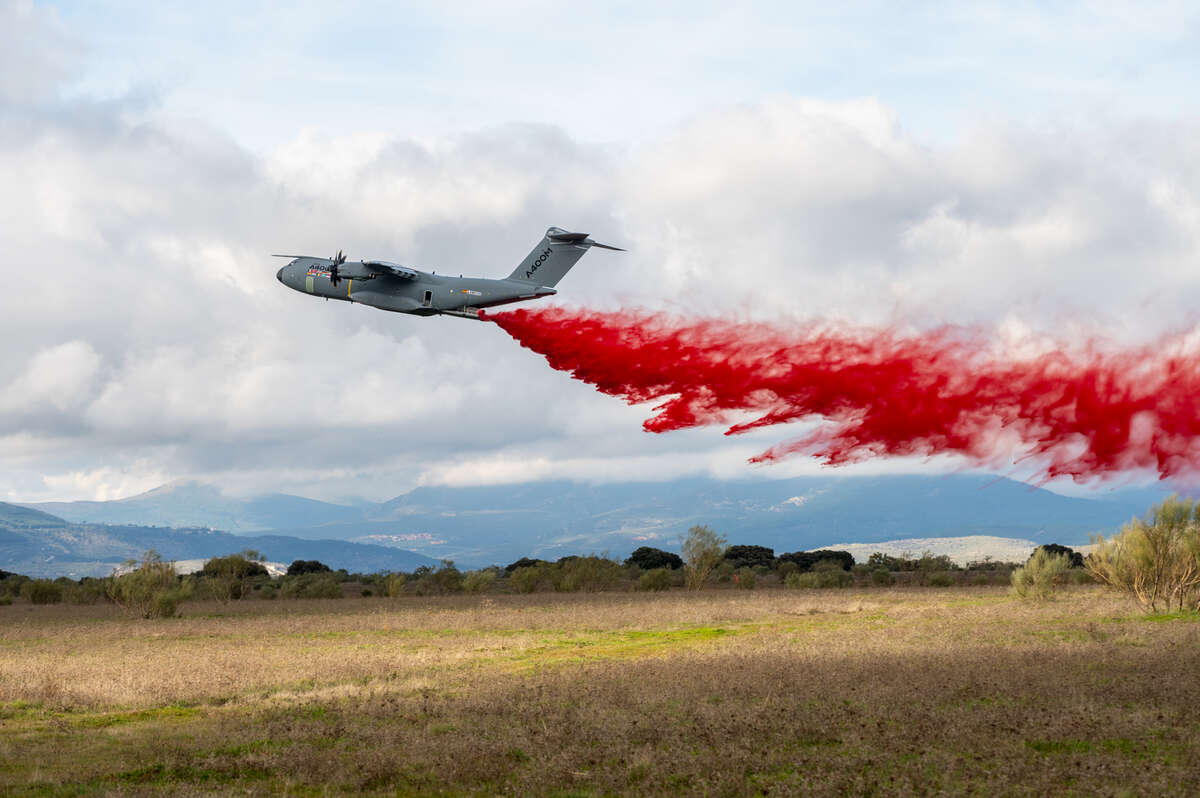
Now, exactly what constitute ‘light’ and ‘medium’ remains to be seen, though it seems clear the ‘heavy’ component is the C-17s in Papa. Could a medium air transport capability made up of two to three aircraft (to ensure one or two is available at any given time) be of interest to Finland to ensure that we have the ability to go wherever we want whenever we want with a hundred soldiers? It might be, and the crucial question is then does the C-130J sit at a place where it isn’t offering enough of an upgrade compared to paying a bit extra and getting the Atlas? And what about the secondary air-refuelling capability? Granted in the age of the F-35 having a tanker without a boom is of somewhat limited value for tactical aircraft, but we would if nothing else be able to share fuel with other Atlases, and we might still have some interested partners with other platforms (looking at you, Sweden) whom we might help out. Perhaps more interesting is the roll-on/roll-off fire suppression kit, which can be put into the cargo hold of any A400M, immediately turning the transport into a 20,000 litres-capacity firefighter able of laying 400 m long retardant lines – again putting the aircraft in a middle-ground between traditional medium air tankers such as Boeing 737 (15,000 litres), C-130 Hercules (11,000 litres) or Bombardier Dash8 (9,800 litres) based ones and heavy ones such as the DC-10 Air Tanker (45,000 litres). The system is currently undergoing tests in Spain, and offer an interesting option for countries such as Finland which has started to see large terrain fires, but still not to the extent that it would warrant dedicated aircraft. A key detail is that the system takes just 10 minutes to refill once the aircraft is on the ground, as this has earlier been seen as one of the issues with very large aircraft – a smaller and lighter platform might not have been able to drop as much in each drop, but they have a significantly higher sortie-rate thanks to the ability to top up quicker.
There are in essence three parts to the question, the first of which is whether we ought to upgrade our air transport capability to begin with? If the answer is ‘No’, we will just keep going as we have so far, calling up some of our friends when we need to send some people with guns somewhere, send something to our people with the guns who are already out there somewhere, or get some people out of something (it’s no coincidence that both British and French personnel often return to the Kabul evacuation or Sudan 2023 when talking about the A400M showing its true value). And then hope they have some suitable aircraft and crew ready to fly the missions we need in accordance with out wishes. However, it should be very clear to all looking at these questions that while you can order your own units, you can only ask nicely when it comes to those of other countries. And their national interests and risk tolerances might not be similar to yours.
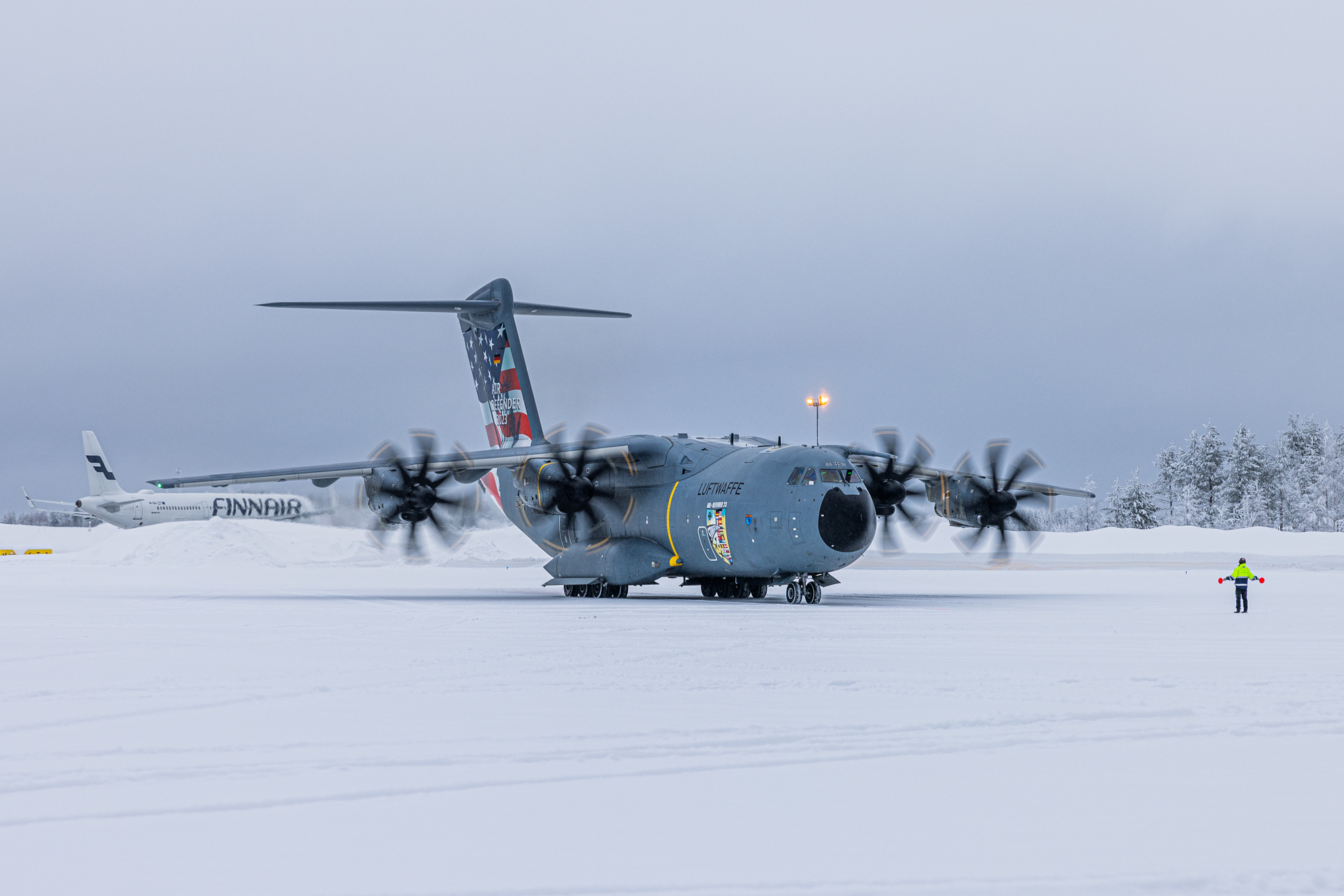
If the answer then is ‘Yes, we want a more serious air transport capability’, the next question is for what kinds of missions, and what is the budget? If we just plan on sending some soldiers on exercises and other kinds of missions where we can plan in advance and ship their heavy equipment by ground or sea, or something to transport our special forces to some forgotten corner of the world, what we need is a tactical airlifter and not a strategic platform. People are light and can be crammed into surprisingly small areas aboard a transport aircraft. However, if we see a need to be able to deploy even limited units to other parts of NATO, say Greenland or Romania, if we want to be able to deploy aid independently to a disaster zone, or if we want to be able to be able to evacuate Finnish soldiers or civilians – say if we suddenly want to bring home our part of UNIFIL – a Super Hercules might be able to do the job, but an Atlas would certainly be the better choice.
The question is, do we want to, and can we afford it?
 Corporal Frisk