
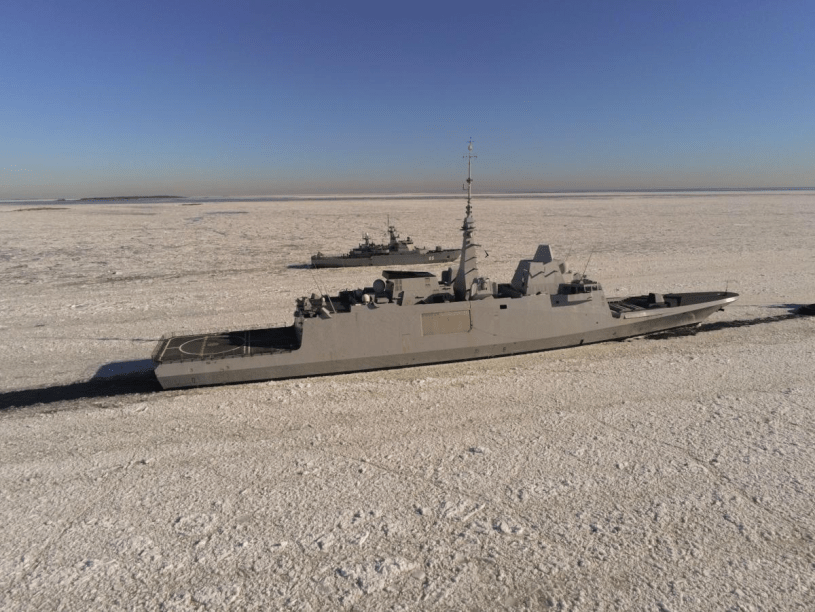
As we discussed in the first post, the FDI is significantly smaller than the ships that preceded it. With that, it comes as no surprise that there were some worries with regards to seaworthiness and the quality of life onboard, inlcuding ensuring good seakeeping.
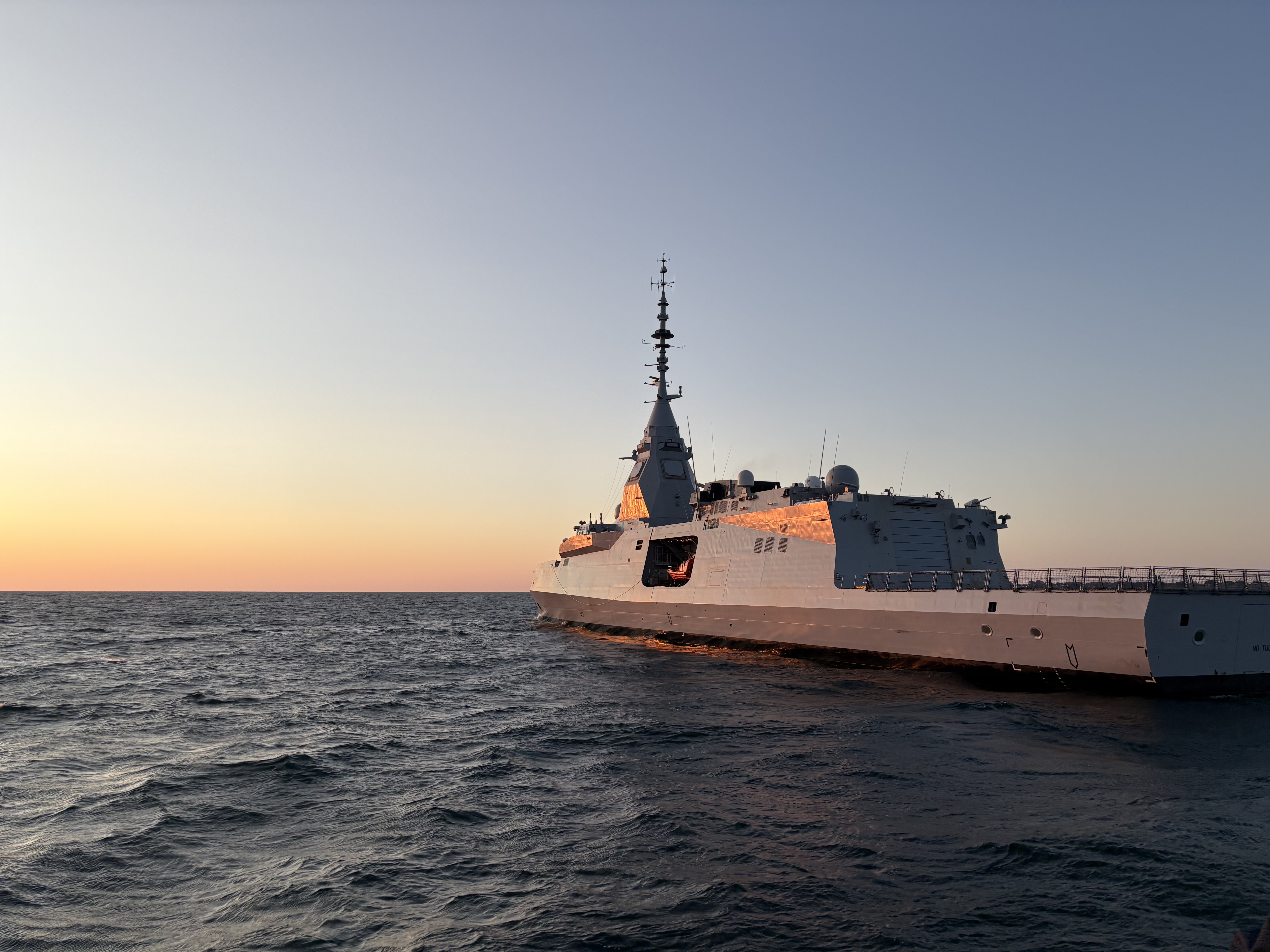
This has been a key focus of the design, and so far things are looking promising. The characteristic inverted bow plays a part in this, providing more of a wave-piercing performance in higher sea states. It also feature a proper bulb, which both house the bulb-mounted sonar, but also is a key part in providing buoyancy to avoid the tendency to nose-dive into waves that some older non-bulbed inverted bows have tended to do (also note that hull is of the a traditional shape, and not a tumblehome, regardless of France’s proud traditions in the field. And if you feel like you don’t know what I’m referring to, click the link. It will make your day better. I promise). The inverted bow also provides two additional benefits, in that it helps with the signature reduction, and provides a longer wetted hull length, as thanks to the magic of physics, counterintuitively a ship goes faster for any given power if the hull is longer.

In either case, this seems to be working, as the Amiral Ronarc’h encountered rough to very rough seas on its first sea trials, and the commanding officer was reportedly very happy with how it behaved.
Let’s also not overemphasise how small the FDI is – at 4,600 tons the class is roughly the size of the Type 22 Broadsword-class, and just a bit smaller than the Type 23. And while not necessarily known for giving their crews a nice time, earlier experience of fighting wars in the North Atlantic shows that you can indeed make do with smaller vessels. Much smaller vessels.
However, one major issue that vessels which are small or compact for their class is that room for growth is limited. You tend to find some things that you need to add to a vessel as the decades of service start to add up, and on a small vessel there’s less opportunities to do so. Of course, that can be solved by removing older stuff (see Hamina dropping the 57 mm for a 40 mm to make space for torpedoes, among other things), but this is an issue which has the potential to give someone working on the FDI grey hairs at some point in the 2040’s.
A big question here is obviously what shape future growth will take, with Naval Group (and Marine Nationale) betting that it will be heavily weighted towards swapping out old sensors and subsystems to new ones, which will place an emphasis on reserve power rather than on the traditional mass and physical space (though there is obvoiusly some mass and space for growth as well). For power, the current 3 MW of installed power (plus the seventh back-up genset) gives a significant power reserve, though exactly how much is somewhat difficult to judge. It is of course dwarfed by the electric power of e.g. the Type 26, which is a healthy 12 MW, but that include the power needed to propel the vessel to approximately 20 kts (as it uses diesel-electric propulsion at those speeds), which is handled by the 32 MW installed engine power of the significantly lighter FDI, which then again is expected to cover speeds up to 27+ knots, at which point the Type 26 has already switched to its 36 MW gas turbine. As such, putting simple comparable figures for the two next to each other is difficult.
To sum it up: there is available power to grow (and I wouldn’t be surprised to see Scania get more power out of their gensets in the future), but how much and if that margin will prove to be satisfactory is something we’ll have to check back in on in 2040.
The size of the crew has in fact not changed much going from how the FREMM originally was run to the FDI, as the French have run their FREMMs with rather lean manning already earlier. When e.g. the US Constellation-class envisions a crew of almost 200, the French FREMM during basic operations saw a total of just over 120 (including the helicopter detachment), though for more demanding operations such as the combat operations in the Red Sea the frigates could have their crew expanded to 160 in total. Still, based on recent experiences, a decision has now been made to raise the standard crew to 140, to improve combat resilience. On the FDI, the basic crew is 111 to which is added an aviation detachment of 14, giving a standard complement of 125. There are facilities for up to 150 in total, in case you want to bring along extra crew members, or a detachment of marines or special forces.
A large part of ensuring that this lean manning doesn’t cause issues is trying to remove as many mundane tasks as possible, by streamlining the everyday operations of the vessel. This includes e.g. the logistics flow of loading the vessel being made as efficient as possible. It might not be as sexy a feature as the weapons or sensors, but the fact that the whole food chain – including loading, storing, preparing, consuming, and waste management – takes place on a single deck where all doors have removable thresholds to ensure that the cargo can be handled by a single crew member with a forklift and a pallet is a significant feature, and removes the classic human chains. For the RAS-positions (replenishment at sea) up at the top of the superstructure, these are accessible by the forklift through an elevator, ensuring that there is no need to break up and repack the pallets arriving, something that is true for vertical replenishment over the helideck as well. The FDI has RAS-positions on both sides, though the starboard one is for liquids only, while the port is for both liquids and solids. Palletised logistics on a warships is not something you will see make headlines in newspapers, but it is a huge deal for those actually running the ship.
And, yes, they do bake their own bread. Coming from a country where “freshly baked bread” means the local supermarket has warmed frozen dough pieces immported from Germany and put them in paper bags, it did sound somewhat amusing, but one of the improvements when it comes to the Amiral Ronarc’h is that with the new smart oven, the chef can prepare the dough the day before, put it on trays in the smart oven which will keep them cool overnight, and then at a pre-set time start heating them up, to ensure that the breakfast is served with freshly baked bread and croissants.
This is both living up to all stereotypes I have about the French, and completely awesome. I have no issue imagining the morale boost it offers when having had the dawn watch, you are then able to then step off the watch and get a cup of hot coffee and a fresh croissant.
The vessel is naturally equipped to be able to take all waste back to shore, with solid waste being processed, compressed, and stored in a cool storage room. The requirement is for all waste generated by a full complement of 150 during a 30-day period to be stored aboard. Once in port, waste and waste water is removed through standardised connections, and the vessel is able to connect to both shorepower and shore data networks from the connection points found amidships between the two RIB-bays.
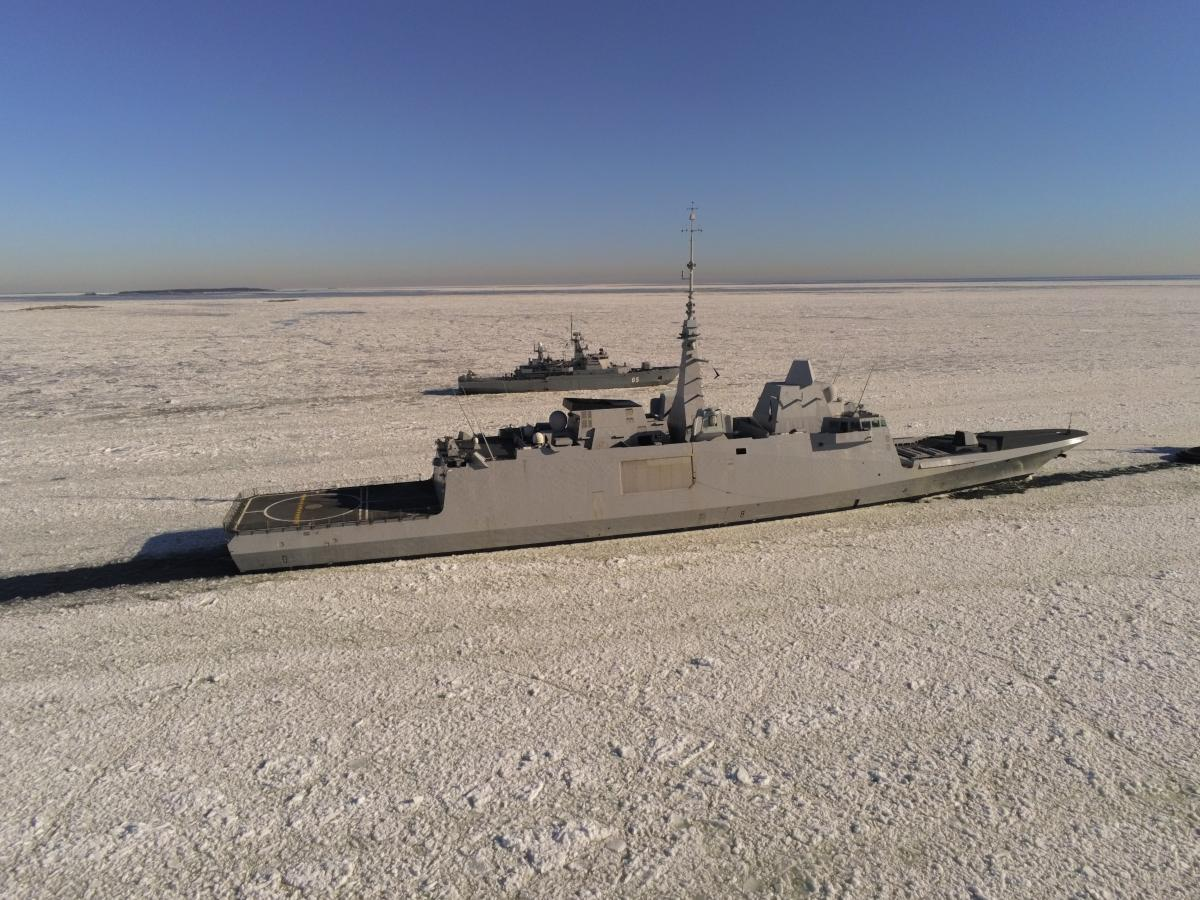
The living conditions aboard are also somewhere between “nice” and “obviously, this is the 21st century”. Rooms are for one, two, four, or six persons, though the yard notes that this is just the setup chosen by the Marine Nationale, and the buyers have quite some freedom in choosing how they want to set these up. The one room we got to peek into was nice and light (in particular considering there are basically no windows), and with a surprising amount of floor space. A key change compared to the FREMMs is that with the exception of the single-person cabins, all have the toilettes, bathrooms, and showers installed outside of the rooms. This was based on feedback that in shared rooms people coming from and going to watch are noisy, affecting the sleep for those not on duty. By moving as much of the preparations as possible out from the sleeping spaces, the hope is to make this situation better.
So, while Naval Group certainly was very friendly to invite me aboard, there is little doubt that this visit was related to their export push for the class, and in particular with regards to Norway where they are one of the four vessels downselected. As such, I guess the big question is, does the FDI make sense for Norway?
A short refresher: The single largest item in the Norwegian defence plan presented a year ago is the acquisition of five new frigates – with options for a sixth – to replace the four remaining frigates of the Fridtjof Nansen-class. And Norway plan on acquiring them fast. Very fast.
They want the first vessel delivered by 2029.
The vessels will be multipurpose frigates with the ability to fight enemies in the air, on the surface, and underwater, but an emphasis is placed on ASW. For this purpose, they will also be equipped with ASW-helicopters, and while the Norwegian Coast Guard is getting MH-60R Seahawks in 2026 thanks to US Navy handing over slots in the production queue – there has been no order for ASW-helicopters as of yet.
The new frigates will be ordered according to what is operated by a “close ally”, and the Minister of Defence Bjørn Arild Gram went as far as using the word “identical” and drawing comparisons to the 212CD-program.
The four frigates left in the running are the British Type 26, the German F126 (or F127, I’ve seen both mentioned), the US Constellation-class, and the FDI. Of these, the F126 is still largely a paper-product with some welded steel to show (the F127 if that is the one on offer is even more so), and is literally the length of some battleships. The Constellation has figured in this series a few times, it is the US version of a FREMM, sharing approximately 15% commonality(!) with the original design, and is quite frankly “a mess”, and then there is the question of whether the US really can be trusted to stay a “close ally”. The Type 26 is likely the vessel to beat, as there is a close cooperation stretching back to 1940 between the Norwegian and British armed forces, further reinforced by sitting on opposite sides of the North Sea. The British also have a rather long and storied tradition of building ASW-frigates for North Atlantic conditions, of which the Type 26 is the latest iteration. The offer to Norway is centered around the British version of the ship, and includes an option to join the existing shipbuilding program, under which the Royal Navy currently has five out of their planned eight frigates in different stages of production. Of these, the leadship HMS Glasgow is set to enter sea trials soon. The vessel is significantly larger than the FDI, sport an AW101 Merlin helicopter as its main airborne asset, and is able to fit a huge amount of weapons in the form of a 127 mm deck-gun (with the BAES Hypervelocity Projectile, which promises to be quite something), a battery of 48 dedicated launch cells for CAMM/Sea Ceptor air-defence missiles, a total of 16 NSM anti-ship missiles, 24 multi-role strike-length Mk 41 VLS-cells, and assorted short-range weapons. Add to this an extremely large and flexible mission bay with ample of room to add new or temporary capabilities, as well as the sprint-and-drift capability afforded by the CODLOG-propulsion, which offer extremely silent diesel-electric drive during the drifting part.
However, the reason you are able to fit all of this onto the ship is that it is a very large frigate at 6,900 tons, with a standard crew of 157 and space for another 50 embarked marines. While the overall design is impressive, there are also a number of those head scratching moments that tend to come with British military procurement – such as buying the extremely versatile full-length Mk 41 cells, while the only weapon planned for integration is the Anglo-French Future Cruise and Anti-Ship Weapon (FCASW) together with an unspecified land-attack capability which might or might not be Tomahawks fired from the Mk 41s. Another is that despite the heavy medium-range air defence battery of 48 CAMM, the vessel is not equipped with a modern fixed radar, instead relying on the rotating Type 997 Artisan operating in the E/F-band. And while it is entirely possible that the talk about the Artisan being better than its reputation is correct, there’s no getting around that it’s a rotating phased array. All taken together, compared to the FDI which has a serious high-end air defence capability (including the ability to target incoming ballistic missiles) but faces questions about magazine depth, the Type 26 completely lack a high-end air defence missiles, but has a good depth of magazine for self-defence and medium-range engagements. The question is whether the UK configuration really is the one Norway wants, and whether it will stay that way in the long run?
(Yes, you could hypotetically implement a long-range missile to the Mk 41 for the Type 26, but if you account for that you should in faireness also account for implementing CAMM quadpacked on the FDI, which would raise the maximum to 128 air defence missiles on a 32-cell FDI, or 64 CAMM and 16 Aster 30)
But there is yet another significant factor: time.
BAES might be very confident in that many of the systems are mature and in many cases combat proven, but the fact of the matter still is that the first ship hasn’t started sea trials, and several of the key systems are new to the Royal Navy and/or have never been integrated before. Add to this the delivery slots available before 2029 (nil), and you are seeing some serious clashes with the Norwegian stated aim of getting a reliable platform delivered by 2029. Granted, it is entirely possible that the UK will hand over one or two of the vessels currently being built for the Royal Navy to Norway and order replacements further down the line, but that would make the British frigate-gap even worse. This is also not in Norway’s interest, as Norwegian security doesn’t depend as much on how many frigates they have in the North Atlantic, as it depends on how many frigates NATO has there.
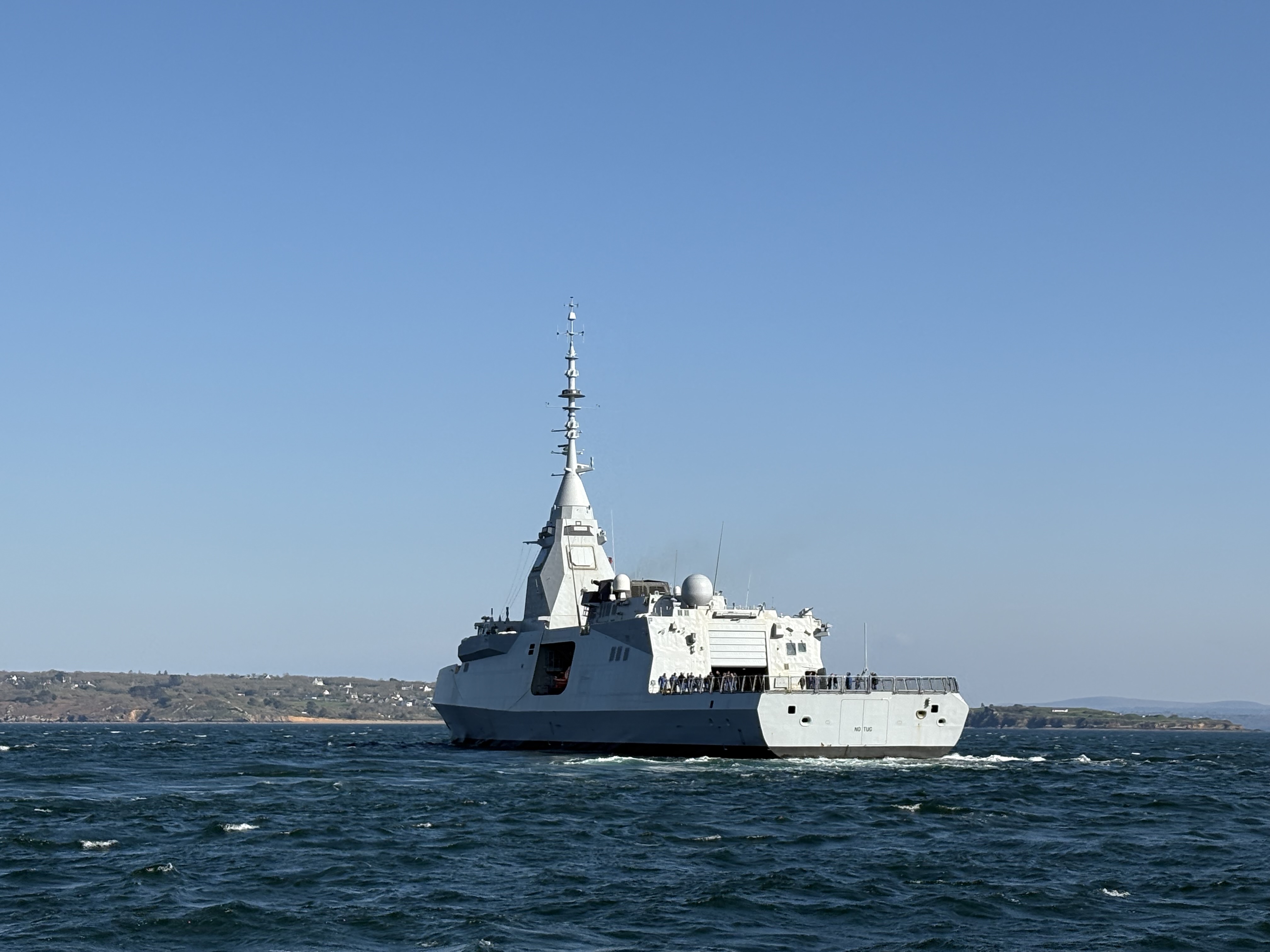
Contrast this to FDI, which also largely relies on proven systems (in their case from the French FREMMs) but ones which are indeed already familiar to the service and yard from earlier projects, and crucially their leadship has spent half a year at sea already – with the formal handover to the Marine Nationale expected later this year, and the navy declaring the Amiral Ronarc’h fully combat capable in mid-2026. As mentioned, they have also been able to run tests on the sensors and combat management systems already during the building of the PSIM as discussed earlier, and having smooth sea trials is no hypothetical, but something the project is currently experiencing.
Another key detail is that France really is able to field the vessel in the configuration it seems Norway wants it, with the most advanced ASW-suite available, backed up by serious multirole-capabilities. The Greek order for three ships – with the expectation currently being that they will increase the order – also means that MH-60R is already integrated. In essence, the only true change would be the integration of NSM instead of the MM40 Exocet, a change which won’t alter the physical dimensions of the launchers, and one which the company is confident is a minor integration into the combat management system.
“It’s not a significant difference, it would still be the same ship”
The question of size is also interesting. While the larger ships obviously are able to mount more things, they also require more crews and rule out certain infrastructure. And with the Norwegian Navy having faced issues with recruitment and retention when trying to assemble 120-strong crews for five frigates, the fact that you are able to crew six FDI with their helicopter detachments, and still have 35 fewer persons onboard in total compared to five Type 26 (with 157 in the crew for each) is a factor that shouldn’t be underestimated. Because remember, the Norwegian are looking at five frigates with the option for a sixth if the budget allows for it, as ASW-work is very ship-intensive, and every hull can only be in a single location at any given time. And while I usually tend to not put too much trust in statements about affordability given by defence companies, the smaller size of the FDI does mean I do believe Naval Group when they matter of factly note that it is “the most affordable one”.
There are those – quite a few people in fact – who will argue that the Type 26 once commissioned will be the premier platform for ASW-work in the North Atlantic. That might be correct, though I would caution against speaking in absolutes when it comes to the performs of these kinds of highly classified systems of systems (to go full jargon). And crucially, that overlook the significant differences in ASW-doctrine between the Royal Navy and the Marine Nationale. As an example, if the Type 26 is able to find and shadow its targets on the passive sonar while drifting at slow speeds and staying undetected (or at least not fixed accurately enought that the submarine feel it has a firing solution) and only occassionally need to sprint at 20+ knots on the gas turbine, that is a completely different way of doing ASW compared to the French idea. If that is the way Norway want to hunt submarines, the FDI will have a tough time competing. If, on the other hand, Norwegian tactics are moving in the same direction at the French, seeing a higher need for sustained high speeds while also not trusting passive sonare to do the job, that will flip the table and raise the question why they should buy a warship that is significantly heavier, more expensive to buy and operate, and require signficantly more crew?
And if Norway really is serious about the delivery schedule and sees it is as a pass/fail-requirement, it is difficult to see any other scenario than FDI winning on walkover.
And it’s not like the Norwegian industry would be completely left out either, as Naval Group understandably already has a history of mounting Norwegian stuff on their vessels. The French FREMMs get their controlled pitch propeller and integrated bridge management system (IBMS) from Kongsberg, and the French and Greek FDI are sporting Norwegian propeller blades manufactured by Oshaug Metall under a long-time partnership.
But, compared to the packages offered by some of the other contenders, this is still on the lower side, so Naval Group aims to add yet more.
“We have organized with the support of FSI, an industry day in Bergen on October 7th and 8th attended by more than 50 Norwegian companies. Naval Group teams are currently covering Norway to meet individually a lot of them, and explore their integration in our global supply chain (construction, through-life support, R&D), including of course the FDI.”
Naval Group is also finalizing several partnerships with academia and research institutes, including having signed a Partnership Cooperation Agreement with Norwegian research organization NORCE to explore future R&D collaboration, with the MoU providing a formal framework to explore “potential R&D initiatives of mutual interest, with the goal of identifying, evaluating, and developing joint research projects”. Interestingly, the focus will be on dual-use technologies, relevant to both civilian and military applications with an eye at capabilities that might benefit the Royal Norwegian Navy in the future.
“These collaborations highlight our commitment to involving Norwegian industry in our global operations”
But again, the timeline is perhaps the most significant factor.
The Lorient yard is able to deliver one FDI every six months currently, and also recently announced that it is studying the option to speed up the process further, including discussions with more than 400 subcontractors. But even under the current pace, the yard has empty slots to deliver the first frigate by 2029, and have the sixth out by 2035, provided we see a selection this summer and a firm order no later than the summer of 2026. This is in addition to the five frigates destined for France, as well as the three Greek ones, two of which are launched and the third of which is in drydock. Even with a Greek follow-up order, the yard is able to meet the Norwegian requirements, while still having slots left for anyone wishing for rapid delivery of a European-built frigate in the 4,600 ton-class with serious capabilities and a relatively lean manning requirement.
Oh, I am hearing that Sweden might have just that requirement, the country that just happened to receive the former deputy of the DGA (the French defence procurement and technology agency) as the new French ambassador. And that while there are no formal negotiations about buying FDI for the Luleå-programme, there are “expressions of interest from Nordic nations besides Norway” according to Naval Group’s Norwegian partner. Naval Group also has confirmed that they “consider as prospects” plans for five frigates to Denmark and “at least three” to Sweden, which is somewhat interesting as the Luleå-class is four vessels. Might it be that Swedish politicians have finally realised the need for growth, that NATO creates a need for a force structure for sea control and not just sea denial, that their Navy currently is falling into pieces, and that the Luleå-class is too far away (in particular if that entails laying down the first new surface warfare ship-class since 1995), and as a result are embarking on a quick buy to replace the Stockholm-class built in the mid-80’s? On the other hand, might it just be a typo – the Danish proposal also seems to be off by one, as it has earlier been reported at four instead of five – or potentially discussions about shrinking the Luleå-class to three vessels?
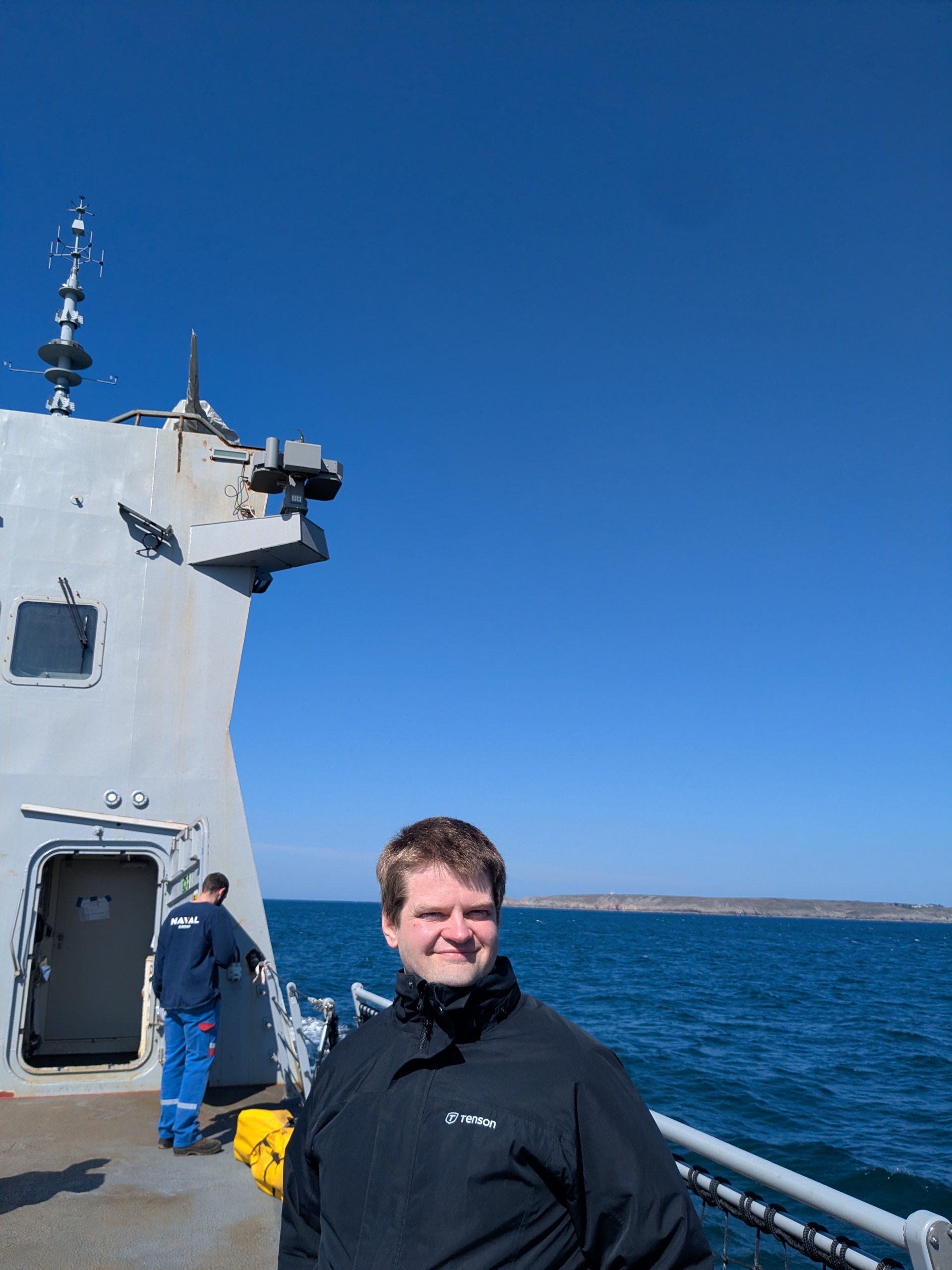
As Naval Group said, “The market is fast-moving”.
 Corporal Frisk