
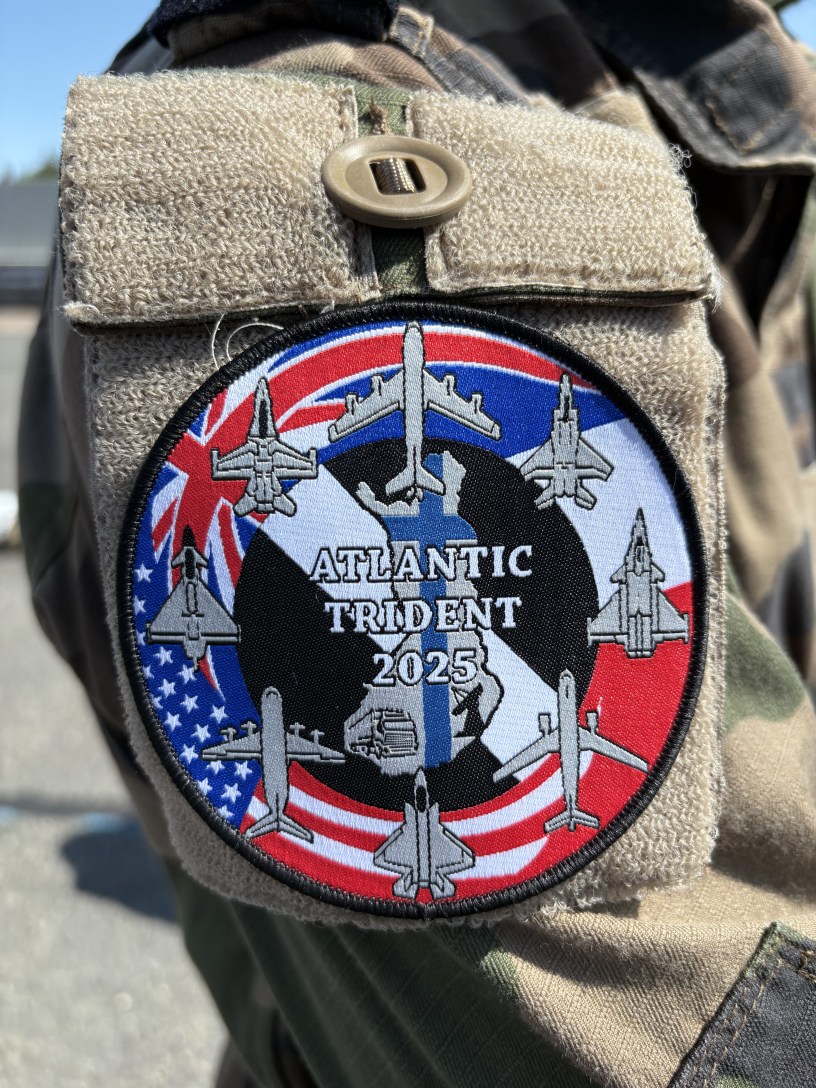
The US Air Force is certainly a league of its own, both globally as well as in NATO. However, when it comes to NATO, there is another tier one step immediately below made up of the Royal Air Force and the French Armée de l’Air et de l’Espace. Yes, these are the alliance’s three nuclear powers, but from an air power point of view the three also are unique in having the broad variety of the enablers and force multipliers needed to fight a modern air war – including tankers, large ISR-platforms, air mobility on a major scale, airborne early warning and command and control platforms (the RAF doesn’t operate any right now, but it’s just a temporary capability gap until the E-7 Wedgetail enter service, slotted in to take advantage of the fact that everything is calm right now and any potential conflict is unlikely to affect the UK…). As such, the three countries have unsurprisingly done quite a bit of bilateral and trilateral operations and exercises, with the Atlantic Trident-series being one of the more visible high-end outlets for the trilateral cooperation. The exercise series started back in 2015 as an opportunity to train high-end missions and in particular the ability to cooperate between fourth and fifth generaion fighters, and following what apparently was a rather succesfull edition it was followed up by exercises in 2017, 2021, and 2023. The idea was simple – a high-end exercise for the cutting-edge air power capabilites of the three strongest nations of the alliance.
And then little Finland called and said “Why don’t you come over here and run your exercise together with us?”
There is a Finnish saying, “It’s not the one who’s asking who’s foolish”. Of course, Finland is able to offer a quite interesting package with large training areas, the opportunity to exchange ideas on how to do dispersed fighter operations, the F/A-18C Hornet as a somewhat rarer aircraft to train together with, a change of scenery with the light summer nights, and an air force about to do the switch from fourth to fifth generation fighters and keen to learn the ropes, but honestly when asking around the main reason why NATO’s three strongest countries came to Finland and the Finnish Air Force got a unique opportunity to train with the three big ones seems to be that Finland was the one who realised to ask.
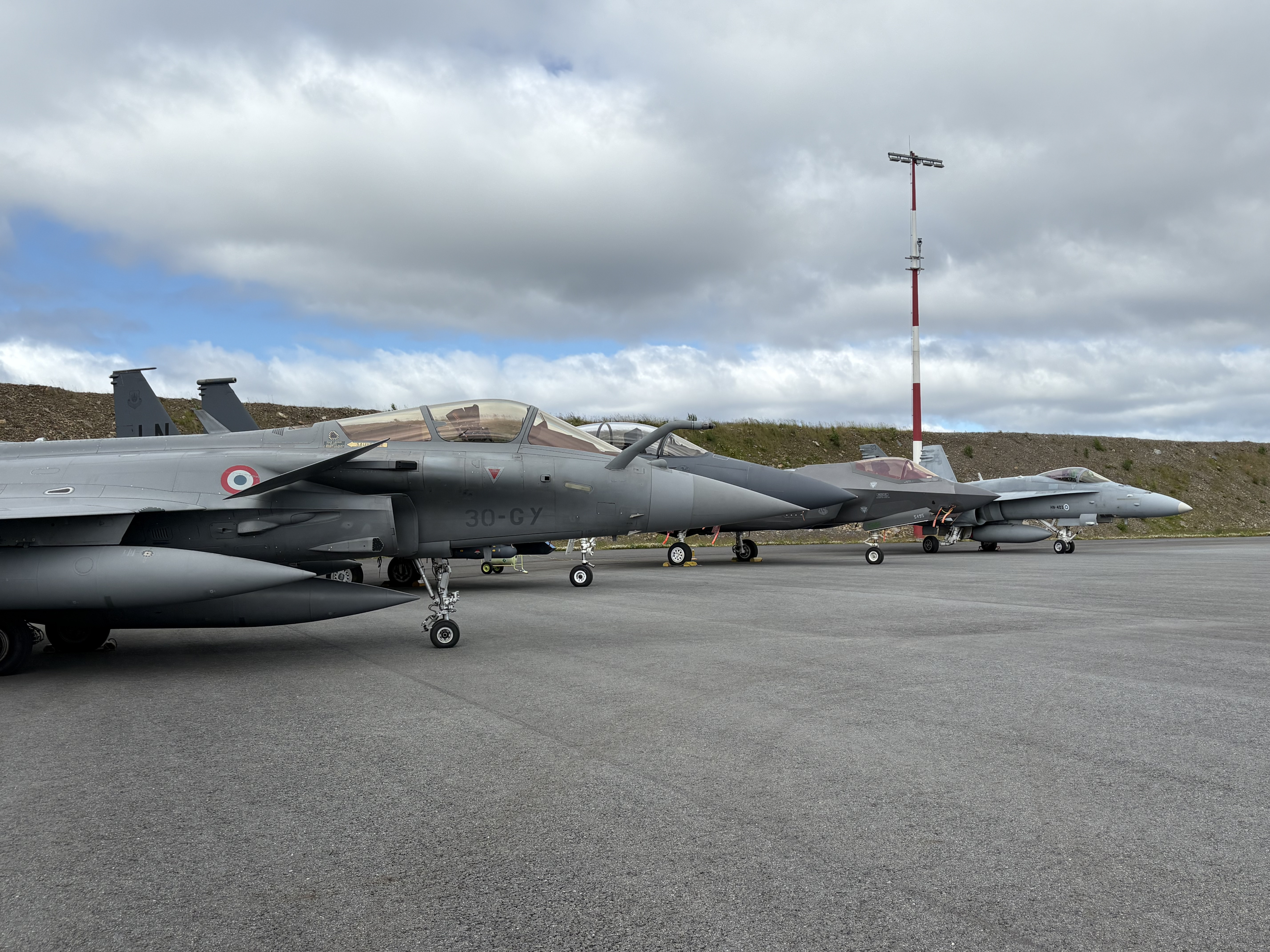
For this edition of Atlantic Trident, the exercise evolved from one focused on the tactical platforms (i.e. the fighters) to one focused on the larger operational picture, with a consistent scenario which saw Finland ask for aid following the country being threatened by the Red Nation. This in turn saw the three majors sending expeditionary air power to its aid, allowing them an opportunity to practice dispersed expeditionary deployment (Agile Combat Employment in USAF-lingo). The exercise then played out as an air campaign in which performance on one day had effects on what happened the next one. Examples included ground-based air defences that might have survived strikes being present for the following missions, as well as attrition on the aircraft involved being modeled. A key part was of the missions was that the international force plugged into the Finnish Air Force command and control, including with elements being embedded into the relevant parts of the Air Force Command in Tikkakoski. This provided for one of the key goals of the exercise, which was to have a cultural exchange where the Finnish Defence Forces learns NATO methods and processes in practice with the leading countries in the driver seat (US was the lead nation for the exercise), while they also get to familiarise themselves and learn from the Finnish way of leading air operations.
Interoperability in general was a big theme, with all countries cross-servicing the aircraft of the other ones, including refuelling, rearming, and doing basic maintenance to ensure that regardless of where a fighter touches down and which country has maintainers and resources to spare on that base the aircraft is able to be turned around and continue the fight.
The two weeks kicked off with an easier first week which focused on familiarisation flights, both with an eye to getting familiar with the airspace and the Finnish C2 (as well as the fact that the nights doesn’t really get dark in Finland this time of the year – one of the two things together with the significant magnetic declination in Finland mentioned by the French exercise lead as local conditions requiring a bit of adaptation), with most flight being basic fighter manouvers in classic 1-vs-1 combat. In addition the cross-servicing was trained heavily to ensure that it would work as intended during the second week of operations. The second week then saw the ‘real’ war-fighting scenario, with composite air operations flown by all units in the aforementioned persistent scenario setting.
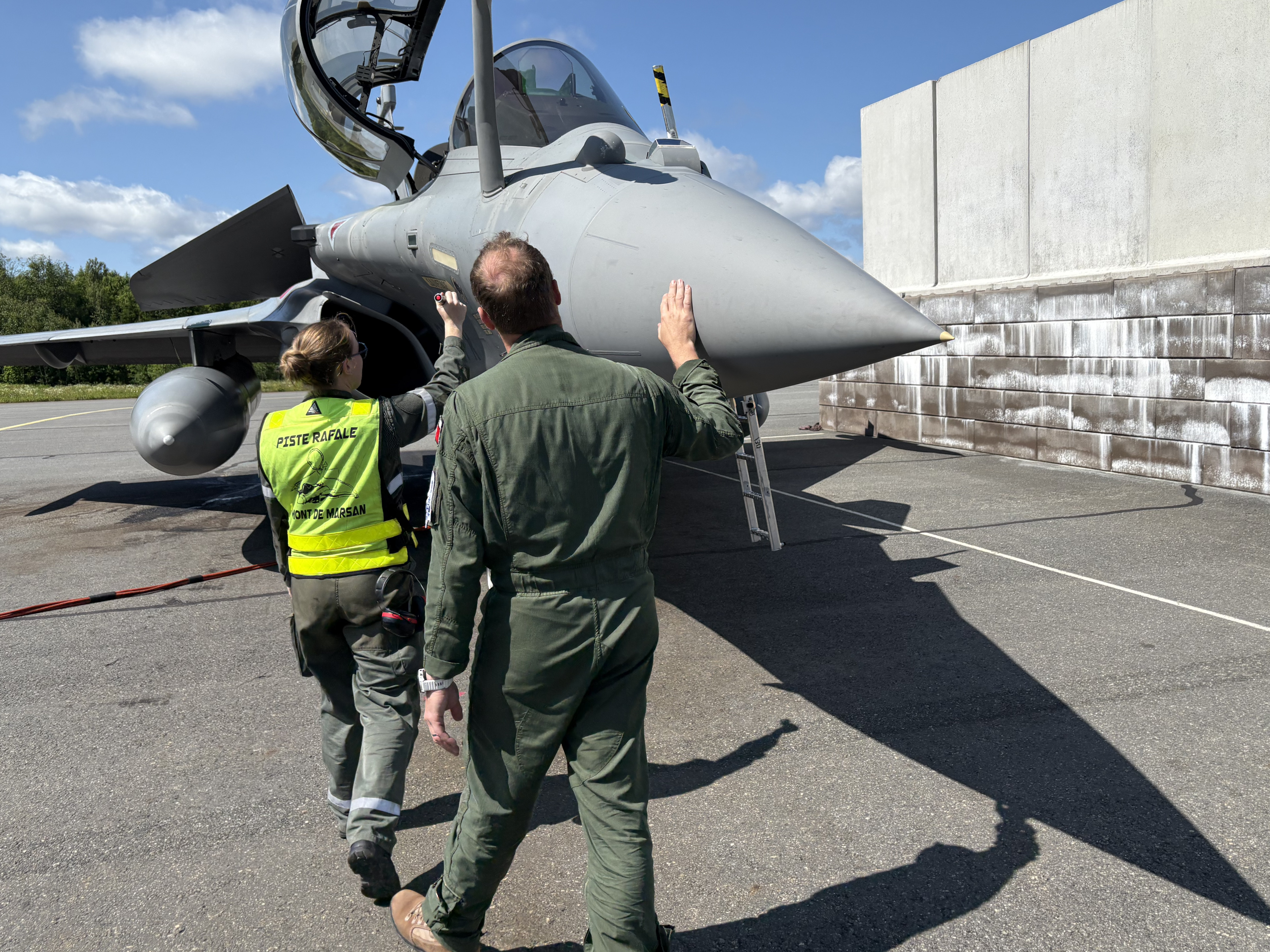
Speaking with the leader of the French Rafale-detachment, lieutenant-colonel Vincent (the French service personnel use only first names when dealing with the media), he described the crews getting to know the general idea of the mission the day before they were to fly it. The missions included more or less the whole set undertaken by multirole fighters, including air-to-air operations (both within and beyond visual range), air-to-ground missions, suppression and destruction of enemy air defences (SEAD/DEAD), protection of high-value assets, and escort of helicopters in personnel recovery and CSAR missions. The French detachment included six Rafale from the 30e Escadre de Chasse, which included personnel and equipment from both ECE 1/30 Côte d’Argent and its sister unit, the famed RC 2/30 Normandie-Niémen (time might be a flat circle, but in this case the irony is obvious). As one of the three major powers in NATO, France takes pride in being able to deploy expeditionary air power independently, something which was visible in the French showing up to Atlantic Trident with six Rafale, a A400M Atlas airlifter, E-3F Sentry operating out of Rovaniemi, and supporting the exercise with their Airbus A330 MRTT Phénix tankers operating out of their home base Istres-Le Tubé back in France. The USAF in turn brought their KC-135R Stratotanker tankers to Rovaniemi, in support of eight F-35A and six F-15E Strike Eagles, while the Royal Air Force brought a detachment of Typhoons. In addition Draken International brought professional Red Air to the exercise in the form of a Dassault Falcon 20 and a number of Aero L-159, which also operated out of Rovaniemi.
As mentioned a key part of the persistent scenario was training how to deal with attrition. To this end hostile attacks on air bases were simulated, with the engineering teams then being involved in the airfield damage repair (ADR) operations then being a key part of the exercise. Airbases damaged needed to be repaired to be allowed for use, something that was simulated down to individual installations such as taxiways or runways. Then it fell on the engineering teams to make them operational as soon as possible. As the French exercise lead explained, it was the first time they had seen cross-reparations at this scale, which brings us to perhaps the most unique unit involved in the exercise: 25e régiment du génie de l’air, or the French Air Force’s 25th engineering regiment. This is a unit specialised in ensuring that airfields are operational, and as such it works in airfield damage repair as well as the construction of air field defences for both humans and aircraft.
To perform the mission, the 25 RGA can either travel light – using equipment that is fully airportable – or then as was the case in Atlantic Trident they can take their heavy machinery, which means that they will travel by road and sea. In this case it took six days to deploy on own wheels through Europe, with a hop by boat over the Baltic Sea in between. The FDF had then prepared Halli airfield so that their guest would feel welcome. By blowing a number of craters in the taxiways with explosives to simulate an airfield that had suffered an air attack.
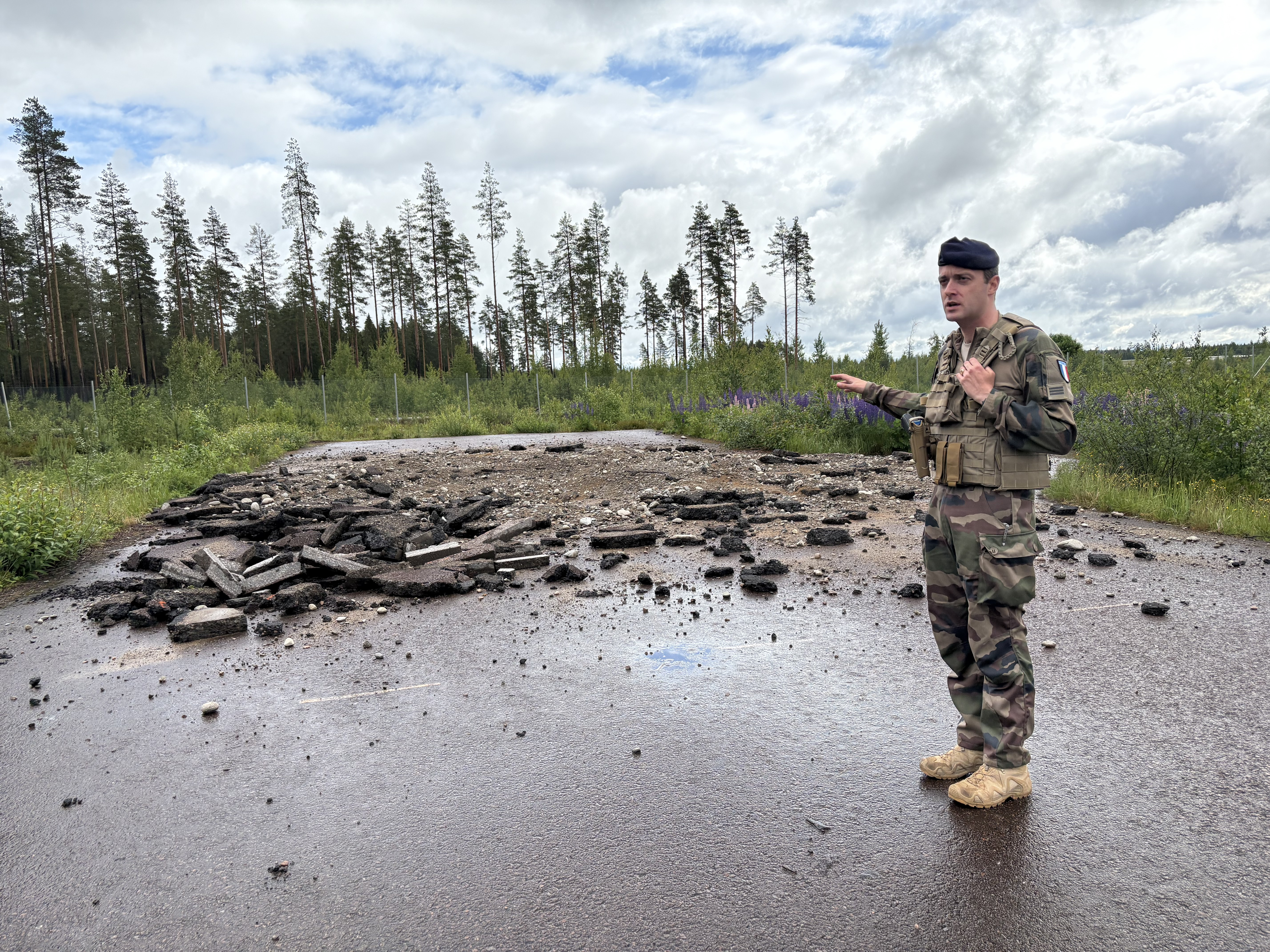
The ADR-process kicks off with recconaissance of the area in question. This include mapping out the damage suffered, but also looking for potentially hazardous chemicals, unexploded ordnance, and other potentially dangerous stuff. Depending on where in the world you are deployed, this might also include more general recconnaissance ensuring that there aren’t any potentially hostile ground units in the vicinity. For this work, the 25 RGA operate a number of light armoured personnel carriers, the trusty VAB in its Véhicule d’Intervention sur Base (VIB) variant able to mount the classic 20 mm M693 autocannon. Once this is done, the repair can start, which include removing debris and shrapnel (and taking care of any explosives found), followed by cutting and digging the craters to a nicer shape, which can then be filled and prepared using ordinary earthmoving technices. The surface is then taken care of, in the French case by pouring quick-drying concrete, though e.g. the British use matting instead. While the French was the lead nation for the ADR-teams, both the UK and the US also had units deployed which took part in this part of the exercise. Again, the exchange of ideas and knowledge about working methods being a key part of the exercise.
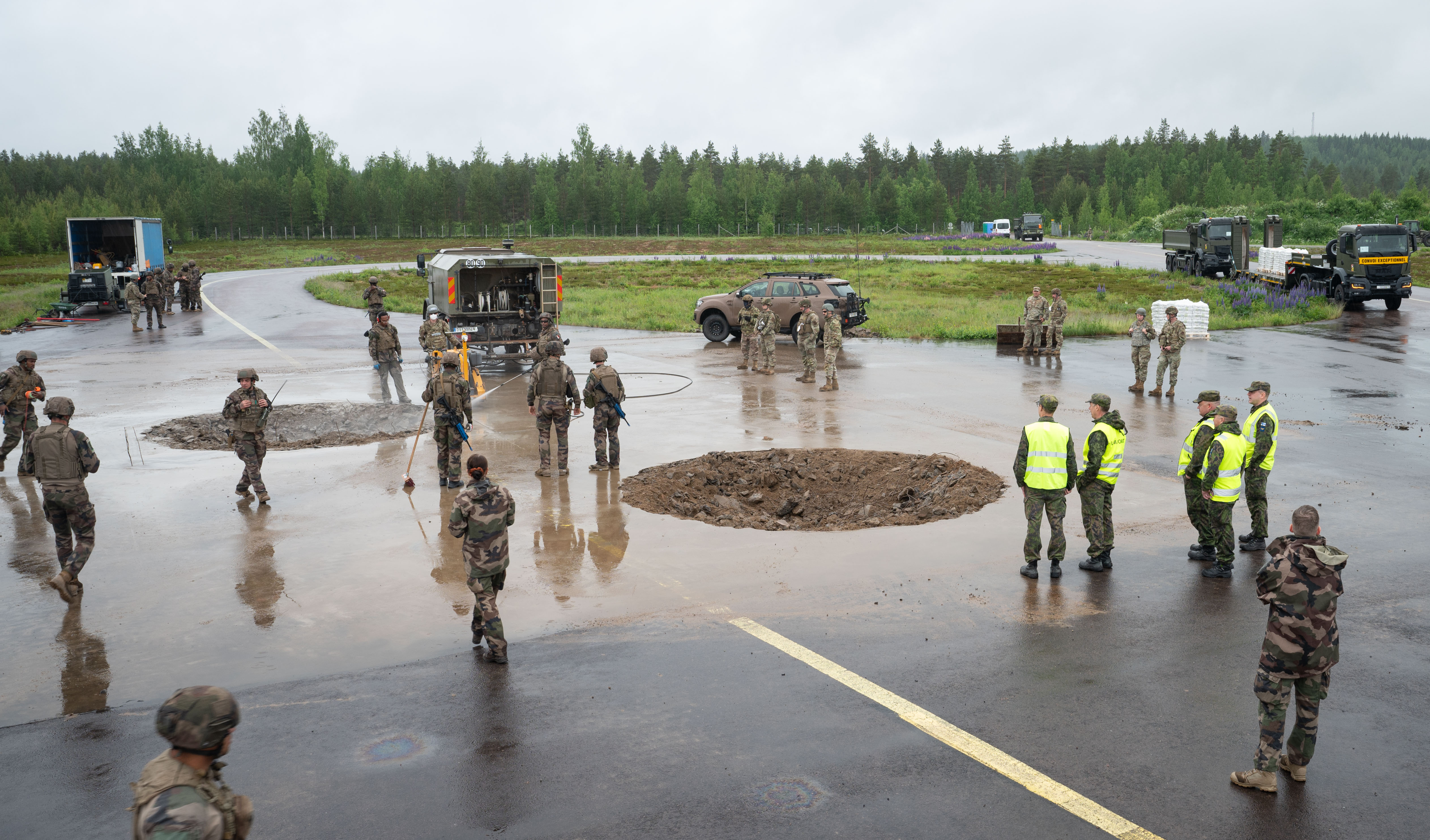
Once the surfaces are up to the required standard – either quick-fixed for rapid usage or more permanently patched – the third phase is the ensuring of the security of aircraft and personnel, which include e.g. the building of shelters and shrapnel-proof walls. This was the phase which was ongoing when we got the opportunity to visit the airfield, and saw a large number of French and British vehicles running around at the construction site, filling bags with dirt and gravel, before stacking them in places designated by the Finnish hosts as suitable locations.
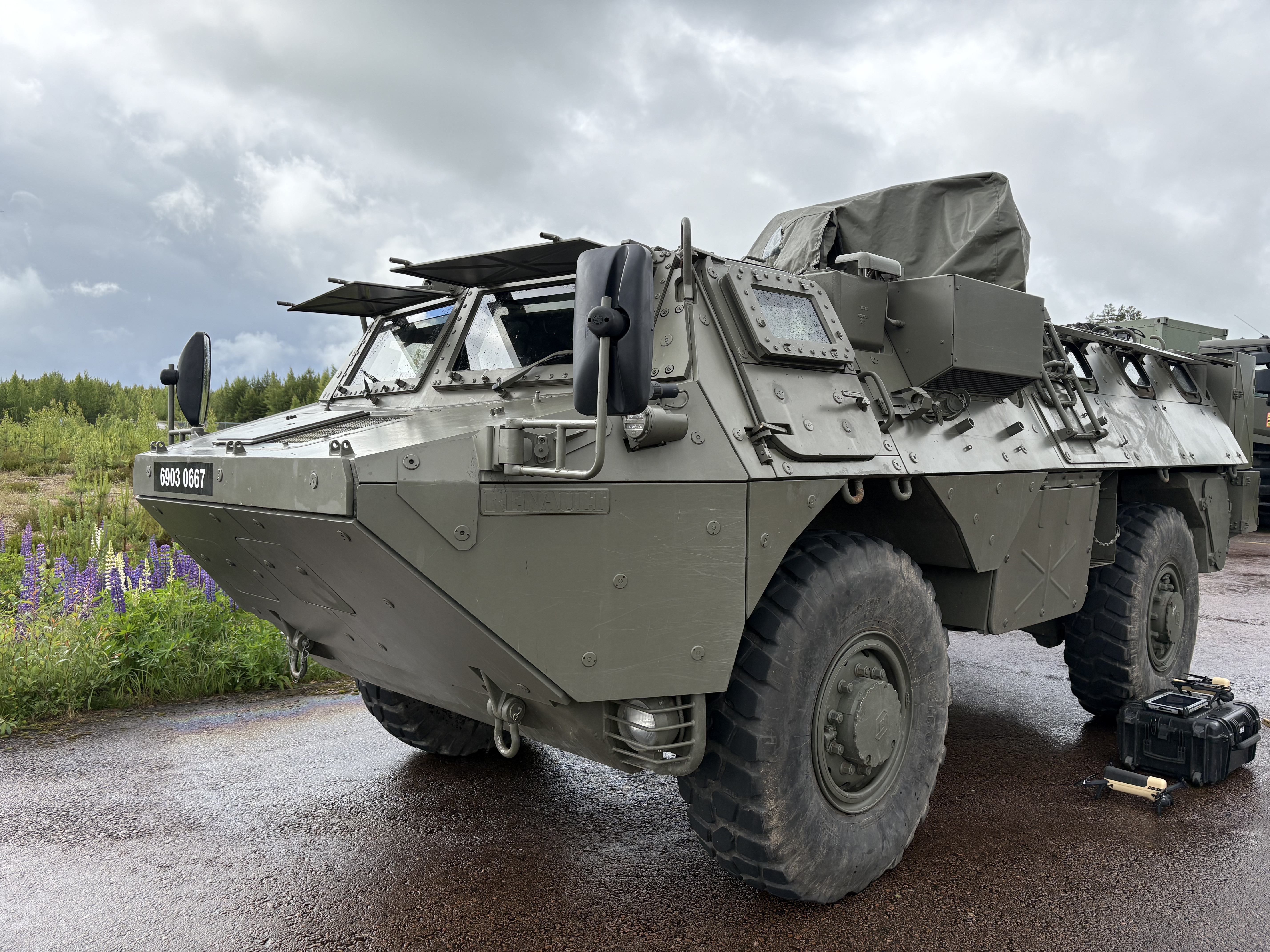
To enable this, the 25 RGA had deployed with a total strength of roughly a reinforced company. This included a mobile command center for the staff, a single recce platoon and two ADR platoons, as well as a number of smaller teams of experts. For movements of individual equipment and teams during the exercise they were supported by the A400M Atlas deployed to the exercise.
The other French ground unit we ran into was the 20 CPA, or commando parachutiste de l’air no 20, which is the force and base protection unit of the French Air Force. While technically not part of the special forces, they are able to handle a number of the mission sets normally associated with SOF, such as counter terrorism, intelligence gathering, parachute insertion, rescue evacuations/EXFIL-missions, VIP escort, JTAC, or sniping things from helicopters. The unit also can deploy their own dedicated vehicles, and have some more niche capabilities such as soil investigation capability to determine whether a specific airfield can handle the aircraft planned.
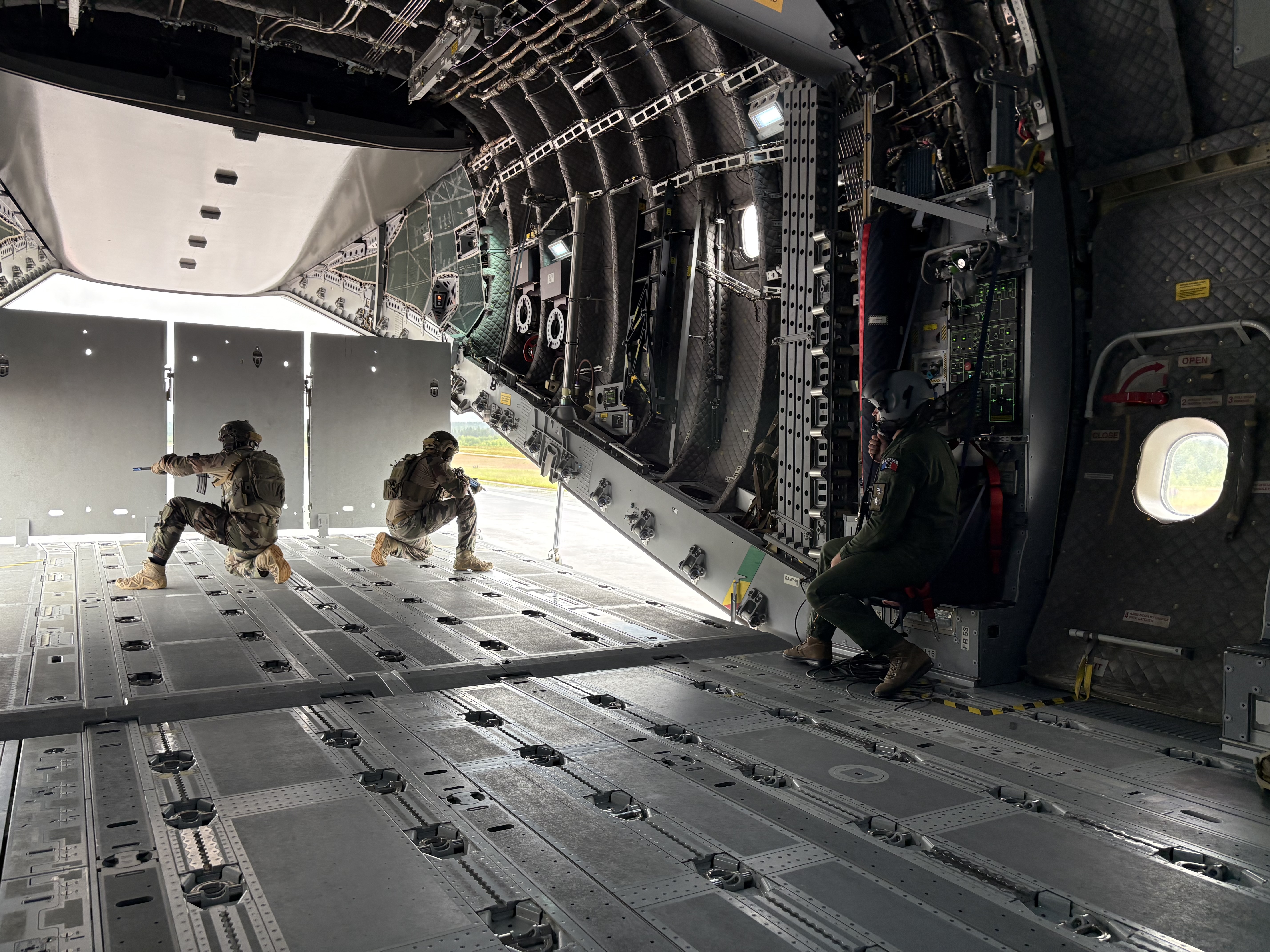
Together with other Finnish and French media, we got to witness 20 CPA in action up close when as part of a transfer to Halli to look at the work done by the engineers there. Our flight saw the A400M Atlas touch down according to what the French calls the ‘assault landing’ profile used in high-risk locations, with the commandos then escorting the media out of the aircraft in a fashion similar to what they would have been using for a high-value delegation disembarking. We’ll get back to the Atlas in a future post, as it is a rather interesting capability.
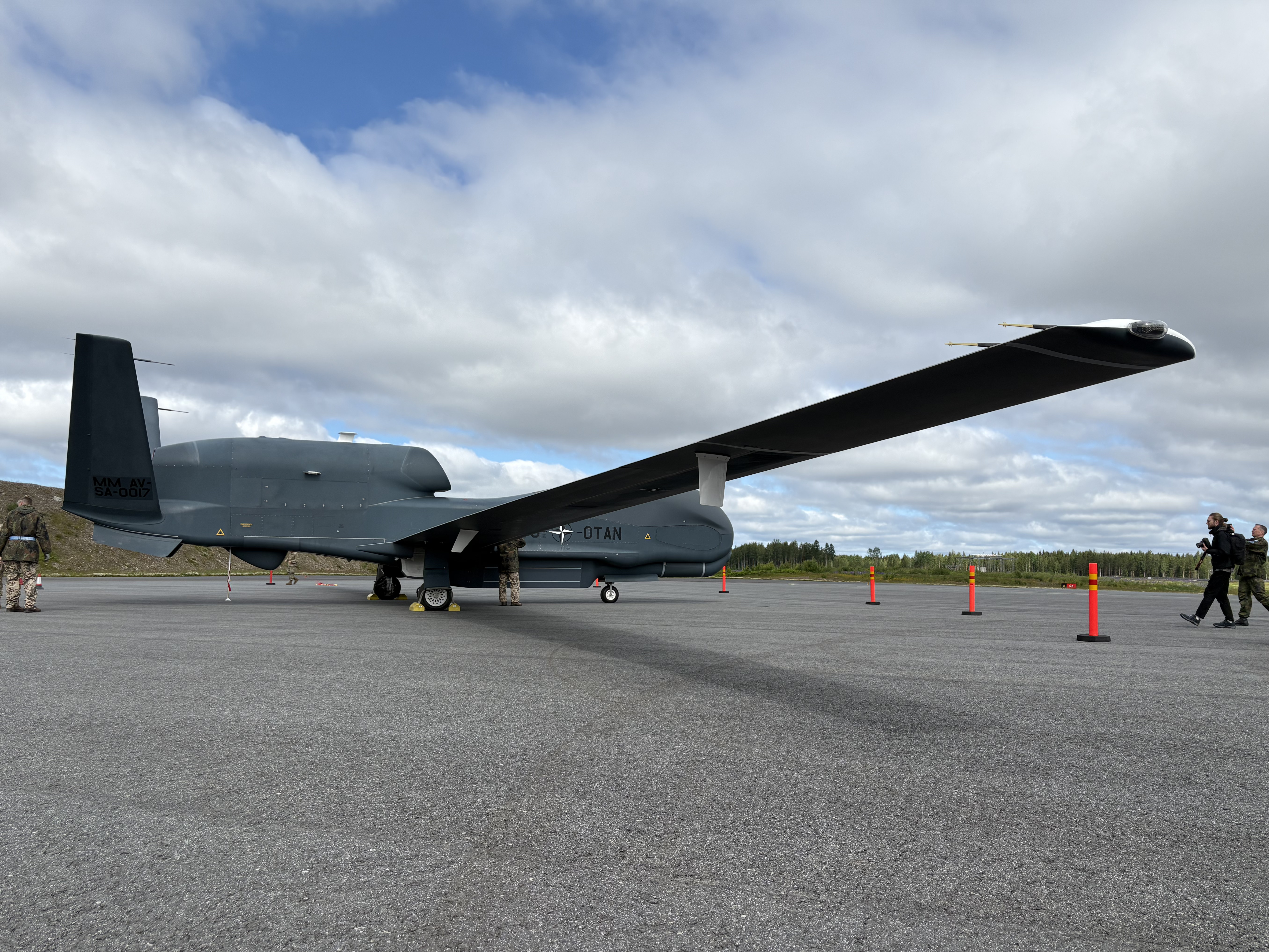
An interesting coincidence – for those who still believe in them – is that while not part of Atlantic Trident, Tampere-Pirkkala AFB also played host to another unusual guest during the same time, namely an RQ-4D Phoenix. This was the first time the RQ-4D deployed somewhere else than its home-base of Sigonella Air Base in Italy. The small fleet of unmanned aircraft based on the RQ-4 Global Hawk-platform is one of the few physical platforms actually owned and operated by NATO (as opposed to members allocating platforms to the alliance for it to use), and while the high-altitude drone is capable of reaching Finnish airspace from its southernly home, there has been an interest in establishing a northernly base to ensure shorter transit times and more time on station, as well as the ability to rely on dispersed bases (or just divert to a secondary base in case something comes up mid-flight). Interestingly enough the Phoenix was still operated from Sigonella, which also is where all the data gathered was processed together with ISR-data from other locations, before being shared with those in the loop. As such, exactly what took place related to the Phoenix in the cordoned off area we weren’t supposed to photograph remained a bit unclear to me, but the RQ-4 certainly is an impressive and strange-looking creature on the ground, and the NATO Intelligence, Surveillance and Reconnaissance Force (NISRF) personnel sounded extremely happy with their three-week deployment to Finland and the work they had been able to do while proving that their main platform is indeed also deployable on an expeditionary basis. It remains to be seen whether Tampere-Pirkkala AFB will become NISRF’s second base, which is an option that has been voiced in media, something that certainly could boost the intelligence gathering-efforts up here in the High North.
 Corporal Frisk
