
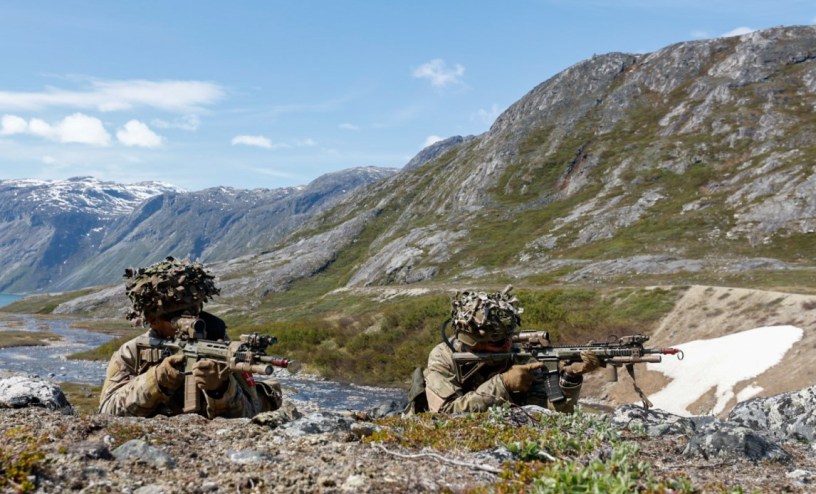
While Trump has had a tendency to chicken out from a number of his more disruptive policy decisions, he has also shown that he is ready to make unconventional decision in areas he has strong feelings about – one of which apparently is Greenland. We are also seeing a number of key people in his administration having very strong opinions about the US getting control of the island, either through force or through the threat of use of force to pressure Denmark. And if there is one thing the Venzuela-experience unfortunately might provide Washington with, it is a feeling that military interventions are a quick and easy solution to complex issues (again, in the medium- to long-term Venezuela might play out differently, but in the short term the experience likely was one of unstoppable power).
This also means that we have officially reached the point where a US armed attack in one form or the other to capture Greenland need to be included as a potential scenario for 2026, because it turns out that at times Trump does exactly what he says. It is easy to call the idea unprecedented, but that isn’t exactly helpful considering this is an administration who makes a living making unprecedented decisions on a monthly basis. It is also obvious that there are not any reasons we would describe as “rational” behind a US invasion. There are some natural resources, but it is not like the Danes aren’t open for business if someone would like to invest in them (and the risk of Denmark nationalising the whole industry once foreign investment has built it up is quite a bit smaller than it is in Venezuela). From a defence point of view the island does sit in a strategic location, which is why the US has a comprehensive defence treaty with Denmark allowing for a number of things, including things the US isn’t currently doing following its drawdown of forces on Greenland after the Cold War. And in any case, the Danish armed forces (together with their friends) have stepped up presence in Greenland and the Arctic more generally, and is investing literal billions of Euros in the capabilities asked for by Washington. However, what is rational to you and me might not be rational to everyone (ask Mr. Putin who made the decision, likely in his mind a very rational one, to invade Ukraine), and it is entirely possible that A) the current US administration doesn’t understand the facts above, or B) we get back to the earlier mentioned motivations of looking for glory, a desire to paint more of the map blue, and personal pettiness.

From a Finnish – or a more general European – point of view, this is extremely bad. You may argue that the Rules-based International Order™ is dead (or that it was, in fact, never alive), but in either case small countries prefer when large ones invading them is as rare an occurrence as possible. For Finland in particular, having tried decades of Finlandization under the Soviet Union, the possibility of Finlandization under the US is not particularly tempting. Crucially, to keep freedom of action in the international space, cooperation with other small countries is a must in the current security setting, and that would become significantly more difficult if these are picked off one-by-one. There are some who argue for appeasement for the length of Trump’s term, and then we can all go back to our normal ways in a few years time, but unfortunately when looking at the current leadership of the governing party in the US, it seems an uncertain bet to make, and we should be prepared for the possibility of this being a long-term course change based on trends dating back to the late 90’s.
To be clear, a major part of my thinking about Finnish national interests on the international stage is that we want to strive to put ourselves in a position where our voice carries as much weight as possible, so that when we encounter a situation where our national interests are at stake, those making the decisions will at the very least listen to what we say – with the full understanding that as a small country at the edge of the world we will never be a major consideration when the major powers start cutting the cake. If you are more of an adherent to the driftwood-school of Finnish international relations and believe history is something that just happens to us, we could obviously just sit tight and hope for the best. However, I find that hope is a poor strategy, and as such it would be beneficial to act.
And the sooner we take action, the better, based on the simple fact that then we are better able to influence the course history will run instead of just reacting to it. Being seen as the one acting early will also give more weight to our voice in later discussions, and I believe there will unfortunately be quite a few discussions of importance in the near future where we very much would like to have a seat at the table and have some influence on the outcome.
This looks eerily much like one of those crossroads of history, where any moves might dictate the outcome for years if not decades.
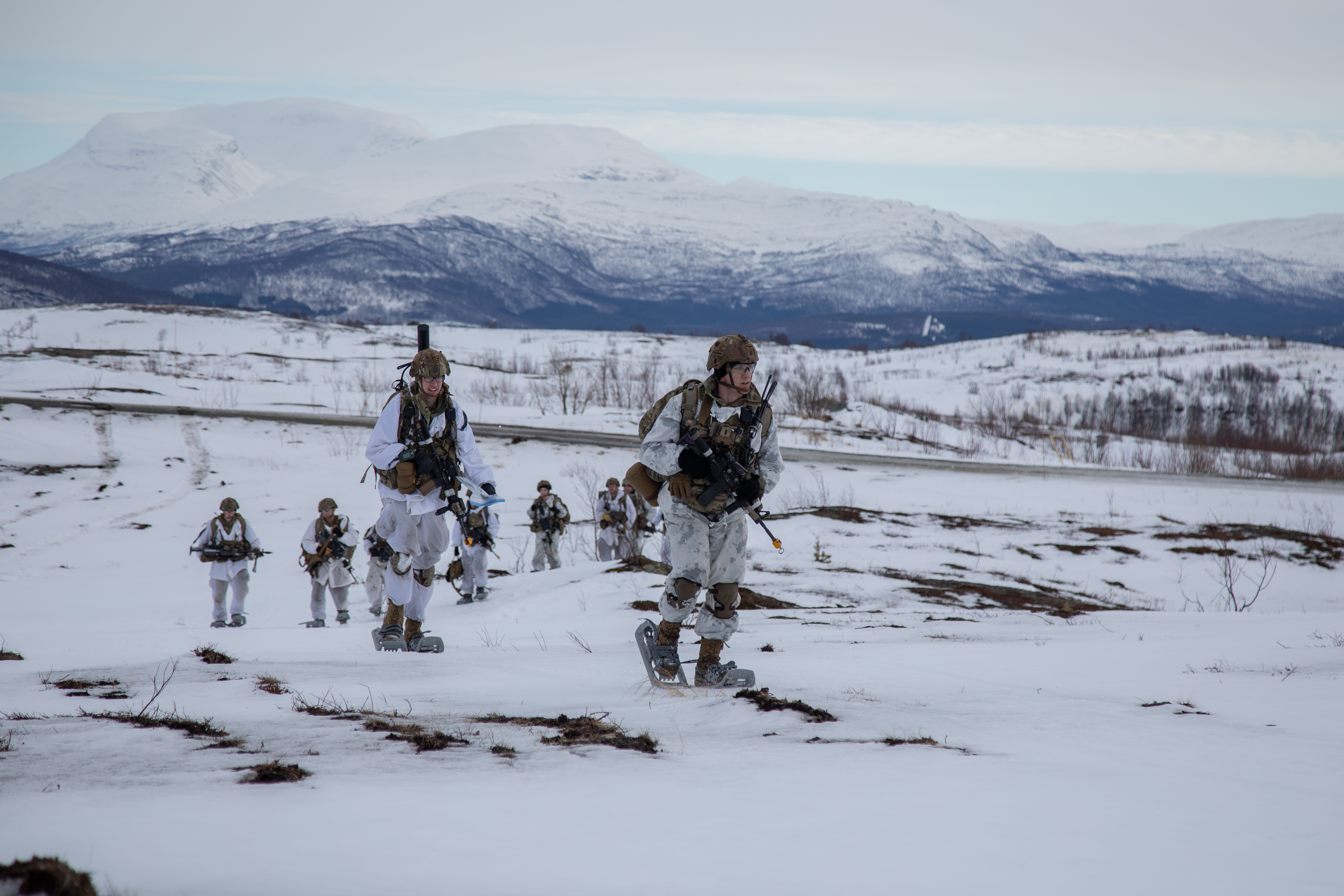
My suggestion at this point is simple: it starts with the Finnish political leadership flying to Copenhagen and asking their Danish colleagues what their plan is for if the US invades, and what they expect from us as both friends (if you believe countries have them) and treaty allies (an undisputed fact of Finnish legislation). This needs to be headed by the president and the prime minister, with the minister for foreign affairs and the defence minister also playing key roles, and it also needs to be anchored with the leader(s) of the opposition. It will also very quickly come to involve key persons and departments of the FDF.
Because the big question is “Will you fight?”
This is not a decision to be taken lightly, but it might easily be one of the most consequential ones that any Danish government in the post-war era will have to take. Because in wars people die, and while it is generally accepted that some things are important enough that the state will have its citizens fight and die for them, the authority to wield organised violence on a large scale is also the highest power any government has.
Knowledgeable voices I hold in high regard has stated that “no NATO country will fight the US militarily for control of the territory“, which is a very dangerous thought for the US administration to hold, as it invites the idea of a more or less bloodless use of force. However, this is where Denmark’s unique history, poorly understood outside of the country, comes into play.
We, Frederick the Ninth, by the Grace of God King of Denmark, the Wends and Goths, Duke of Schleswig, Holstein, Stormarn, Ditmarschen; Lauenborg and Oldenborg, Makes it known. In the event of an attack on Danish territory or on a Danish military unit outside Danish territory, the attacked unit must immediately take up the fight without waiting for or seeking orders, even if a declaration of war or state of war is not known to the commanders in question.
So begins the “Anordning om forholdsordre for det militære forsvar ved angreb på landet og under krig” (roughly “Ordinance of the order for how the defence forces should act in the event of attacks on the country and during war”), an order issued by the king in 1952, and which has been in force ever since. The inspiration obviously comes from 9 April 1940, when Denmark made little resistance and got to suffer under Nazi-German occupation until the end of the Second World War. The so called Kongelige Forholdsordre is general enough in its language that it has survived through the years, but still goes into some details. As a standing order, it is displayed in all garrisons throughout the Cold War and on to this very day, meaning generations of Danish officers, NCOs, and enlisted have served under the watchful eyes of the words of Frederik IX.
Every attack shall be treated as a general order for mobilisation.
False orders to abandon mobilisation or surrender are to be expected, and to be ignored until there are clear proof of these being issued by the correct authorities.
Units under attack or units in the vicinity of these shall immediately, without waiting for orders, join the fight with all available resources. Isolated forces shall, while making energetic attempts to slow the enemy’s advance as much as possible and inflict the greatest possible losses to him, seek contact with other fighting Danish or allied units.
It is hard to evaluate what the impact of this would be when it comes to individual units facing superior firepower from a longtime ally who (like Russia on Crimea) kindly ask people to stay in their barracks and no one needs to get hurt. However, it does feel like the impact of a strategic culture shaped by three quarters of a century of repeating the same message of never giving up without a fight is something that is easy to overlook for foreign observers not spending their whole careers marinated in the message that their outmost mission is to never again allow “a 9 April”. Danish paper of record Berlingske also decided to check its current status, and in case anyone is wondering whether an order from 1952 is still valid, the answer was crystal clear.
The Kongelige Forholdsordre is in force, and until further notice that is the order to any Danish units seeing any part of the realm come under attack.
The first step in creating any kind of deterrence is to ensure that the other side believe there will be a cost. However, this does seem to be where the Danish forces – rightly or wrongly – are suffering from a credibility problem. This is unfortunate, as any decision by Washington then will be made based on a faulty risk calculation (see: Putin deciding Ukraine wasn’t going to fight in 2022). It is crucial to get the US leadership to start asking how many caskets draped in US flags Greenland is worth, and to force them to ask whether they really are prepared to kill allies who they served alongside with both as part of NATO, but also under fire in places like Afghanistan. Because in the aftermath of Venezuela, this is no longer a fun meme-thing that the president and his people can joke about. At some point we have to start preparing for if the words becomes a reality.
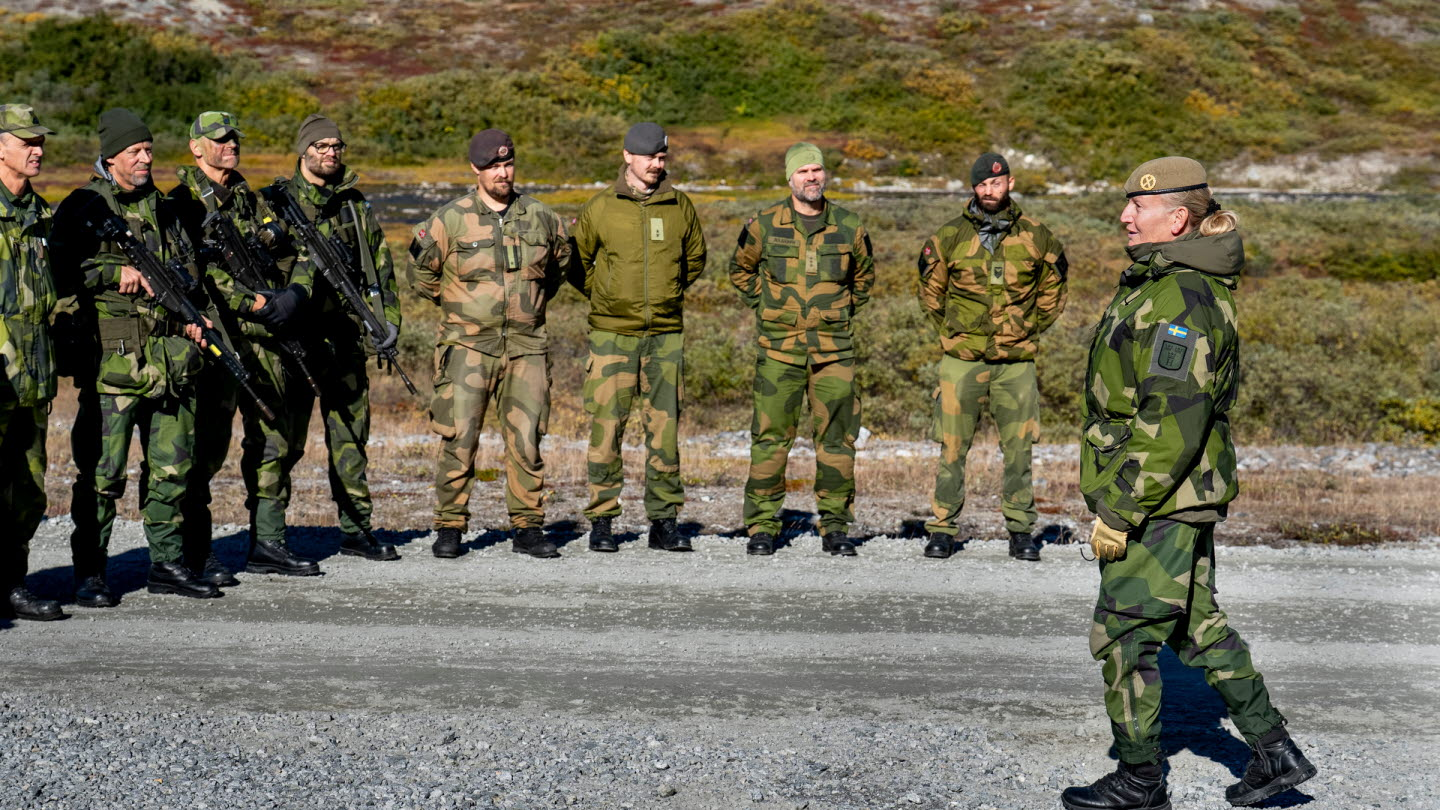
Outright defeating a US attack would be difficult, but even a tripwire would not be without value. In my original tweet over at Bluesky I mentioned that in the best of worlds any Finnish aid to Denmark is coordinated with in particular Sweden and France. The basic reasoning is that the more countries we get involved, the higher the cost as not only is the military capability increased, but it also clearly shows that this isn’t just about picking a fight with Denmark, but with Denmark and her allies. The reason I picked Sweden and France is that one represent another Nordic country, and one which both we and the Danes have a long experience of working together with, while the other is a major European power that has shown a willingness to act in this question. Preferably the list would have included both the UK and Norway. The former as both a close ally to the Nordics and in its role as the second major European power, but I had some doubts about their willingness to risk their special relation (which, funnily enough, is how we liked to describe our Finlandized relation to the Soviet Union), something that Home Office Minister Mike Tapp (not to be confused with the actual cabinet minister) then did his best to confirm in a rather strange interview by refusing to say that Trump shouldn’t invade Greenland, even if Starmer later has been somewhat more forthcoming. I have a similar worry with regards to Norway, which should be the first to rush to Denmark’s aid due to their own interests in Svalbard, but instead might opt to try appeasement.
So, the ideal response is to deploy troops to Greenland as soon as possible, which can be done with officials claiming that it is simply a response to Trump’s insistence on the island being too weakly defended, while at the same time making sure through more discreet channels that no mistake should be made, these ones are there to defend it against any possible aggressor. Because for a deterrent to work, the units involved must be ready to fight if called upon, so while we can call it an “exercise” unrelated to current threats, for it to work there can be no question that the units deployed aren’t combat ready. This also means flying in munitions and spares on a scale not normally seen during exercises.
This is also the point where we Finns need to ask ourselves if we are not prepared to send our army to defend our Nordic brothers and sisters when they are threatened by attacked from a larger enemy, what is the scenario when would we come to the help of our allies? And consequently, when do we trust our allies to send their sons and daughters to bleed for us if we are attacked?
To be very blunt, we need to make a decision about whether Nordic countries being invaded are something worth fighting for, or whether we – to paraphrase Mannerheim’s bitter words at the end of the Winter War – will decline to help our neighbours due to concern for our own house. This decision again shines a spotlight on the fact that – and I say this as a life-long NATO-supporter – in certain quarters the decision to apply for NATO-membership was perhaps not thought through as an assessment of obligations and benefits, but rather simply as a way of ensuring that others will come to our aid if Russia invades. As a matter of fact, the answer to the question of whether we will aid Denmark has already been given by the Finnish parliament years ago, the only question now is whether we will honour our promises if called upon?

What could Finland then do to support Denmark and the inviolability of their borders? Surprisingly much, actually. If we start looking at the individual capabilities of interest here, Denmark is only just rebuilding its ground-based air defences, and as such SAM-batteries would probably be very welcome in particular as any US attempt at taking Greenland would include a significant amount of air power and airmobile operations. The same goes for sea denial systems such as anti-ship missile batteries and naval mines (I am not jealous of the crew who would get tasked with taking one of the Hämeenmaa-class minelayers over the North Atlantic in winter conditions, but hopefully if France is along they can at least ask to get some freshly baked croissants if they meet up with a French frigate). In addition, mass is always nice in combat, so deployment of winter-capable infantry units is likely appreciated, something which Finland is rather well-equipped with (light units being a good option thanks to their lower logistics needs compared to mechanised ones). And with the FDF enjoying (at least for now) the backing of NATO, having a very limited number of ongoing foreign deployments, and the Russians being occupied in Ukraine, we most certainly are in a situation where the FDF can afford to send an expeditionary force of a few air defence batteries, a mineship, a coastal defence battery, and a battalion-sized battlegroup to Greenland without it endangering the defence of our eastern border.
Which again brings us back to one of the basic issues with the current Finnish situation. There is nothing stopping us from having a reservist-based force while part of NATO, but that means that when our alliance commitments calls for a warfighting capability, we will need to send reservists. And while I appreciate politicians taking the first careful steps towards recognising that Greenland may yet turn out to need to deploy some kind of a force to it, I would appreciate a clear message to the voters that everyone understands that with the reservist-based model being the one that we employ and one that enjoy broad backing, the soldiers deployed would be mobilised reservists. Or alternatively we need to create ad-hoc units instead of relying on the planned wartime ones, with the budgetary costs and greater organisational disturbances that causes.
Because this is how the world looks right now.
 Corporal Frisk