
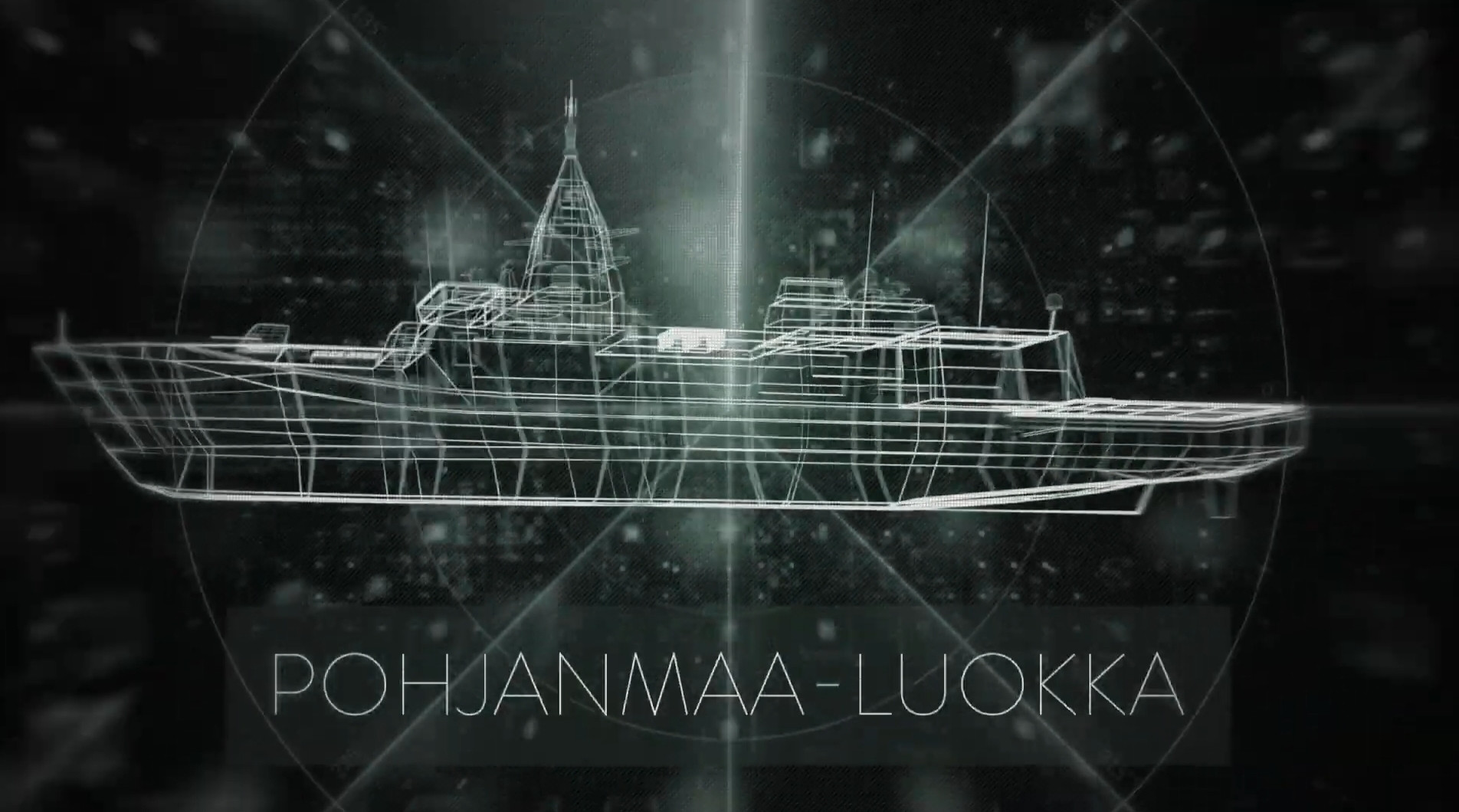
Sit down comfortably people, because it’s time to speculate about VLS-cells. The Pohjanmaa-class is now finally being built, and it will get the new and upgraded ESSM Block 2, both things which you know if you saw my recent piece at Naval News. The Block 2 is a significant boost to an already very capable design, but now a new little clip from the FDF dropped over on YouTube. Nothing revolutionary, but the renders are showing that the design is being finalised, and an interesting detail can be spotted. Maybe.
Between the deck gun – a hand-me-down 57 mm Bofors left over from the Hamina-class which in turn downgraded to a 40 mm gun to balance the weight increase of the MLU – and the superstructure are the Mk 41 VLS. These come in batches of eight launch cells, and will hold the air defence missiles for the vessel. The first few wire frame clips seem to show two batteries of eight. That’s 16 cells, giving 64 missiles if quad-packed, which the ESSM is. A decent load if you don’t plan on using the cells for anything else, which for the time being seems to be the plan -note that the Navy refers to the combination of the ESSM Block 2 and Mk 41 as the ITO20 (Air Defence System 2020). One or two batteries of quad-packed missiles is a quite typical fit for European corvettes and frigates, with e.g. the Norwegian Fridtjof Nansen-class fitted for two modules (though at different times only a single one has been installed). As such, that is to be expected, and I am happy it isn’t a single eight-cell launcher, as I would not have been completely surprised if that was the case.
However, now the intriguing part comes, as just a few seconds later a full render comes up, and that seemingly shows four cells in a 2 x 2 pattern.
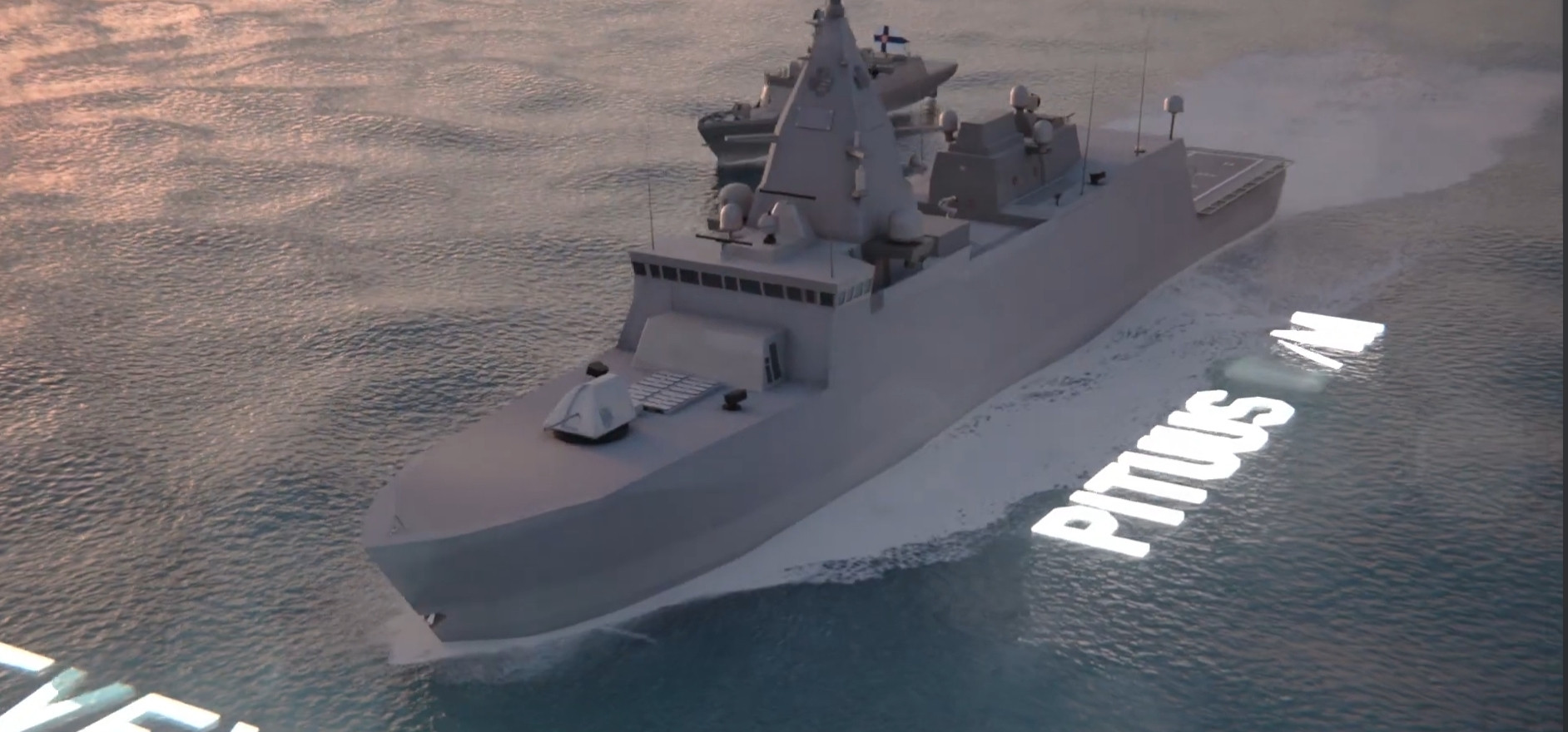
Now, renders are somewhat tricky, and YouTube isn’t the world’s greatest way of sharing media. But it does to my eyes look like we are seeing four distinct squares, with each square holding two rows of four lids. A comparison can be made to the aforementioned Fridtjof Nansen-class. While somewhat longer and heavier, they sport the same beam as the Pohjanmaa, meaning that looking at how broad a single cell is on their foredeck should give a sense of proportions.
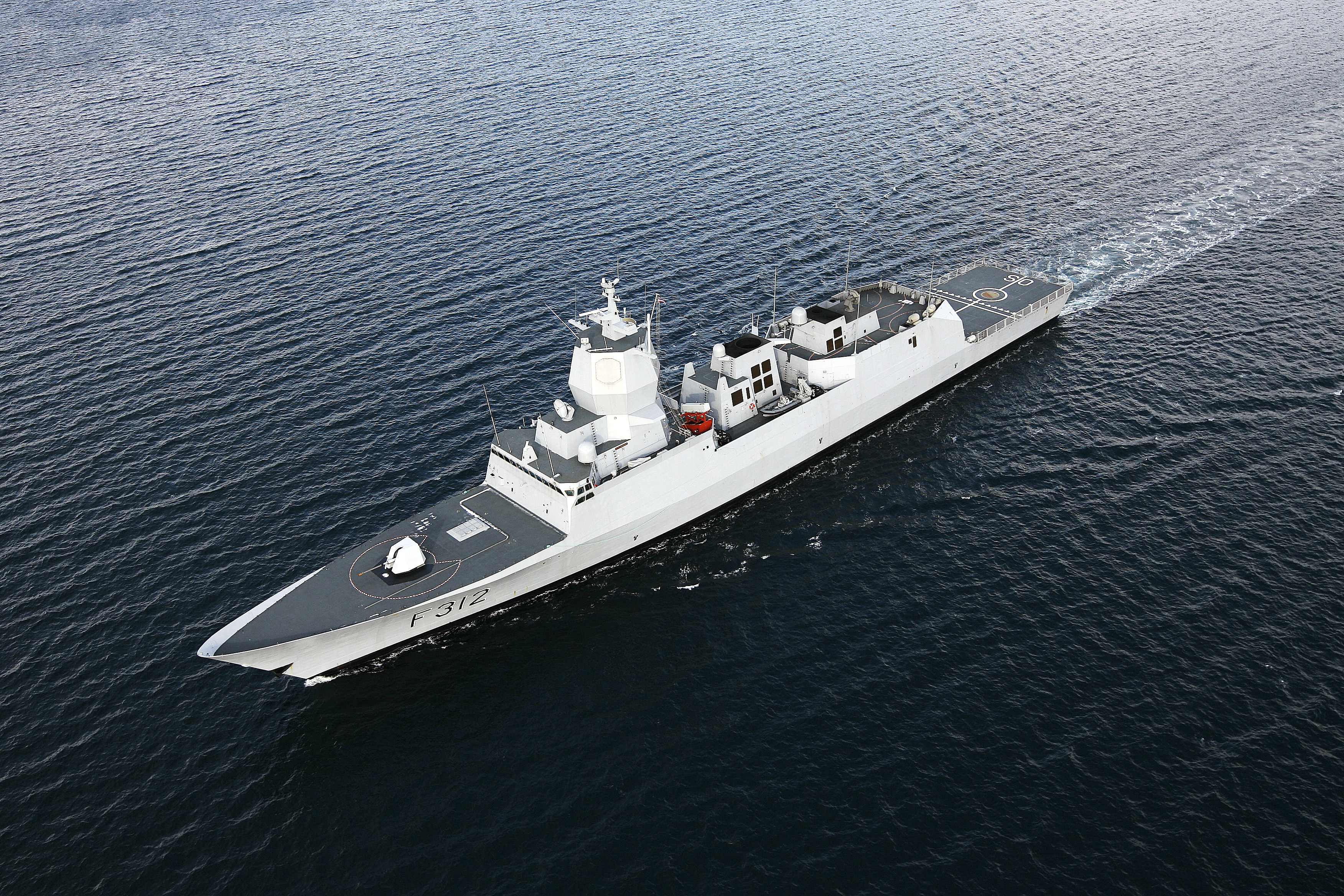
This does seem to strengthen the idea that the render shows the Pohjanmaa able to take not one, not two, but four eight-cell Mk 41 launchers. This isn’t unheard of in a vessel of this size, but we are at the very edge of the launchers per tonnage-ratio for frigates and corvettes. The current German air defence frigate, the 5,700 ton F124 Sachsen-class as an example sport the same 32 Mk 41 cells, though in addition it also has two 21-shot launchers for short-range RIM-116 RAM-missiles. The British Type 26 (6,900 ton) has 24 Mk 41 cells for larger weapons, and 48 dedicated cells for the Sea Ceptor air defence missiles (roughly similar to the ESSM in capability). The FREMM-class is another design in the 6,000 to 7,000 ton range – depending on exact version – and in the air defence versions sport a relatively limited complement of 32 (French version) or 16 (Italian version) Sylver-cells, which basically is the European system corresponding to the Mk 41.

Now, all of these are significantly larger than the Pohjanmaa, but it should be noted that Finland traditionally hasn’t shied away from fitting a lot of weapons to relatively small hulls. In part this has come down to the concept of operations, where operations close to shore means you can make do with less space reserved for stores, fuel, and crew spaces, as endurance isn’t as critical. However, it isn’t out of the question that it could carry over to the blue-waters, as globally several navies are fitting more launchers to their hulls than is typical in European waters.
The really interesting thing is not necessarily the ability to fit 128 ESSM to each vessel, as that might be a bit of an overkill for most of the envisioned missions and would cost. A lot. However, what it does mean is that larger weapons can be carried, without significantly reducing the number of medium-range missiles kept for air defence. While Finland has so far not ordered any larger weapons, the straightforward nature of the Mk 41 and the powerful sensor suite and combat management system of the Pohjanmaa-class means that they could rapidly unlock even further mission sets if NATO’s capability targets so require. The obvious candidate is to give the vessel’s air defences even longer reach, with the Standard-family of missiles.
The Standard-family was born 70 years ago, when the US Navy wanted to standardise on a single family of missiles following the early developments post-war. Here is a rather nice Raytheon-made YouTube-documentary for those interested in the backstory, but the tl;dr version is that through standardising components, a whole family of air defence missiles was born, which has continued to be updated throughout their career and has seen long and stellar service all over the world, including in combat. The issue for Pohjanmaa is obviously that any member of the family hasn’t been integrated with Saab’s Giraffe-radars, though the fact that a number of European operators sport Thales-made radars give an indication that it likely can be done.
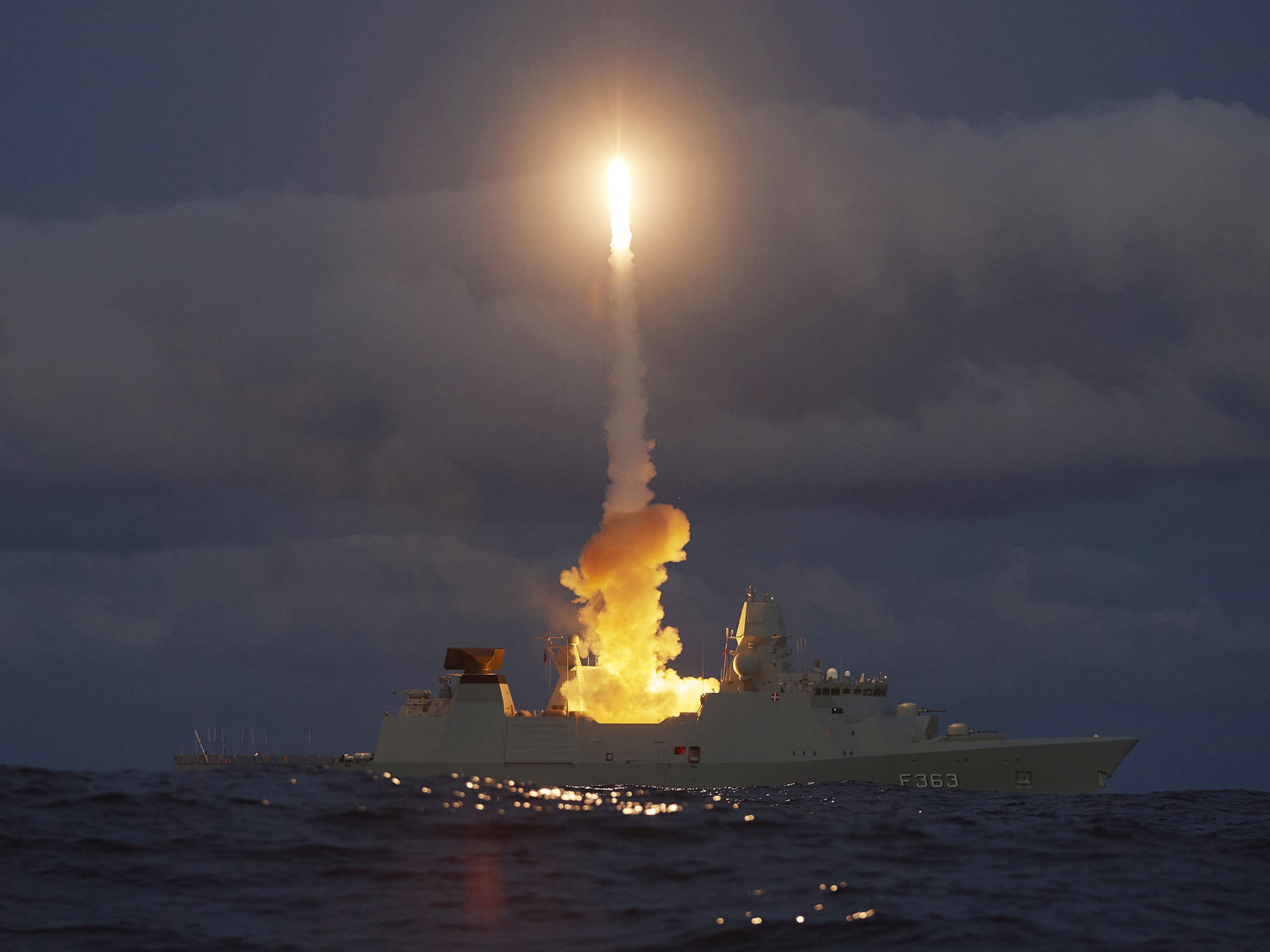
The basic missile is the SM-2, which gives a seriously increased range compared to the ESSM, and is in operational service with a number of our close friends and allies (it still feels really good to be able to say that), including Denmark, Germany, Poland, the US, and Canada. It also sports a secondary capability as an anti-ship missile, though in that role it is more of a back-up weapon than a first choice. It is often described as ‘medium-range’, which is the same terminology used for the ESSM. However, for the SM-2 we are looking at 150+ km, while the ESSM has a 50+ km range. While these numbers are always given with caveats, it deserves to remember that a tripling of the radius gives a covered area that is nine times greater (due to the area of a circle being based on the radius squared).
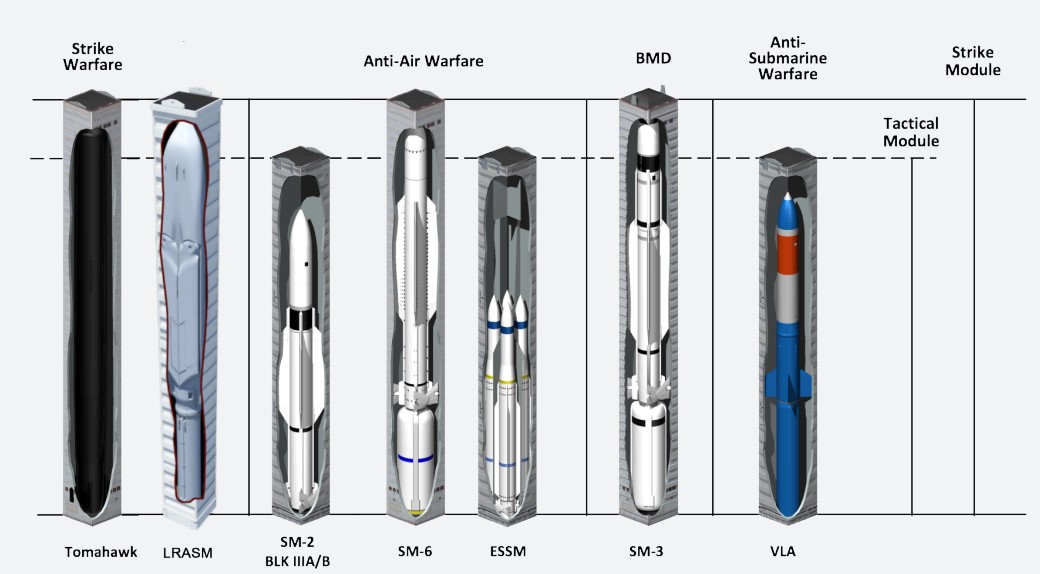
A short caveat – we still don’t have official confirmation of the length of the Mk 41 modules of the Pohjanmaa. If they are the shorter ‘Tactical Module’ the choices are limited to ESSM, SM-2, and VL-ASROC. That ‘limitation’ would still allow for one of the more solid air-defence loadouts among European vessels. However, the ‘Strike’-length does open up for more varied weapons, and if the amount of cells fitted really is 32, I wouldn’t be surprised if part of the reasoning is the possibility of carrying a more varied weapons load, which would make me lean towards ‘Strike’-length cells.
Enter the more exotic (and costly) members of the Standard-family, such as the (eye-wateringly expensive) SM-3 designed to intercept short- and intermediate-range ballistic missiles, with a proven capability against satellites and ICBMs as well. A really interesting weapon is also the SM-6 long-range surface-to-air-missile which serve alongside the SM-2 on USN vessels. Exactly how much longer the range is is unclear, and the US Navy keeps testing ever more intricate variants, but it is way above 240 km, perhaps over 350 km in the most recent versions. The SM-6 is also anti-ship capable, has an anti-ballistic missile capability, and apparently feature a nascent capability against hypersonic glide vehicles. But the price tag means that while extremely capable, it won’t replace the SM-2, and any export order by a small- or medium-sized would be for a limited number of ‘silver bullets’, likely to be fired only as part of joint-targeting under a common NATO-plan.
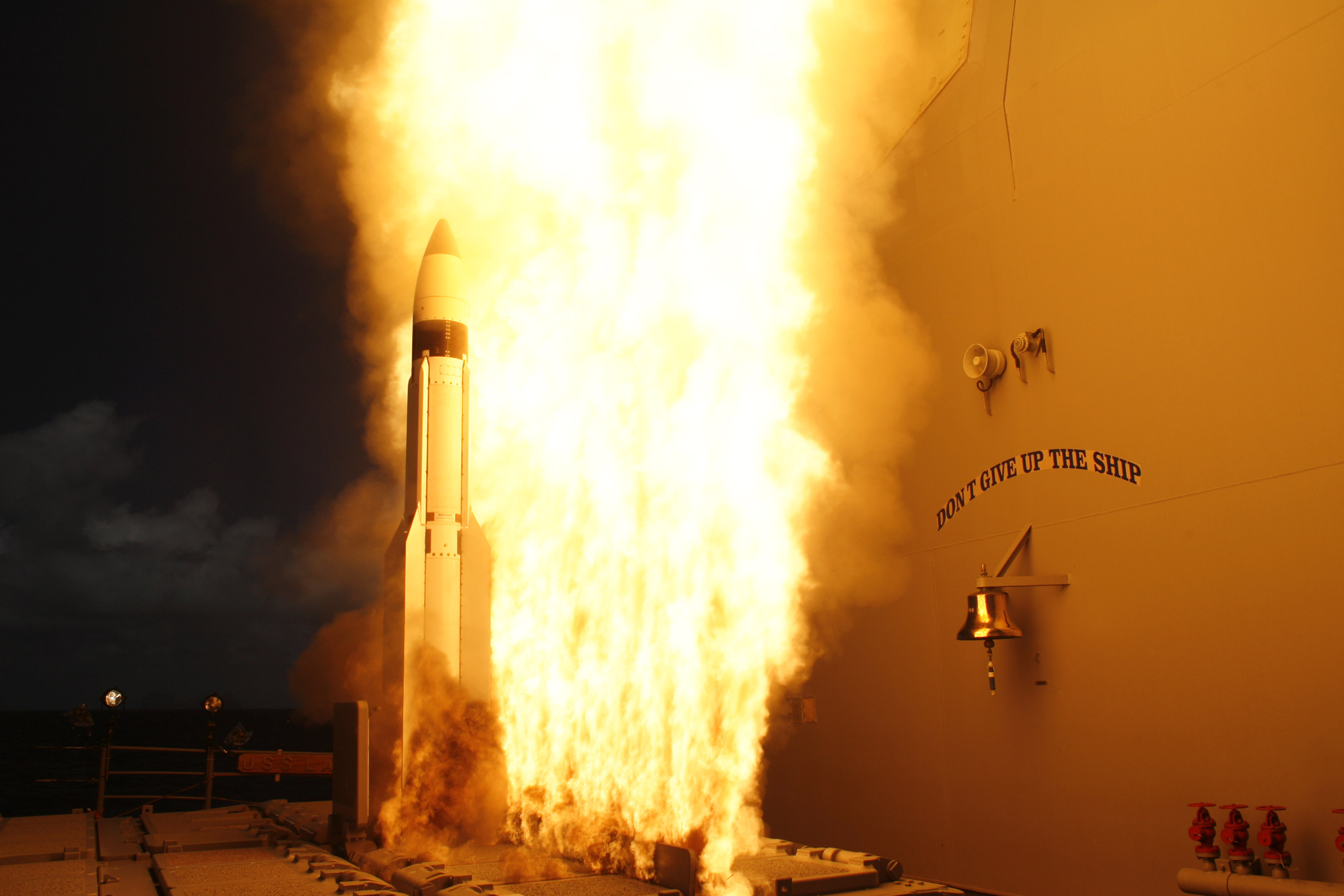
Putting to sea with a mixed load of e.g. 16 SM-2 and 64 ESSM would give a completely different kind of air defence coverage, both for coastal areas and on the open seas (interestingly, while the SM-2 is more expensive than the ESSM, it isn’t four times as expensive, so this loadout would actually be cheaper than an all-ESSM one). Cough up something along the lines of 10-15 millions, and we could even bring an SM-3 along, to shoot down a satellite or intercept an ICBM, likely with another vessel or ground-based radar working as the sensor spotting the target.

It also open up the possibility of non-air defence missiles. The obvious alternative is the Tomahawk cruise missile, which in addition to the US Navy and the Royal Navy is going to arm e.g. the Dutch frigates. The Tomahawk likely needs no further introduction, but lets just give the short version and say that it’s a weapon that has seen thousands of combat launches, has a range well in excess of 1,500 km, and would certainly be a serious contribution to the FDF long-range precision-strike arsenal. As mentioned, a more obscure alternative is the RUM-139 VL-ASROC (or simply VLA), which in essence is a missile that flies out and drops an anti-submarine torpedo on a designated spot, or the boosted LRASM which is the anti-ship version of the JASSM fitted to an ASROC-booster, which provide a heavy anti-ship missile out of a Mk 41 cell (the weapon has been successfully demonstrated, but not ordered into production).
As noted, all of these weapons can be fitted into Mk 41, regardless of whether you have eight, sixteen, or 32 cells, but the quad-packed nature of the ESSM means that you start to quickly lose a large amount of your primary weapon if you want to start mixing in heavier missiles. Eight SM-2 and 32 ESSM simply doesn’t provide for the weapon numbers to be able to fight a prolonged battle either at medium or at closer ranges, in particular as the Pohjanmaa lack a true close-in weapons systems such as the RIM-116 Rolling Airframe Missile. 32 cells offering a combination such as eight Tomahawks, eight SM-2, and 64 ESSM is already a load that wouldn’t look out of place in a NATO North Sea task force, and would provide a land-attack capability, a limited area air defence capability, and a serious medium-range air defence capability any task force commander would be happy to have in his or her force.
If it turns out that the render is just too blurry and the number of cells actually is the expected sixteen, this post will go down as a somewhat-useful-but-not-really look at what a larger number of VLS-cells would open up when it comes to realistic opportunities. However, in the meantime I will start tying my shoelaces. Just to be on the safe side.
 Corporal Frisk
The new rendering of Pohjanmaa seem to show only one RWS located in the right aft corner on top of the hangar. Has one of the RWS aft been replaced by two manually aimed 12,7 mm located amidships? Maybe there are no RWS at all any longer?
There’s one RWS left, the “kauko-ohjatut aseet” mounted to starboard on the rear of the superstructure.
DSCA approved 4 Mk41’s in strike-lenght, so it’s still going to be just one for each ship, if that doesn’t change. Render is showing that it is possible to fit two in the future. Miniature model has one fitted and room for a second one. There is also just one Trackfire or something similar in the rendering. That’s not enough even if there is two of them. Let’s say there are tens of ‘sea-lancets’, something cheap so big quantities, but still big enough to harm the ship, attacking the ship from the rear. Maybe a Millennium Gun would be better than two NSVs with joysticks. Or are these ships just for naval mine warfare and other Nato ships are going to help them to do that? It’s so stupid to spend so much money but not the last tens of millions for real CIWS. Let’s hope there are more news, but now the ships look weak.
I can assure you that the 68 missiles in the DSCA isn’t the final number either, and if you read closely you will notice that the *whole point of the text* is that this latest render seemingly doesn’t match the earlier info.
Very interesting development. Newest version of the American missiles (ESSM Block II and SM-2 Block IIIC) dosen’t even need an illuminator radar, so it should be able to integrate into the S-band radar of the Pohjanmaa the same way that it will do on the AN/SPY-6(V)3 on new constellation class frigate.
There has been a semi-guidance solution implemented for the ESSM already – which I assume is the CEROS 200 as we know it is coming and can have an X-band CWI-module. ESSM and CEROS 200 is also a tried and tested concept, but would it take SM-2 is more open. My understanding is that the Standard Missiles can be guided by X-band fire-control radars (case in point APAR), so that wouldn’t automatically rule out semi-active versions either.
I would think for a Finish (NATO Baltic) purposes, Air Defense with possibly the ASCROC would be the load out. Your F/A-18s or the F-35 can launch land attack missiles with good range
I never saw the Russian Naval presence in the Baltic as anything other than iffy and that was before Poland and the Baltic States joined NATO. Basically it would be shooting ducks in a barrel (US saying) and Ukraine has proven how fragile Naval presence is (or at least the way the Russian have worked it). Essentially Ukraine with no surface fleet and minimum air presence (some strik3es on Snake Island) have chased the Russian Navy away from even the central Black Sea.
Air defense would be the one mission needed and a ship being flexible as to location could also aid Ballistic and Hypersonic Missiles (are they not the same?).
One area I thought the Constellation Class choice was stupid was the limit on the 32 cell system from the FREM. The F-100 class had 48 and its clear that you need all the anti missile load you can get (reloads current in port only). The 57mm gun on the Constellation is also a joke. Militaries can be weird. The F-100 was virtually a US systems on a Spanish hull, talk about a plug and play.
Yes, but with the F110 (very ASW oriented, that is true) Armada is back to 16 Cells MK41 Strike…maybe the combination of 8 sm2 and 32 ESSM is not that bad.
In Spain many consider the 16 cell choice for the F110 a poor solution, even considering that the main AAW asset in the Armada are de 5 x F100 frigates with 48 celll each. Some rumours have been leaked about the ARmada studying the order of two additional F110…this time, with 32 cell VLS!
Theater level AD and BMD is the right path for these assets, we also need an BMD treaty with the US.
The Typhon Weapon System offers Tomahawks and SM-6 as land based, it would be a perfect fit for us together with these ships.
I think Finland deserves FMF from US for these and from any programs the EU can actually get done.
I will repeat my recommendation to donate the Rauma-class to Ukraine.
Use any freed up resources and personnel to equip and train for the Pohjanmaa-class and enhanced operational rotation for the Hamina-class.
Maybe we can actually claw back some of the delay.
Mandatory comment for Smokerr, the 57mm is no joke, not for this class or the Constellation-class.
With all due respect, when a tank has 120 mm gun today and you put a 57mm gun on a major warship? Even the 76mm ship gun has close to the same rate of fire and you get much larger affect out of the shell (if air defense is the goal – that is what comes on the FREMMs so a dumb down).
57 mm is what we put on Coast Guard ships (and the failed LCS). The F100 class comes with a 5 inch gun.
If AD is the goal the 57mm is the best gun on the market just with the standard 3P shell, MAD-FIRES settles the matter.
I would actually like to see the 57mm Bofors on a MBT or IFV..
And it is all about AD and ASW in the Baltic and generally regarding the NATO theater of operations.
I can see a role for larger guns in destroyers and cruisers but as a luxury for these smaller escorts and multirole ships.
As noted, the 76 mm fires almost as fast and longer range along with its much larger shell (payload, warhead). None of those guns is an anti conventional air gun as any fighter will have a long distance launch capability with at minimum bomb glide weapons far beyond the range of a 5 inch let alone 57mm.
30 mm weapons are preferred on AFV, its a trade off in ammo capacity and capability. So no you will not see the 57 mm on any kind of AFV. For those rare cases an anti armor rocket is the way to go (more and more 3 seeker head rounds)
At best the 57mm is capable for drones of all types, but there is a reason the CIWS systems are 20mm or 30 mm gattling gun types as those can hit fast incoming missiles.
The 40mm guns were considered deficient toward the end of WWII (thugh very highly regarded prior) and the 75 mm (US 3 inch) anti aircraft guns were considered the best between output and affect (40 mm and 5 inch). Some AFV have moved to 40mm but at a reduction in ammo carried and its a bit of a toss up now as to what an AFV is supposed to do (support troops or fight other AFV)., You are better off with a Javelin and more ammo for troop support (per the consensus of who is going with what). No one in the armor world is considering 57 mm.
The larger the gun the wider the options and a Constellation is fully capable of the 76 mm and as it is supposed to be in the F-100 variant and equal offering, 5 inch is likely easily done.
Keep in mind the same idiots (US Navy Admirals) that brought us the failed LCS bring us the Constellation that is hugely modified from the FREMM vs a plug and play F-100 type.
Constellation is better than an LCS by far and better than nothing but not what it should have been.
I meant as SPAAG for its ability against drones, loitering munitions, missiles, rockets and aircraft.
Mark 110 57mm can hit fast incoming missiles with the ammunition I mentioned.
The 57mm Bofors is superior or equal to the OTO Melara 76mm in most categories except in a gunnery duel or naval surface fire support.
Neither is a high priority for the Pohjanmaa or the Constellation.
In a very rough generalization I see the Constellation as a way to free up DDGs to the Pacific AO.
And actually the are many AFV concepts looking at using 50-60mm guns, including in the USA.
With all due respect, the 76mm has much larger shell and that in turn means more blast radius. The shells can be smarter. I was wrong on the rate of fire.
We are not going to disagree on that issue obviously.
As for AFV, while they are looking at 50mm+, the reality is that to do so for rare cases of use vs the support for troops means 30mm is as large as you want. If you need more then the TOW pack on the Bradly or better yet a Jav mounted on the turret gives you superior range and lethality (fire and forget) vs trying to take on other Tanks of AFV (in fact a Jav allows you to take on a MBT if needed)
Keeping in mind, tank on tank is pretty rare, vast majority of the time an MBT or an AFV is supporting troops.
I think its worth noting that in WWII against Kamikaze, the 3 inch gun was determined to be superior to even 5 inch (trade off in range and blast vs numbers) and the 5 inch had sensing shells.
I agree that a modern ship is unlikely to be in gun range of another ship, but what happened in Leyte Gulf should not be forgotten, the enemy has a say and they don’t do what you think they should.
This is a good view of the 57 mm system and how it works (and the rate of fire is limited by the shell type selection as well as the limited magazine).
https://chuckhillscgblog.net/2023/08/19/bofors-57-mm-mk3-mk110-naval-gun-reload-works-video/
And the 76mm. Drawing from the magazine below, it has a long duration faster overall operation as well as not compromising on the shell type.
https://www.youtube.com/watch?app=desktop&v=mn51wKAeApA
Damn it, why can’t we put RIM-116 systems on the warship? In the conditions of battle in the Baltic Sea, the enemy attack on the warship will be very massive.
What is massive?
In my estimate the enemy does not have the capability for a massive attack.
You would think that in the most vulnerable missions and scenarios, escorting an landing or other shipping, the ships will operate with a Hamina-class screen or allied ships.
If operating in the BMD role they would be in return covered by land based AD systems like the David Sling and NASAMS.
The Bofors 57mm with all the different ammunition available is more lethal than the RIM-116 and the Bofors 40mm of the Hamina-class is no joke either, not even mentioning the missiles.
As Finland will not be operating in the Pacific that would be true for Finland, but you can never have too many missile cells. What you sail with is all you have for extended periods of time.
Realistically the Baltic is a dead zone for Russian threats. We are talking about a deterrent and not its going to be used.
Yes, I am all for the maximum amount of VLS cells but I dont see the RIM-116 as a must have system.
For extended periods at sea the Pohjanmaa needs logistics ships anyway and there is a fleet train program also coming up.
Traditionally Finnish Navy has a very good forward naval logistics capability within its own AO.
The threat is real regarding missile defense and ASW in the Baltic.
They will go for smaller but heavily armed surface units and build up the submarine fleet.
A few thoughts about.
1 – the beginning of the war means that until the allies arrive, only own forces will be used. On all fronts, in all environments
2 – hunting large warships is actually their crazy purpose in life. Let’s remember Väinämöinen and Ilmarinen.
3 – massive attacks by swarm of cheap drones, add here a salvo of anti-ship missiles in sea skimming mode. Detection range and interception costs become critical both quantity of shots.
4 – the use of Mk41 cells for other munitions reduces space for ESSM. The interception capability can be partially expanded using the RIM-116 system.
Hans:
I agree on the threat problem, but BMs would be far fewer than drones.
All Platforms need to maximize drone attack removal. Big drones of course are worthy targets of any of the interceptor missiles.
Best combo I have seen is the CIWS with both the 20 (or 30mm) gatling and the Stinger.
76 mm for the far edge of that type engagement.
At some point the drone is big enough to carry a lobbed bomb with guidance kit or a missiles and those have to be dealt with before they are in range (ideally). The close in Defense is still relevant as you won’t get all threats.
Equally important is the Combat system that can handle the engagements, far to fast for human reactions.
@corporalfrisk, interesting write up as always.
Offtopic: At the risk of current events going fast, I’m curious if you will do a post on current Ukraine support. Forgetting any talk of who should do x or who is not doing enough, the immediate issue and usage is artillery supply. Finland seems to be uniquely positioned vs any other European power (including the traditional powers). It could even be an avenue for Finland to signal displeasure if Russia continues to weaponise immigration. And now that finland is cleanly within nato perhaps there is room for manuver here?
Good luck getting any deep analysis or qualified guesses from any Finn on the amount and type of room we have even if there has been some speculation in foreign media.
Generally speaking I am pretty sure they have already got the signal of our displeasure.
We know they know they would end their “empire” by challenging us conventionally now and it will only get harder for them going forward.
So they do these hybrid operations, tomorrow they might learn where a chicken pees from as we say in Finland.
Oh I know about the Finnish mentality on this. I live in Helsinki and have to fight using Finglish while writing this. On a personal note, I was surprised by my own satisfaction of being in NATO again… was thinking about that when the USS Kearsarge made a port call last summer. I know Finland by itself can stand alone, but always good to have allies.
mark:
You are doing good with the Finglish and I shudder to think me going the other way!
I think previously the best Finaland would be able to do would be to make it so costly for Russia as not to attack.
Now? If Russia can convince itself (or Putin and the Cabal) that its going to be fine, then they wold attack anywya.
Strategically there are two problems. The other side has to believe the determiner (granted Finaland at one time proved they would go to war) and the other is miscalculation because no one is ever sure until they attack someone.
My best case for Ukraine was they would loose 30% (roughly everything East of the Dniper River) and then some aka the Khearson extension.
No one really thought Ukraine would succeed to the degree they have. Ukraine did not know. Zelinsky went all in and the population responded. I doubt that would have been true if he had fled.
Germany invading Russia would be another case though that came far closer to success. Germany invading France of course was a success (from their standpoint). But they tried it again in the Battle of the Bulge and a total failure.
In the end its all in the mind of whoever is in charge. The US saw that with the nutty President Bush who was going to attack Iraq at all costs. We are still paying for that. In theory the US should have cross checks on that, but after 9/11 Bush stampeded people and anyone who stood up was called a traitor.
Finland still has its deterrence and that is stacked higher with NATO and as we have seen, no one is going to stack up an attack without it being foreseen so NATO would have responded as soon as they saw that power being put on the border.
Putin is capable of convincing himself that NATO would not fight.
Its an amazingly complex aspect of the world and all it takes is one person in power deciding an action regardless of logic.
US is an indispensable ally for us as the leader of the free world.
Our geopolitical position is similar to that of South-Korea, Taiwan, Singapore, Israel or Poland as an outpost in a highly strategic location.
Finland and many Finns are still in the process of learning what this means and what this position demands of us.
The DARPA/Raytheon 57 mm MadFires looks dead in the water as the USN never took it over and its not in their budget.
Did see video of Oto Melar 76 mm with its Strala guided round shooting down a slow target drone at approx 4 km, not overly impressed.
Even the small Japanese combatants use a 5 inch gun. The 76mm is impressive as it can continuous fire its maximum load (water cooled barrel) and direct feed from the magazine.
57 mm should be reserved for ships that simply cannot handle the larger guns.
WWII experience was the best anti aircraft gun latter in the war was the 76mm (3 inch in US Service) due to rate of fire and explosive charge. the 40 mm had done an admirable job but lacked the shell boom to ensure a kill and a kamikaze be it human or drone you had to break the aircraft so it quit flying (or kill the occupant) and the 75 mm gun threaded rate of fire with that affect. 5 inch was fantastic but rate of fire was too slow for what was going on.
The 5 inch was still outstanding for longer distances and the chance to kill an aircraft but as it got close in the 75 mm (3 inch) was far better than a 40mm.
You have to be careful on drawing conclusions from publicly released material. OTO Melara is only going to release the max capabilities of the weapon system to military customers (Russian, China, North Korean, Iran) need not apply.
Max rate of fire will not be used to prove the basic functions. You kill a target then you analyze all the data and tune the software for the shell as well as the engagement combat system.
You explore the range of possible ops and then run simulations based on the data to see what works (very difficult to created a mass attack due to the expense.)
Each type of munition be it a simple proximity round or the DART is going to be used for different ranges and different targets.
And the defenses are also layered with each missile type tagged for certain engagement windows.
Ideally a fighter swats down an attacker without the ship firing but then the missile layers kick in as well as the guns and decoys.
Any target that is even made to dodge leaves itself more vulnerable to a variety of attacks.
The 76 mm (or the 57/5 inch) is one tool in the set as is each ammunition type for anti air work.
I would count it dead only if physically it cant be done.
We are heading towards WW3 or CW2 in the best case scenario, they will get the funding as the 57mm system is so widespread.
Raytheon should invite Nammo in to the project.
The OTO Melara 76 mm with its DART projectile is controlled via its dedicated FCR high frequency/precise Ka-band with its sub-caliber ballistically shaped shell for max range fired at a high 1,200 m/s and can reach 5 km range in 5 seconds, with its canards able to perform up to 40 maneuvers and proximity fuzed,
The 2015 video of the OTO-Melara DART Ammunition Firing Trials shows a 100 m/sec ~Mach 0.3 Banshee drone tracked at 10km, gun fired at 5km and DART projectile hit at 4.5km.
As said not overly impressed due to the slow speed of the target drone, how effective would it be against a high speed subsonic anti-ship missile and if more than one in the attack, assuming totally ineffective against a supersonic anti-ship missile. Might be wrong but would need to see more trials with multiple simultaneous drone attacks and drones with much higher speeds.
As noted, that is a public demo and we will never know its true capabilities.
Slower speeds are used to ensure you get a baseline. Higher speeds follow and then you can look at simulations if your higher speed predictions prove out.
I don’t claim its a silver bullet, just that its one part of the tool set for some targets aka drones and boats and drone boats.
A more capable drone is easier to target and it becomes a candidate (worth it for the value) for using a missile.
It all has to do with what they can carry and if its a suicide type[e that has no standoff and if a standoff type, how far the standoff is.
It truly is a complex subject. What you can say is you put the largest gun on the ship you can as that has value.