
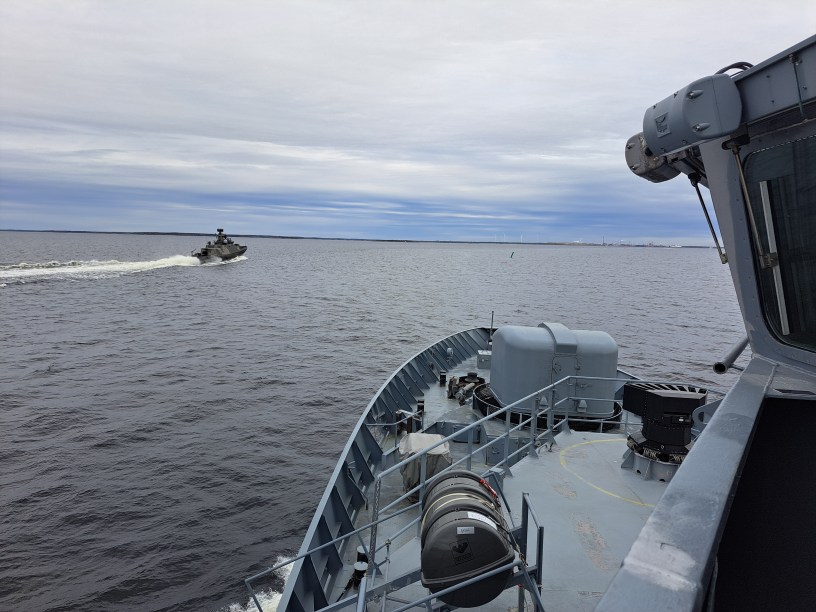
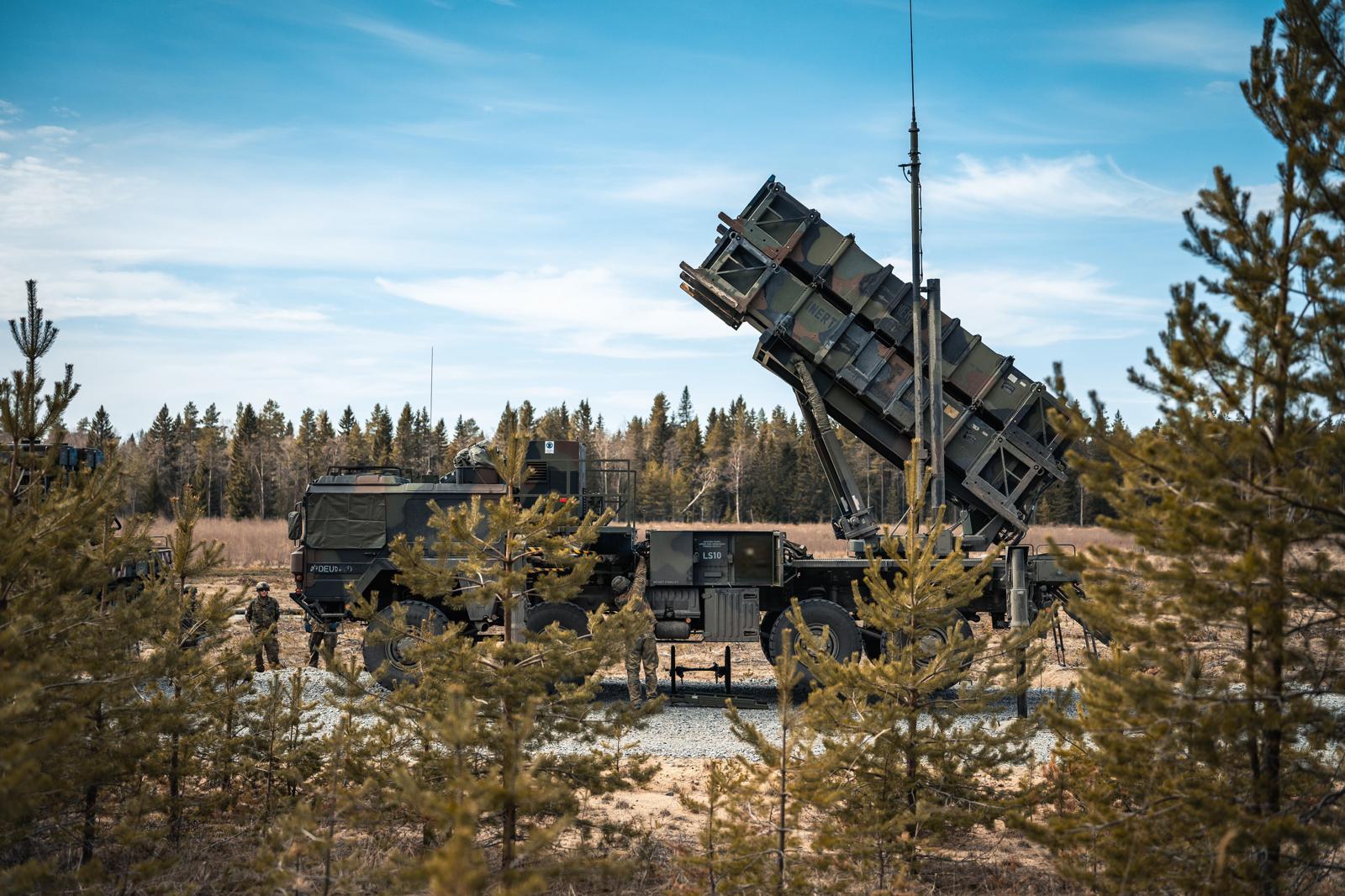
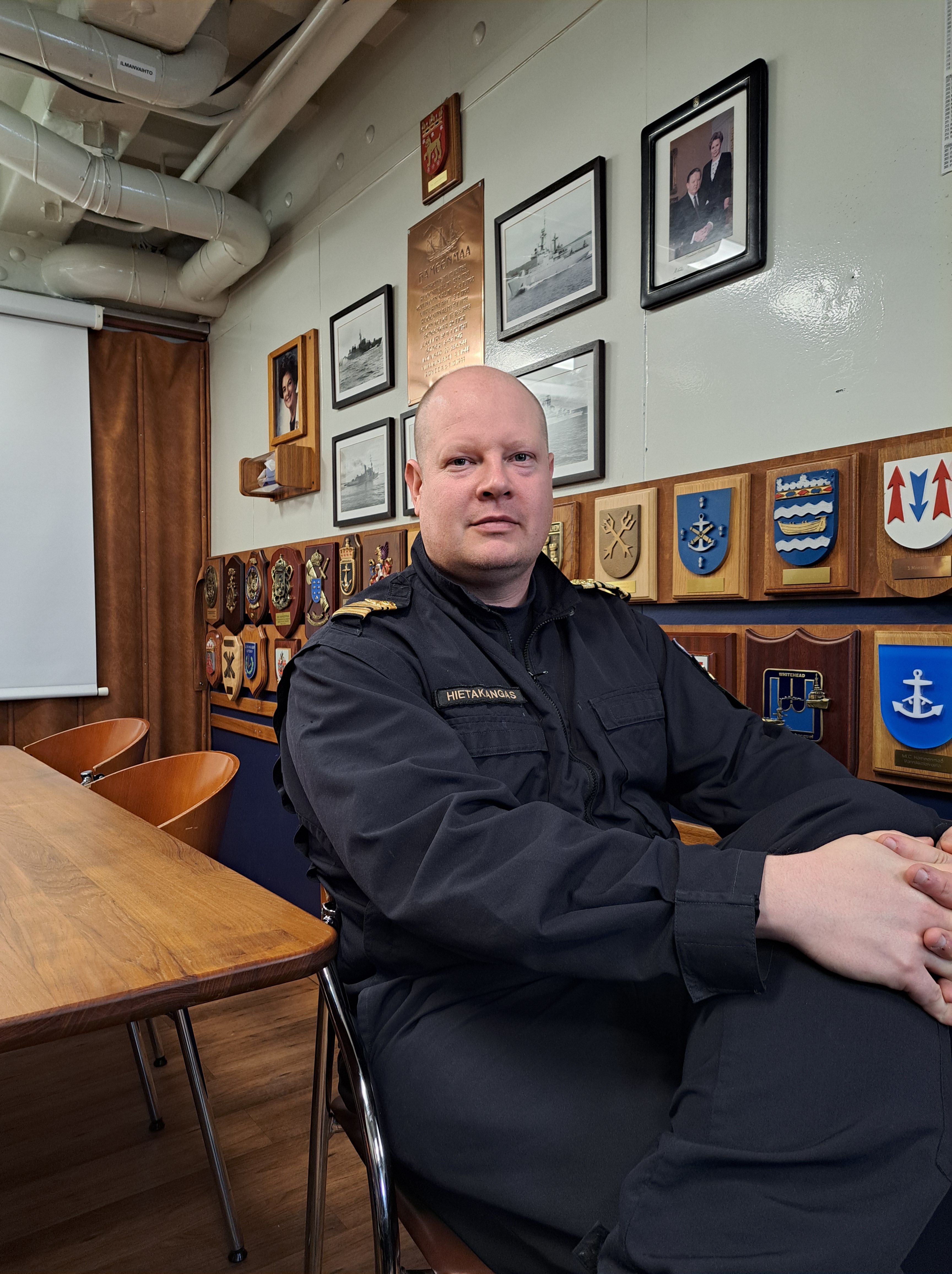
The situation in the wheelhouse is starting to tense up. Under the relatively cheerful sounding comments, it is clear that crew isn’t overly happy with the band of returns stretching across the screen of the navigational radar. Something is hiding behind it, and numerous eyes peer out towards the overcast sky to try and make out what it might be. However, they don’t necessarily need to know. Instead, in a dimmed room hidden deep inside the ship, the situation outside is being monitored closely, and here the situation is being understood. Rows of workstations occupy the majority of floor space in this operations room, occupied by the specialists whose job it is to make sense of the chaos that is about to descend upon the small naval task unit off the coast at Vattaja firing range. We are at exercise Mallet Strike 1-24, the spring edition of the Finnish Defence Forces’ main ground based air defence exercise. Besides the naval units operating ashore along their colleagues from the Finnish Army and German Air Force, the Navy has sent a four vessel strong task unit built up around the 7. Pintatorjuntalaivue (surface warfare squadron) flagship, minelayer FNS Hämeenmaa, accompanied by three Hamina-class fast attack craft. And that task unit is just about to come under heavy air attack for the second time today. Under the watchful eyes of the vessel’s commanding officer in his raised chair in the middle of the room (and under the watchful eyes of a small and likely very unofficial portrait of marshal Mannerheim decorating the wall) the team springs into action, and soon the humming of the air condition unit is accompanied by short and sharp messages as the information start coming in from a variety of sources. The LAAWC (Local Anti-Air Warfare Coordinator) starts to build his picture, and in a calm and collected voice allocates targets both within the ship and externally. Target allocation is key to avoid letting any of the incoming aircraft through, but also to avoid wasting ammunition. The Hämeenmaa’s Umkhonto-missiles have a good reputation, but there are only eight of them. Every shoot has to count in a real-life situation, and that is how the vessel trains. “We don’t give them more missiles for the exercise than would be the case in a real situation,” commander Hietakangas, CO of the 7. PITOLV, explains. “That’s how they learn not spray them at everything approaching.” This means that the 57 mm Bofors gun plays a key role as well. The gun itself is something of a relic, originally having seen service on one of the four Helsinki-class fast attack craft before these were decommissioned in the early 2000’s. But it still is an accurate and deadly weapon, even if the range is somewhat limited.
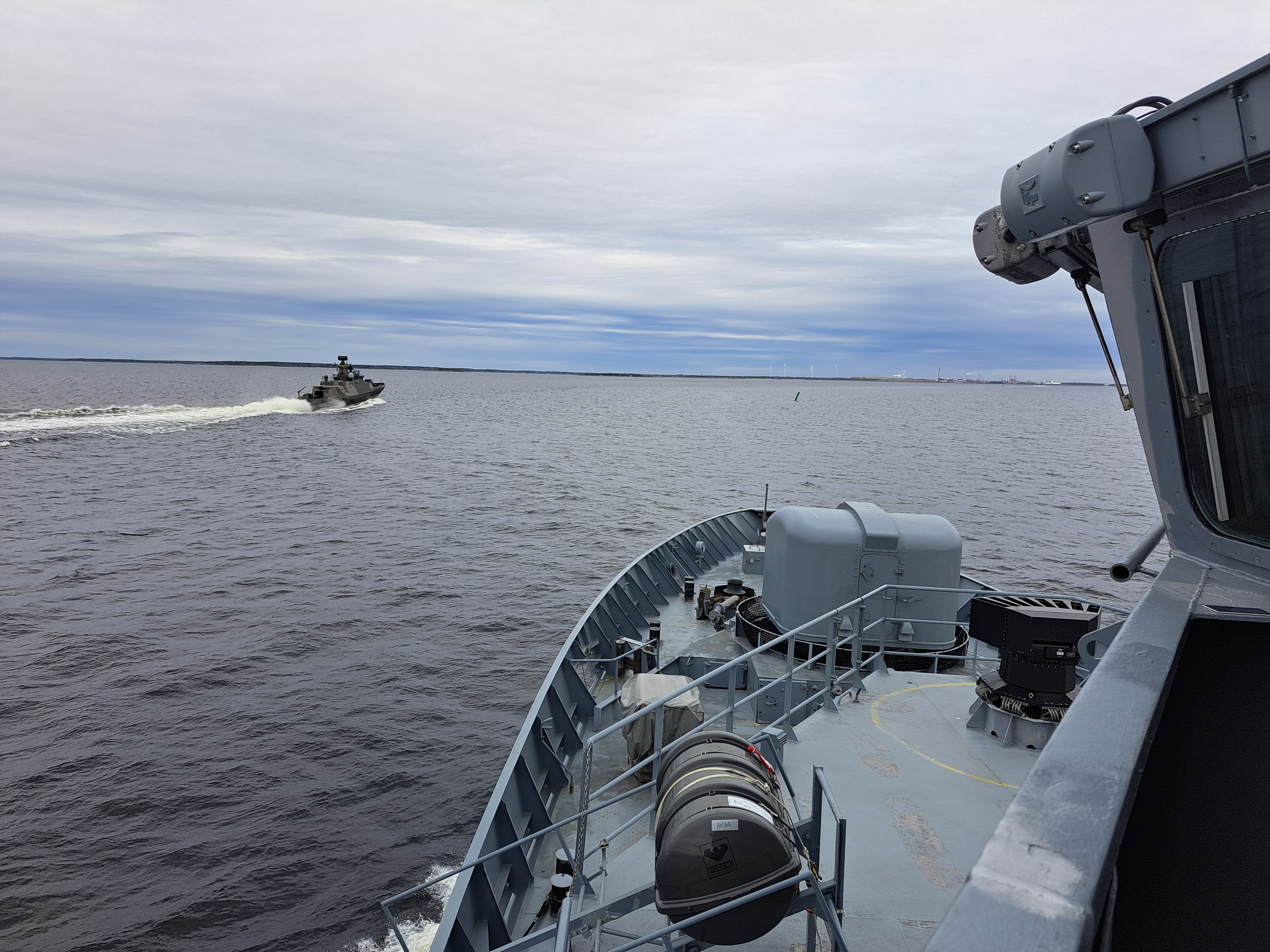
“It’s working, but it’s starting to show its age” is a phrase uttered more than once when walking around the ship. The Hämeenmaa and her sister Uusimaa were built in the early 90’s, and came out of their mid-life update in 2007. A number of systems and solutions are ageing less than gracefully – anything from the aforementioned deck gun, the operations room reserved for the squadron commander’s staff, the engines, and the areas surrounding the galley are mentioned as things that aren’t optimal, but still functioning. For the engines, the Uusimaa will in fact get new main engines installed, ensuring both that she runs smoothly until replaced and that her sister will have enough spares to be able to soldier on with the current Wärtsilä Vasa 16V22 until retirement.
Air defence is a key capability for both the Hämeenmaa- and the Hamina-classes, but it is still always a secondary one. “The idea is that we protect something, in the case of the Hämeenmaa it is often its cargo of mines,” Hietakangas explains. At the same time, a capable (if short-ranged) air defence bubble moving around at speed with both sensors and weapons ready at an instant will still provide valuable service to the integrated air defence network, something that will only change to the better once the Pohjanmaa and its ESSM comes along (even if the ESSM still isn’t an area-defence weapon and the Pohjanmaa is very much a multi-role and not dedicated air-defence vessel). But even with modern datalinks and sensors, being good at the air defence mission – like most combat skills – is still to a significant degree a question of training and skill on the part of the operators, both when it comes to being able to grasp and visualise the often confusing and constantly changing situation in three dimensions, as well as when it comes to how to best respond to it. Mallet Strike is extremely valuable in that regard for the Navy as it offer the ability to train against air operations on a scale that significantly increases the complexity compared to having a handful of aircraft take part in a naval exercise, and the tempo of operations add to the challenge.
An important role of the flagships are their role as training vessels for naval officer cadets. The Finnish naval curriculum include a longer sea voyage, which the mineships have handled on an alternating basis since the retirement of the FNS Pohjanmaa which sported dedicated facilities for the role. Able commanding officers for the vessels of the Navy are the “main product” of the educational pipeline of naval officers, as commander Hietakangas explains, and there’s few better ways of drilling down the basics of service aboard a ship than extended periods at sea. He also stresses the mutual trust and camaraderie among the squadron CO and the vessel COs of the squadron. The unique nature of the ship as the single smallest fighting unit means that the squadron CO has to be able to rely on the vessel COs to carry out their orders to the best of their ability, as they exercise absolute command (and responsibility) over the vessels in a way a company or battalion commander won’t. However, like any unit commander, the tasks of the vessel COs also include keeping the ships and their crews in fighting shape, a much wider and more complex task than ‘just’ leading the vessel in combat.
Anyone lucky enough to get handpicked to command one of the vessels of the Navy has passed quite a few steps on the way, all designed to teach the different parts of the job, as well as to judge who is up to the task. With that said, the consensus seems to be that what makes any CO come alive is combat exercises, in particular when there’s an active opponent on the other side, as nothing beats pitting your skills and tools against those of another highly trained professional. Hietakangas in particular raises the ‘Swedish Tennis’-format as liked by everyone, something that the Royal Navy seem to agree with. And while determining who is the best always is something of an open-ended question, he does note that his vessels have been able to go toe to toe with any warship in the Baltic Sea and come out on top. Not every time, but enough times for him to feel confident in the capabilities of the 7. Squadron should the worst happen.
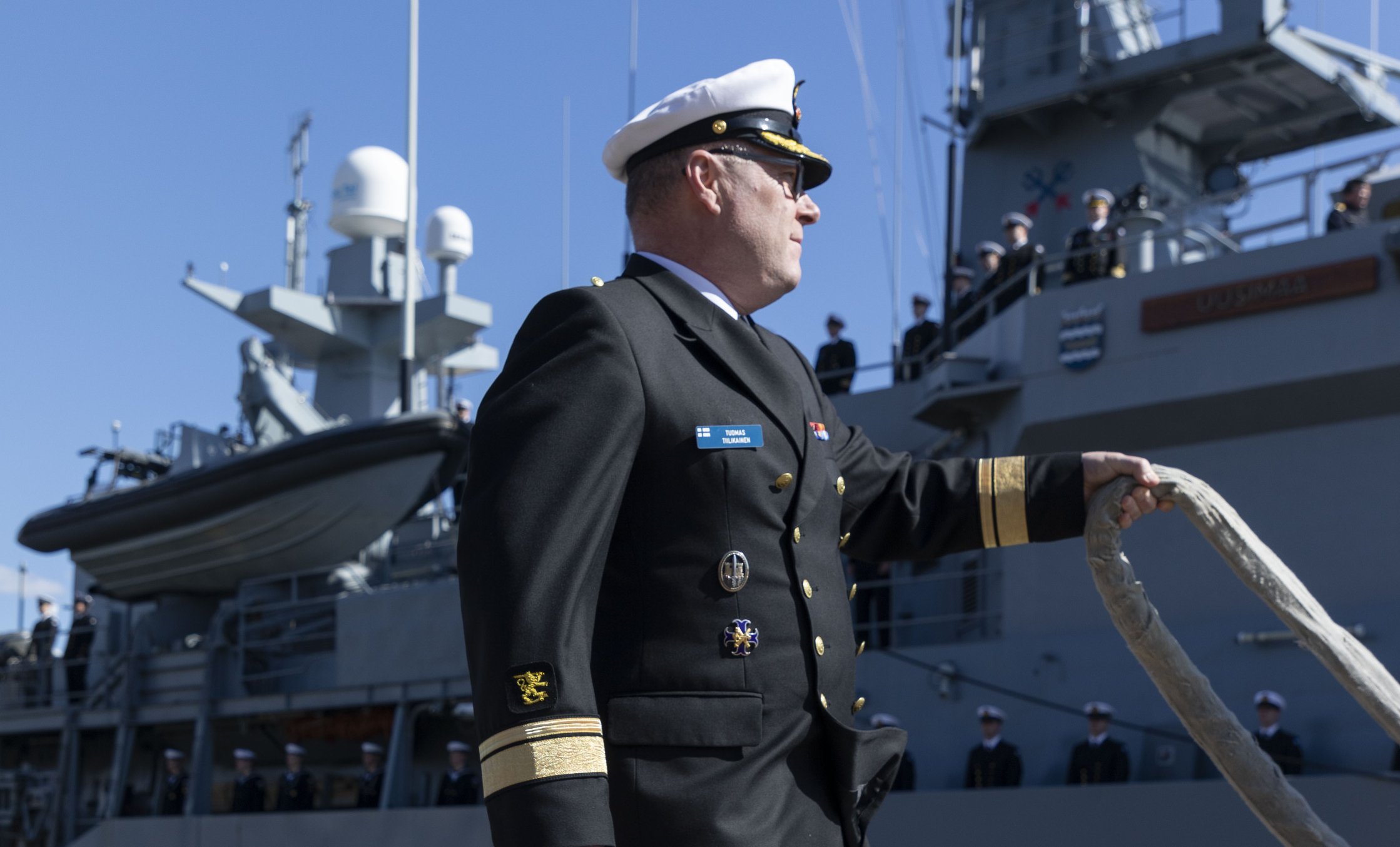
But while surface warfare exercises might be fun, the nature of modern warfare still means any vessel operating in the Baltic Sea will need to be able to handle a truly joint battlefield. This include a heavy emphasis on anti-air warfare – a reason why the Navy year after year send a considerable part of its air defence capable vessels to Lohtaja – but also the ability to counter underwater threat as well as participate in the land battle. The latter has always been a core part of the Finnish Navy’s mission, both when it comes to its considerable amount of coastal units but also with vessels taking a direct part in the fighting on land – as evident by several of the battle honours earned by the older Hämeenmaa during WWII. Sharing an accurate situational picture and effectively participating in joint operations in the archipelago is no easy task, as evident by the fact that in recent years a major exercise with international participation saw a rather spectacular blue-on-blue situation where Finnish troops on the offensive saw simulated ‘friendly’ 57 mm rounds coming their way – one of those mistakes everyone prefer to make in peace rather than war. Training in this complex boundary between the naval battle and the ground war is also a reason why the surface combatants played such a major role in the larger exercises centred around the coastal troops, such as the recent HELKA 24 exercise.
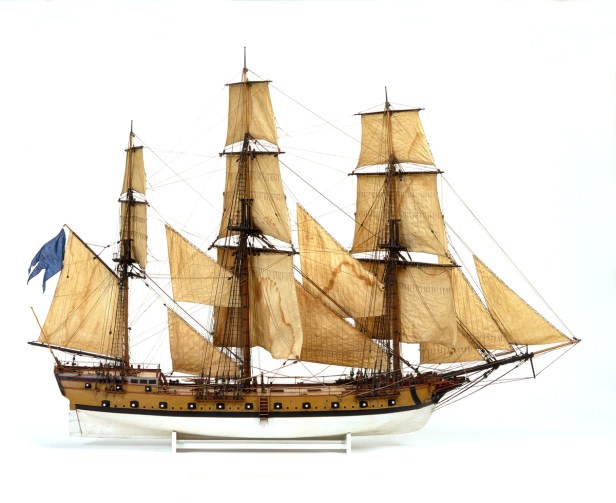
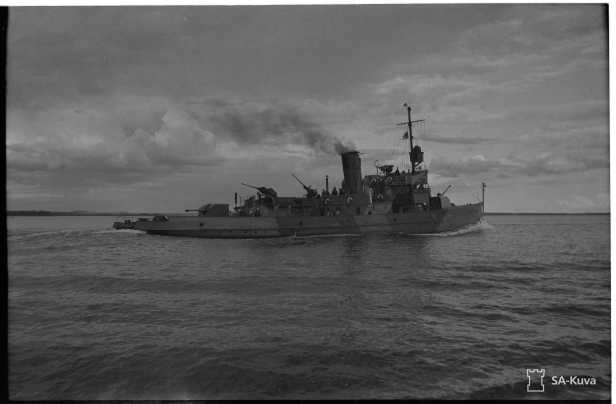
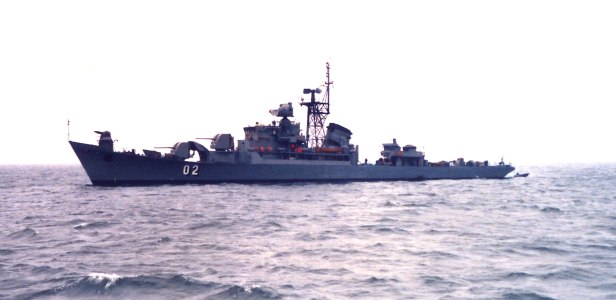
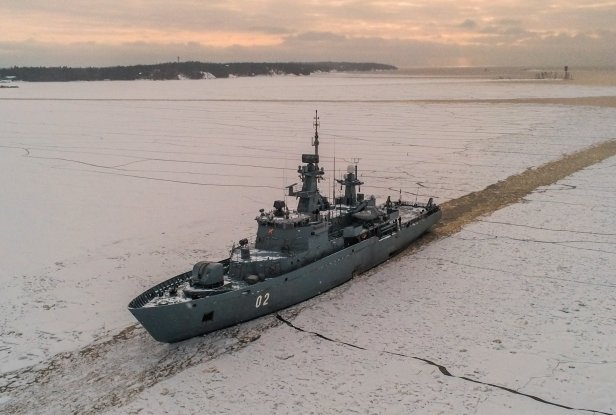
FNS Hämeenmaa is the custodian of the battle honours of its namesakes in the Swedish and Finnish Navies (though notably not in the Imperial Russian Navy). They are given on the battle honour board as follows (in Finnish):
Hankoniemi 17.10.1788
Ruotsinsalmi 24.8.1789
Koiviston salmi 2-3.7.1790
Viipurinlahti 3.7.1790
Ruotsinsalmi 9.7.1790
Lövön selkä 17-18.8.1808
Bengtskär 26.7.1941
Jussaari 30.11-1.12.1941
Someri 8-9.7.1942
Koivisto 22-23.6.1944
Viipurinlahti 4.7.1944
Röyttä 6-7.10.1944
When it comes to submarines, that is one of many reasons why Sweden is such a prioritised exercise partner, and Finland regularly participate in the Swedish naval exercises, including the main SWENEX/MAREX-series of events, as “Sweden always bring a submarine” to their exercises. One of the key takeaways for the Finnish Navy from international exercises against real submarines have been the value of the helicopter in the ASW-role, a capability that the Finnish Navy lacks and which would come at a significant cost if it ever was to be acquired. Still, the ability for the Pohjanmaa-class to at least support friendly helicopter operations is in itself a major step forward in this regards, and it does leave the door open for vertical subhunting if things would change at some point in the future.
There’s no denying that the upcoming Pohjanmaa-class is eagerly awaited. The first reallocations of vessels which are linked to the replacement of the two mineships and the four smaller Rauma-class FAC are about to take place in the near future, and while the overall number of contracted crews employed by the Navy will only see a minor increase (in the order of 20 additional persons in total spread out over the four crews), making the transition run smoothly is a major undertaking for the service’s personnel department. The basic headache can be boiled down to the fact that crews for four corvettes will come from six different vessels of two different classes, and they can’t start training too soon as then the combat capability of the Navy will see an unacceptable dip during the transition time between the current vessels being retired and the Pohjanmaas becoming operational. However, it is also clear that crew roles and specialisations will not fit one to one if you pull the crew from a small FAC and half a mineship and try to put them on a modern heavy corvette – significantly increasing the need for conversion training. The answer is a stepped approach that include gradual retirement of vessels, retraining of their crews, and getting the corvettes up to speed as fast as possible – all guided by something likely reminiscent of one Gantt chart to rule them all (though my understanding is the fire of Orodruin wasn’t involved in this one).
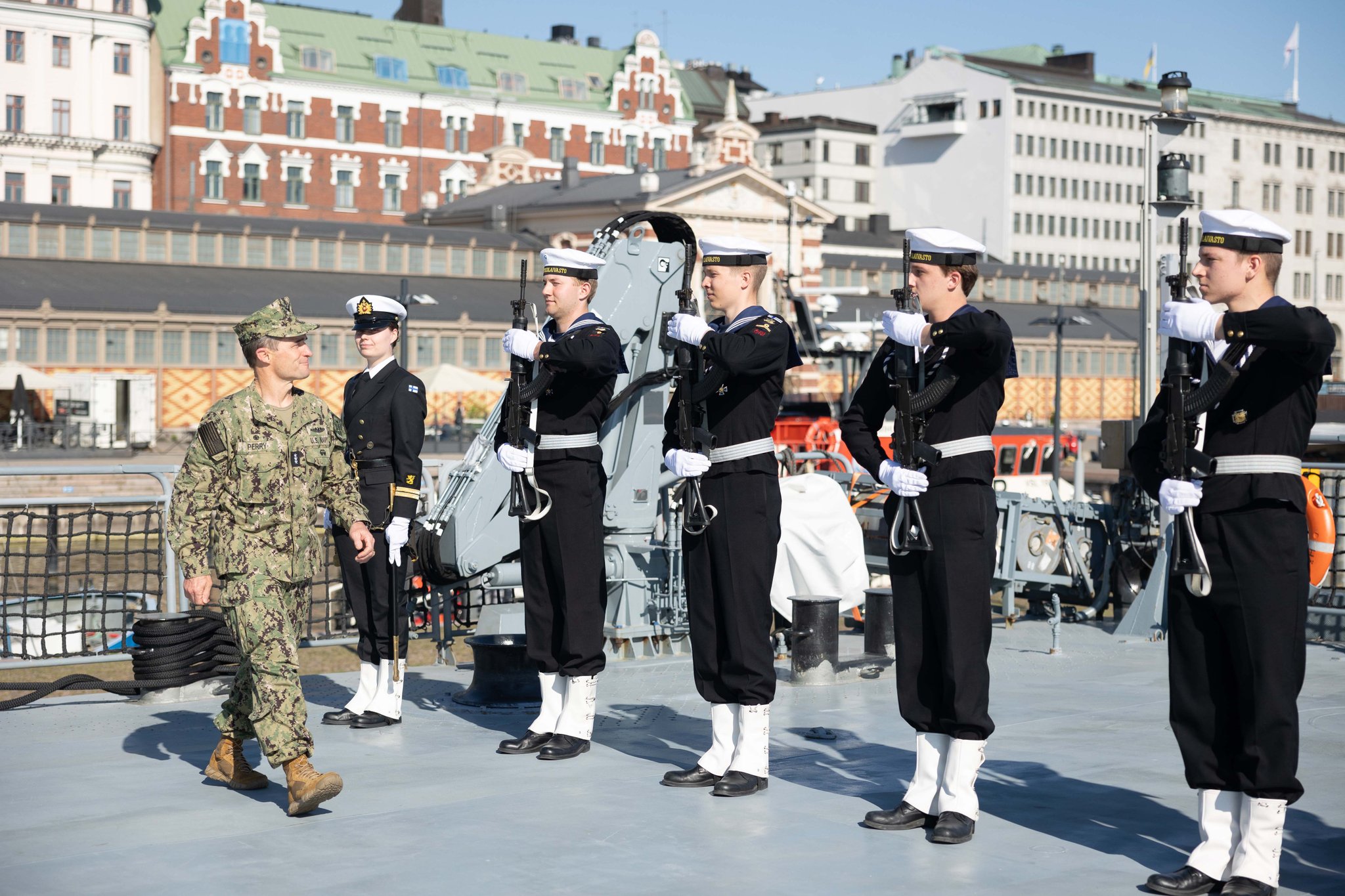
Currently the crew of the leadship consist of two persons – the commanding officer and chief engineer, but the preliminary sweep for volunteers indicate that the Navy will be able to handle the critical first round of staffing satisfactorily.
The larger vessel will bring a host of changes. Some might not be obvious to the casual viewer, but are fairly straightforward – the Pohjanmaa will get retractable fin stabilizers larger than those currently used by the Hämeenmaa-class, which should ensure better seakeeping. This has been one of the weaker points of the Finnish minelayers, as the limited draft has meant compromises in the field. Others will bring significant improvements to the living and working standards aboard, a crucial improvement with the extended endurance. This include better solutions for the galley and dining, cabins with fewer occupants, and a space which can be used as an officer cadets mess when used as a training vessel or providing command facilities for a task group commander when functioning as a flagship (in addition to the improved task unit commander’s space). The Hämeenmaa and Uusimaa as mentioned have done the training cruises capably, but there’s no denying the conditions tend to get cramped once the full complement is aboard for weeks, such as in the case of the cadet voyages (despite the vessels offloading all their conscripts before heading out). However, while these have so far tended to be among the few longer voyages regularly undertaken by the Finnish Navy, being a NATO-ally means that participation in the Standing NATO Maritime Groups or operations in support of allies such as Norway, Denmark, Germany, or the UK might well see the vessels head out to sea in a way the fast attack craft won’t. Here again, the ability to plan and lead operations for a significantly larger squadron will be valuable.
Sidenote: the operations room is called the combat centre in Finnish, while the command facilities used by an embarked staff is called the operations room. Just in case you stumble upon some translation between Finnish and English that doesn’t seem to add up.
Another key detail for the Pohjanmaa-class is that they are built with room to grow. The Finnish Navy has had some bad experiences with the Hämeenmaa- and Hamina-classes in that regard, with the fact that they had no additional room to grow making the MLUs something of a headache (most visible in the need to switch from 57 mm to 40 mm for the main gun to provide weight for new systems on the Hamina). Pohjanmaa will be delivered with a not inconsiderate amount of spare weight not allocated in the original form, making it easier to fit new systems later on.
 Corporal Frisk