
The UK is cutting its armed forces (again). While the cuts to a large extent does make sense here and now, it is still baffling that the forces have managed to put themselves in this position, and that the government refuses to fund the scope of capabilities it wants to have – including most crucially funding personnel.
In today’s world, most of us have recruitment and retention issues, but some have it worse than the rest.
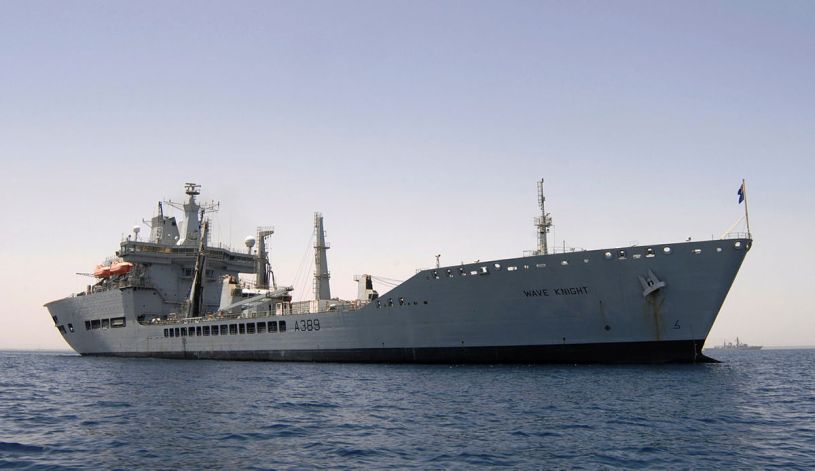
A part of the force hit particularly hard is the Royal Fleet Auxiliary (RFA), which handles a large number of the British supporting ships – tankers, stores ships, certain amphibious assault platforms, repair ships, and interestingly enough the aviation training ship RFA Argus – and crucially is manned by civilians. Now, one would imagine that the political decision when faced with a number of countries not wanting to play nice and no lack of either natural or man-made disaster would be to invest heavily in such a force, but – life being what it is – over half of the replenishments ships are in uncrewed reserve (“extended readiness”) due to a lack of sailors, and with no money forthcoming to pay for more civilians to roam the seas under the blue ensign, the decision has now been taken to cut the two fleet tankers RFA Wave Knight and RFA Wave Ruler.
I am going to stick my neck out and say that if the Finnish politicians mean what they say when they with one voice talk about the need for higher defence funding for the foreseeable future, and if Finland really want to show that we are taking a major role in NATO’s 360-degree approach as opposed to being ‘just’ a land-centric frontline state, the MoD should give the Navy the mission to at least go and kick the figurative tires of the vessels.
(Everything I’m about to say goes for the Swedish Navy as well, by the way)

The role of the fast fleet tankers (and replenishment oilers generally) is to ensure that the navy can keep vessels out at sea for a long time. In doing so the tankers bring stores and fuel, and is able to transfer these to ships while at sea, doing so through a number of different methods. For the Finnish Navy, the need has so far been limited, considering most of our vessels have spent the majority of their time within easy distance of land. Instead, a number of the larger vessels such as the Hämeenmaa-class mineships and the Pansio-class mineferries are able to function as tenders, i.e. while anchored in a safe location they supply some amount of fuel and stores to smaller vessels coming up alongside, but they are not expected to be able to do so at the high seas or while underway.
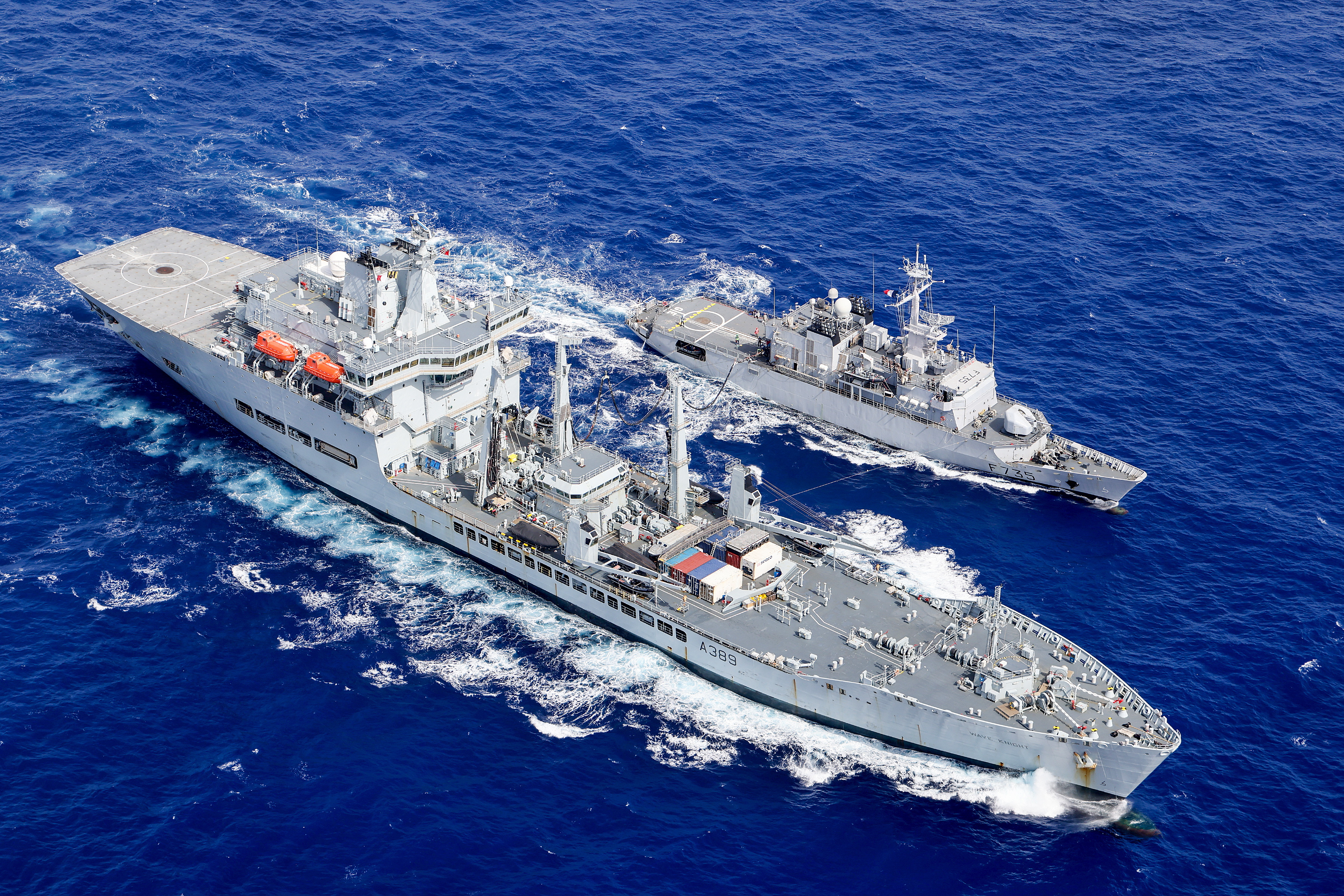
Unsurprisingly, the work of the fleet tanker is absolutely crucial to give warships the endurance they need for many missions. For the Wave-class, they are able to hold 16,000 m3 of liquids (mainly fuel for ships, but also aviation fuel and drinking water), 500 m3 of solids (food and ammunition), and 150 t of fresh food in eight 20-feet refrigerated containers, and they are also able to produce drinking water through integral reverse-osmosis plant. To transfer the stuff to other vessels, there are refuelling stations on both sides and astern. The ships hava a large helicopter deck at the stern with the aviation facilities including a hangar for a Merlin-sized helicopter – which as discussed on the blog is more or less the largest bird you might want aboard a ship. Both vessels are UK-built by what today would be BAES Marine and commissioned in the early 2000’s with a calculated service life of 25 years.
Needless to say, any task group, be it a carrier strike group, and amphibious assault force, or a surface action group consisting of frigates and destroyers, want their own tanker to tag along and ensure a steady supply of fuel, spares, munitions, and refrigerated food. And needless to say, the fact that their mission isn’t as action-packed as that of frigates means there is a constant shortage. For the European NATO-countries regularly operating in the North Atlantic, France is currently down to just two vessels, as they are awaiting the three sisters of Jacques Chevallier to join the fleet (which will also allow the last Durance-class vessel Somme to retire). The Jacques Chevallier-class (or BRF) is a derivative of the Italian Vulcano, and it is perhaps the most modern tanker currently in service anywhere in the world.
The Dutch have the Karel Doorman, which is a combined replenishment vessel and amphibious warfare ship. An interesting concept, though it does raise the question of whether it is a typical compromise that does both jobs at half-speed. In any case, a dedicated replenishment oiler is on the way in the form of the Den Helder. Norway has the KNM Maud, which is a smaller version of the same basic design as the British Tide-class. She is an excellent example of a modern vessel, and although slightly smaller than the Wave-class she sport a full hospital section with an operating theatre, CT-scanners, a pressure chamber, and 48 beds for patients.
The large players are Germany and the UK. Germany has three vessels of the Type 702 Berlin-class, which are of the same age as the Waves, albeit somewhat smaller. The Canadians have bought two vessels based on the same design as their Joint Support Ships, which are currently under construction. In addition, Germany has two older and smaller Type 704 Rhön-class tankers, which are to be replaced by the new Type 707 (or Marinebetriebsstoffversorger Klasse 707, to break out the full German title). The UK, determined to be passed by the Germans in this field, will now be down to four Tide-class tankers, which are newer and larger than the Waves at 200 meters in length and 37,000 tons. However, even that is a bit of a stretch as RFA Tiderace is currently also lacking a crew and spending time in “extended readiness”.
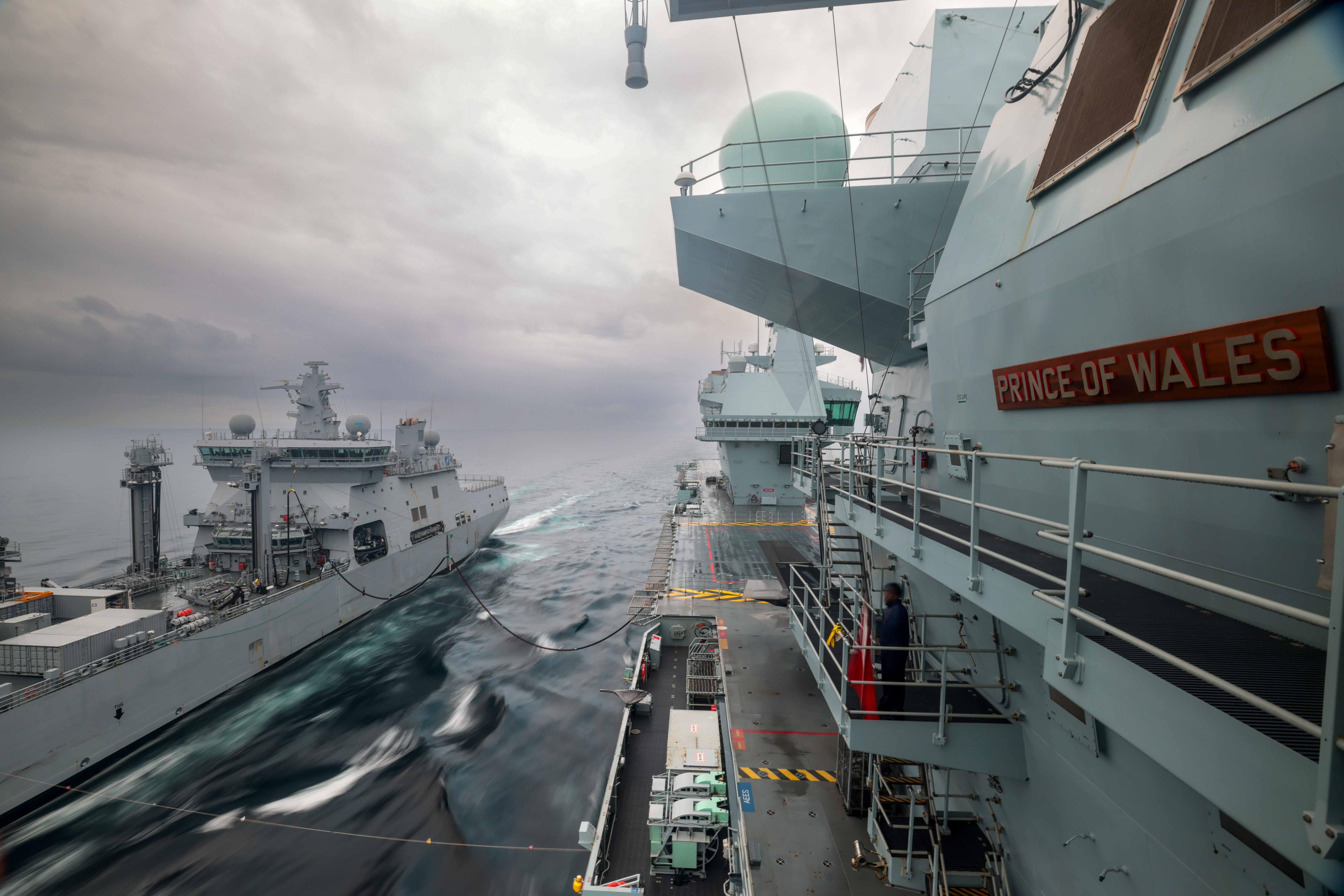
With only a dozen or so vessels available in total – and that is counting the French and British who obviously both have interests in other regions as well – there is room for more. Anyone who can phone up MARCOM and provide a fast fleet tanker to Standing NATO Maritime Group One (SNMG1) can usually expect a heartfelt welcome. It also provide opportunities to support own deployments further abroad, which will become a more interesting prospect with the arrival of the Pohjanmaa-class (and the Luleå-class). The vessels have also been used in a number of other roles, including disaster relief as well as for anti-piracy and counter-narcotics roles.
As mentioned, the Waves were originally planned to have a service life until 2028. However, that can be taken with a grain of salt. The Ol-class tankers they replaced served for 35 years, and fellow Briton HMS Ocean was sold to Brazil upon reaching the end of its planned 20-year service life in 2018 – and is serving on as the NAM Atlântico. The lifespan of a ship is never a straightforward concept, but is highly reliant on actual hours spent at sea, how hard those hours have been – cruising along at moderate speeds does wonders compared to running hard in the North Atlantic winter – as well as how the systems onboard age. Certain systems will reach obsolescence, and will then either have to be ripped out and replaced or maintenance will become an expensive and ever more complicated prospect. So, how much life could the Waves potentially have left in them?
Well, RFA Wave Ruler was laid up (reportedly in “very good condition“) following a refit in April 2018. As such, she has only been operated during 15 of her intended 25 years, and even before being put in reserve she spent a significant part of her last two years operational in training roles in home waters. While such a simple calculation is something of an oversimplification, getting fifteen years out of her doesn’t sound like a stretch, although some systems might require modernisation. An obvious question is the price, and while we don’t know how much interest there might be in her or her sister, a good benchmark might be the aforementioned sale of HMS Ocean, which came in at 84.3 million GBP in 2018, some 112 MEUR adjusted for inflation. It’s a completely different kind of vessel, but say something along the lines of 100 MEUR for a Wave doesn’t sound completely unrealistic – provided the bidding war only takes place between a NATO ally and a scrap yard. Is that expensive? Not really, the German Navy are paying more than 450 MEUR for each of their two Typ 707, which are significantly smaller vessels. Perhaps a more interesting comparison is that of KNM Maud, which came in at approximately 190 MEUR a few years back. To put it in perspective, the FDF bought 13 SISU GTP 4X4 vehicles for 9.7 MEUR, field radios for 25.6 MEUR, and anti-tank missiles for 223.6 MEUR. Apples and oranges, but just to put the potential acquisition cost into perspective – this scope would not be “here’s another naval billion-euro program to back up the Pohjanmaa” but rather a deal of a size that usually get little more than a press release from the MoD and some nice words by national security Twitter.
But buying a vessel is rarely as expensive as running it. The Norwegian budget recently included 17 MEUR extra to ensure that KNM Maud gets the maintenance needed, a good indication of the kind of costs running even a single tanker might incur. There is also no spare tanker crew in the Finnish Navy, so an additional 60-80 sailors would need recruiting – possibly more, depending on if and how the Navy wants to arm the vessels and keep the helicopters flying. That is a bit more than currently found on a mineship, which so far are the largest vessels of the fleet. As such, it wouldn’t be unheard of, but considering we currently have a grand total of two mineships with crews approaching that size, the impact shouldn’t be underestimated either.
Infrastructure is another question, as if the Navy has a spare 200-meter long parking spot, they sure are hiding it well. A good example of what that can cost is the work done in the Port of Pori five years back, which came in at 30 MEUR for a new 420 meter long pier and associated dredging. Costs for port infrastructure is highly dependent on the exact details of what is needed and where, but it isn’t like there’s a ready solution. The vessel might also be needing assistance from tugs, raising the question of whether the Navy should invest in a few of their own or start hiring civilian contractors (the more likely option).
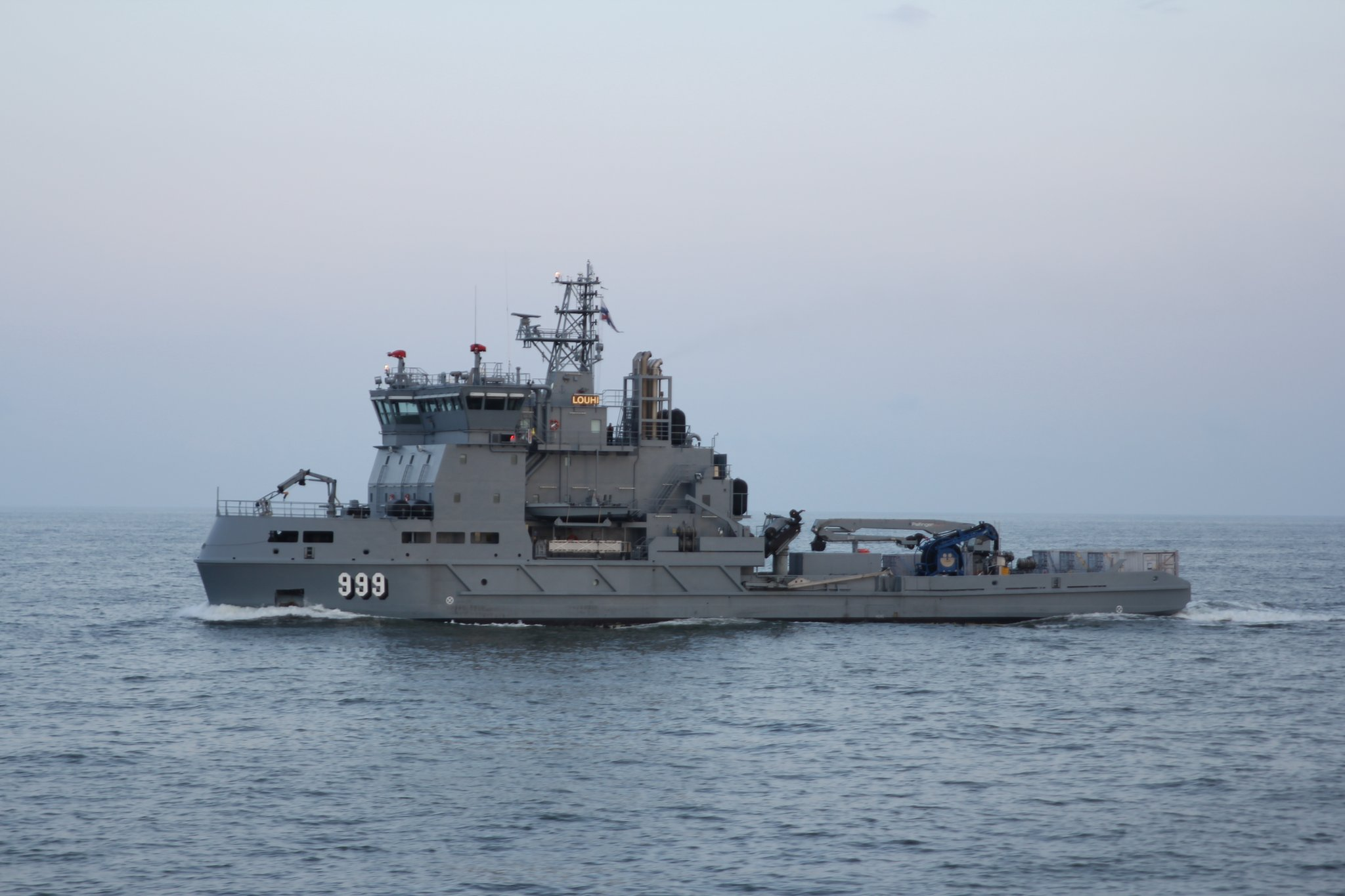
It is clear that the Navy under the current budget could not afford to man and run a fleet tanker any more than the RFA can, but I do argue the increase needed is relatively moderate (at least compared to more high-flying ideas, such as getting submarines). Another question is, considering the versatility and e.g. disaster response capabilities of the vessel, should it really be the Navy and FDF paying the whole bill? A prime example is the oil-recovery/generally versatile workboat and response vessel Louhi, which was funded by the Finnish Environment Institute (SYKE), but is painted grey and crewed and operated by the Navy. Notable is that international crisis management operations are largely funded by the Finnish Ministry for Foreign Affairs (though equipment costs are coming from the FDF budget), and my understanding is that international disaster response in turn gets its funding through the Ministry of the Interior (which also sits on the budget of the Border Guards, which is another potential beneficiary of having a replenishment at sea capability). As such, there certainly are precedents of both military and para-military capabilities being funded from other parts of the state, when these capabilities are used to wider benefit.
A tanker would certainly be useful, and in particular provide both a capability that will marry well with the Pohjanmaa-class corvettes as well as allowing Finland to provide a sought-after capability further afield. While Finland is a stranger to supplying replenishment at sea, as a mission set it is relatively straightforward, and we can likely get the same deal as the Norwegians have, getting to train at British shore installations. There is significantly more realism in integrating it in the current organisation compared to certain other capabilities, and the versatility of it means that several different funding models could be discussed. If that is enough to warrant getting one is another question, as is the question of the true lifespan and running cost for the Waves.
An interesting option is trying to get a double-deal with the Swedes, who’s largest vessel is the mineship-turned-flagship/tender/OPV Carlskrona, launched 1980(!) and nearing the end of its lifespan. Sweden and Finland getting a Wave-class vessel each would provide synergies, and further strengthen the close cooperation between the two navies. Another potential synergy is obviously not kicking the tires on the Waves, but asking how much RFA Tiderace would be? As mentioned, the large fast fleet tanker is in uncrewed reserve after only six years in service, and while there is no indication the UK is about to cut her, questions about the realism in keeping her may well be asked. As such, a serious bid from a close ally might suddenly reveal that she indeed is for sale, providing the opportunity of running a joint UK-Norwegian-Finnish tanker fleet for the benefit of the alliance in Northern European waters. The Tide-class is larger, better equipped, and more modern in its layout, while at the same time able to operate with a smaller crew. At 37,000 t she would dwarf even the Pohjanmaa, but at the same time the size shouldn’t be overemphasised – she is still well below many merchant vessels sailing Finnish waters.

So, is that to say we should buy a British surplus-tanker? I don’t know, but it certainly feels like an option someone should run a few numbers on and make a few phone calls about.
 Corporal Frisk