

In my last post, I mentioned the possibility of FDI ending up I Swedish service, either as the Luleå-class, or as a corvette-replacement. As I recognise that the details of the Swedish surface fleet are probably not what my readers spend most of their days digging into, the scenario might deserve looking at in a bit more depth.
The major headache comes down to two different issues. The first of which is that 90 % of Swedish international trade goes over the sea – which one might read as “If something happens to this we’ll be poor”, but a closer look confirms that the correct reading is “If something happens to this, we’ll be cold, hungry, and lacking a lot of energy, medicines, spares, and other critical components of a working society”. The other issue is this:

The Swedish surface combatants currently consist of nine vessels in three classes. Oldest of these are the two 40-year old former light corvettes Stockholm and Malmö, which have been stripped of their heavy weapons and function as OPVs. At 310 tons, these are very light vessels to be classified as corvettes. Next in line we have the light corvettes Gävle and Sundsvall, the last two remaining of the originally four-strong Göteborg-class. At 35 years and 380 tons, they are sligthly newer and and larger, and crucially underwent a modernisation programme recently which means the sisters are now known as the Gävle-class. The star of the bunch is the five Visby-class 650 ton stealth corvettes. You might be excused for thinking these are cutting-edge based on their looks, but the fact is that they are also starting to show their age, the project having been ordered in the mid-90’s with the vessels launched between 25 and 19 years ago, and the class is set to undergo their mid-life upgrade soon. They are still highly capable ships, but they are rapidly approaching the half-way point of their service life.

This is the situation at a time when the outgoing Chief of the Swedish Navy vice-admiral Ewa Skoog Haslum in an interview stated that Navy should have at least 20 surface combatants “with different sets of capabilities”, while the Swedish Royal Society of Naval Sciences (KÖMS) already in 2018 decried the low number of vessels in their comprehensive report “En marin för Sverige” (“A Navy for Sweden”), which included the suggestion of a growth ladder to fifteen surface warships by 2030 through having nine on strength before 2021 and twelve in 2025 by a combination of restoring the last two Göteborg-class ships into service and quickly jumping onboard an existing design, either something foreign or acquiring more Visby-class vessels (the two Stockholm-class OPVs are not included in that number). The report also propagated for double crews for the majority of the ships to get higher availability.
Unfortunately and unsurprisingly, none of this happened.
Currently in 2025 we are sitting at seven surface combatants plus two OPVs, and with the only confirmed (but not ordered) ship class being the four Luleå-class vessels. The plan is to start deliveries in 2030, and by 2035 have all in service. Exactly how the Navy is supposed to look in 2035 seems unclear, and might very well be undecided for the time being. In the interview refered to above Skoog Haslum talks about the three steps in the capability ladder – the tin-corvettes, the stealth-corvettes, and the Luleå-class – which indicate that in her ideal 20-ship force the Gävle and Sundsvall will either serve on, or have been replaced by another light corvette/heavy FAC. The Swedish political process is also interesting here, as at the parliamentary level the parliamentary defence committee in their report last spring – Stärkt försvarsförmåga – Sverige som allierad, Ds 2024:6 – state that:
The Defence Committee proposes, given the long lead times for procurement, that the possibility of acquiring additional surface combatants with delivery from the mid-2030s, in addition to the Luleå-class, should be examined already now. The aim should be for these new ships to be delivered from the mid-2030s. […] Since delivery of the Luleå-class will not take place until the first half of the 2030s, the Defence Committee believes that the two Gävle-class corvettes and the two Stockholm-class patrol vessels should be maintained and replaced at the earliest after the Luleå-class ships are delivered. Consideration should be given to maintaining the two Gävle-class corvettes alongside the new class of surface combatants that the Committee believes should be considered for delivery from the mid-2030s.
However, in the eventual bill as presented by the government, the additional class i nowhere to be found. The easy answer is that is because it only cover the 2025 to 2030 timespan, though if you want a ship delivered from the mid-2030s, it is safe to say the acquisition work should probably start before 2030. No word is given on the plan for when the four older vessels will be retired either.
Now, the realisation by the committee that four Luleå-class heavy corvettes/frigates backed up by five light stealth corvettes might not cut it is most welcome. At the same time, it is obvious that the sense of urgency is not there – or at least wasn’t there six months ago. Possibly growing to eleven vessels by 2035 – over twenty years after Russia invaded Crimea and kicked of the War in the Donbas – of which two by then will be celebrating or approaching 45 years in service isn’t exactly earth-shattering, and unless the Luleå is seen as the replacement for the 2+2 OPVs/light corvettes currently in service, a second class will have to enter service at some point. A one-on-one replacement would obviously still bring a huge leap in both absolute and relative capability, but any single ship can still be at only one point in any given time.
However, things have somewhat changed since then, as Sweden announced the intention to reach 3.5% of GDP to defence by 2030, and a new defence bill will be introduced following NATO’s new capability targets to ensure Swedish capabilities align which those it has promised the alliance – a minor detail which one would have thought the Swedish parliamentary committee would have seen before doing the last report, but, hey, this NATO-thing is new to all of us (says the man from the country who still hasn’t gotten around to legally allowing most of our wartime units to defend other allies).
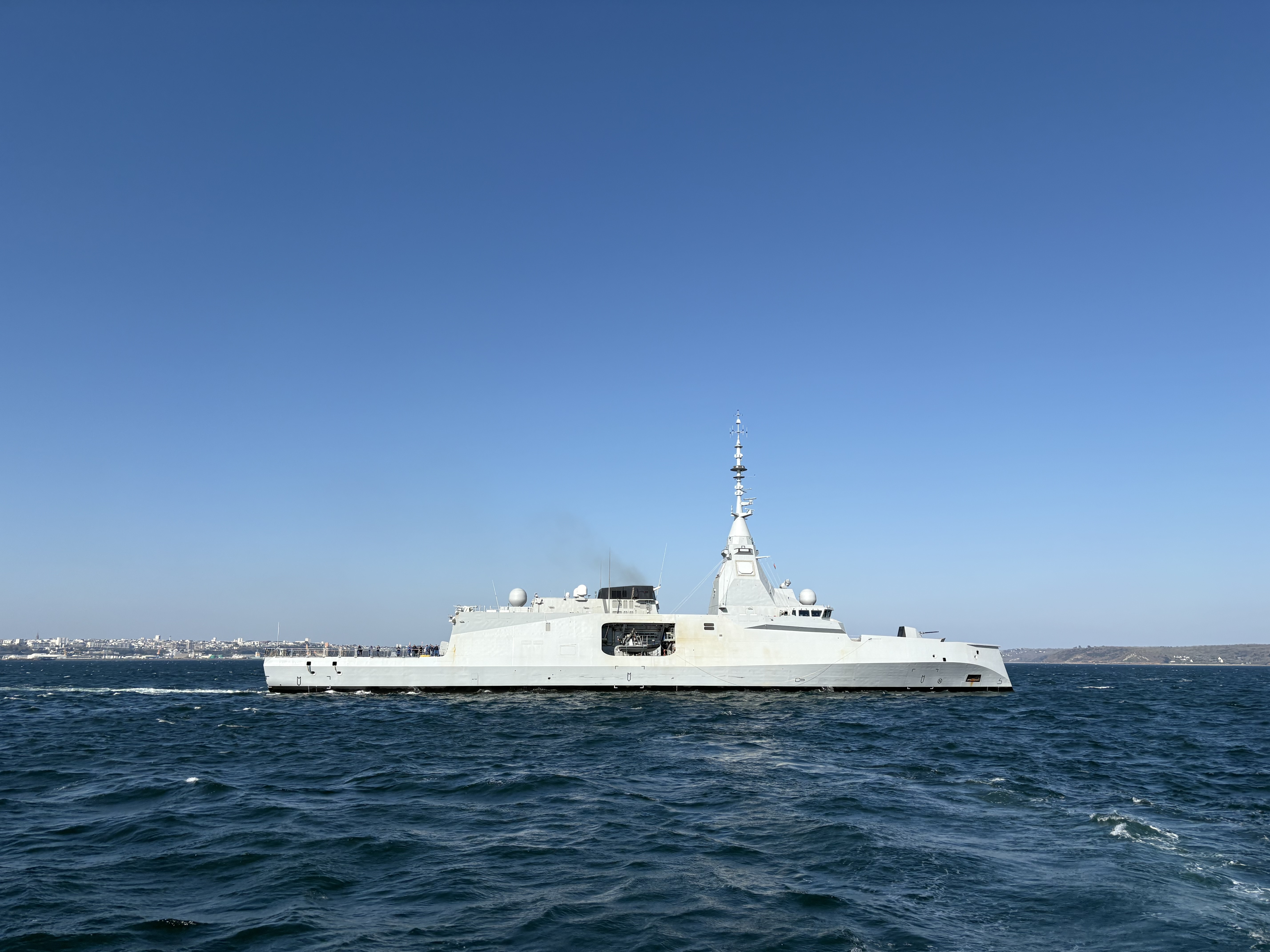
Back to the FDI, what we know is that there are “interest” from Nordic countries, that FMV said they are not in formal negotiations on the FDI for the Luleå-class, and that Le Figaro stated that “Between 20 and 25 new orders for frigates comparable to FDI are expected to be signed soon, including five in Norway, five in Denmark, at least three in Sweden, five in Saudi Arabia, and five in Indonesia. These are all prospects for the French manufacturer [Naval Group].” Note the number of frigates expected for Sweden given as “at least three”, which might mean one of three things: 1) The Luleå-class is over budget, and one possible solution is that the fourth ship – HMS Halmstad – will be cancelled, 2) the FDI is under discussion as a possible vessel for Sweden, but not for the Luleå-class, but for the second class proposed by the parliamentary committee, or 3) Le Figaro has simply mixed up the numbers.
If you actually want to expand the Swedish Navy a bit, you would be able to get three FDI into service in the 2030-2035 span, which would allow for the retirement of the old light corvettes, giving Sweden a force of four Luleå-class AAW-focused multirole heavy corvettes (or frigates), three FDI-class ASW-focused multirole frigates, and five Visby-class light stealth corvettes. Seeing the four old corvettes (of an original six) retired to make room for seven new larger vessels may feel like a serious jump – and a significant deviation from the FAC/light corvette-capability as the third leg of the force in Skoog Haslum’s description – but at the same time it is hard to state that seven moderately sized and five lighter surface combatants would somehow be overkill for Sweden, a country with the sea on both sides, and which has declared an intention to actively take part in NATO-operations in both. In 1982 when Stockholm was laid down, Sweden had eight destroyers in service, after having retired another four just four years earlier. These were then backed up by the six Spica-class torpedoboats and the twelve 250-ton Norrköping-class FAC, for a grand total of 26 surface combatants, eight major and eighteen minor. Sure the vessels were smaller, but this was also a fleet almost solely focused on sea denial and beating back the Soviet invasion fleet, while the current mission set include protection of trade, protection of sea lines of communications over the Baltic Sea to allies on the eastern shores, and air defence. And if that is ancient history lacking any relevance, I would like to point out that as mentioned this is the period when almost half of the current surface combatants were either being planned or already under construction.

A point which also might be worth stressing is that while twelve vessels might sound like a lot compared to e.g. the Royal Navy’s planned force of a total of 24 Type 45 destroyers and Type 26 and Type 31 frigates, this overlooks just how small the Swedish ships are even in a North Sea-context. In fact, the tonnage of the British escorts alone is four times the expected for this hypotethical Swedish fleet, but that does not take into account that for the Swedish Armed Forces the two surface warfare squadrons occupy the role as the tip of the spear in naval surface warfare, while for the UK that role is held by the carriers. Add to this that the UK submarine force is also made up of both more and significantly larger submarines compared to the Swedish ones, and, no, not even in relative terms would a twelve corvette/frigate-mix of the Swedish Navy be comparable to how the UK has invested in the Royal Navy. Add the carriers to the comparison, and the UK as a contry with just over six and a half times the population of Sweden would have eleven times the tonnage in surface warfare and carrier strike compared to this hypotethical significantly beefed up Swedish surface warfare fleet.

The exact specifiactions of the Luleå – again a class which is expected to see the first two ships handed over to the Navy in five years – are unclear. The involvment of Babcock and their success with the AH140 as something of a new standard-hull for Northern Europe with it showing up in the UK, Denmark, and Poland, has lead many to assume Luleå is another 140 meter long 5,700 ton vessel with a lot of Swedish systems, something which would give the ability to mount a serious number of VLS-cells which is crucial for a modern air defence ship. At the same time, I have yet to find a Swedish source talking about any other figure than the “approximately 100 meters in length” qouted in a number of places by both the Navy and industry. This would put it more in the 2,000-2,500 ton range, closer to the size of something like the Russian Steregushchiy-class, the Turkish Ada-class, or perhaps the original Incheon-class frigate (114 m, 3,200 t) if we stretch the span a bit. None of these are sporting particularly impressive air-defence weapon sets, but in part that is obviously a question of priorities. If we assume that it is a 2,400 t vessel with a crew of 90 for the ship and 15 for the helicopter, and that the Swedes at least on some level is looking at whether to gorw the fleet with three FDI-sized vessels to replace the outgoing Gävle-class, we are able to spot the real headache.

Edit: Parabellum over on Twitter found me a source for Luleå being sligthly larger than the ~100 meter discussed by Babcock and Skoog Haslum, as rear-admiral Lindén of FMV in a recent interview gives the length as “something above 110 meters“, pushing it more into the Incheon-class size than Ada-class. Feel free to add approximately 600-800 t and say 20 crew (if we assume lean manning) for each of the four vessels in the calculations below. It will obviously affect the calculations somewhat, but the general issue still stands – though it is somewhat worse than the detailed calculations would indicate.
Obviously, this very narrow look at the surface warfare ships does not take into consideration other branches, such as the smaller patrol craft and auxiliaries, but considering no-one as far as I am aware of feels like there is a surplus in other parts of the Navy, it feels safe to say you can’t rob the patrol craft of crews to feed a growing surface warfare force. As such, while you might be able to handle a growth of three vessels more and possibly a five to sixfold increase in tonnage from an infrastructure and budget point of view, growing your crew almost three-fold in ten years is a huge challenge, and one which – unlike infrastructure – you can’t solve just by throwing money at it in 2030, as many of those missing 635 persons in the crews need to start their military careers well before that date (to be honest, some would have to have started it already) to have the experience needed to fill the positions in a decade.
Now, if the politicians would have listened to KÖMS in 2018 and started running double crews on at least the Visby-class, we would be quite a bit closer to achieving the required level of trained crews for the Luleå-class, while still being able to at least keep running Gävle and Sundsvall until a replacement is found for them in the 2035 to 2040 span as the committee suggested (in that scenario, you will need 420 crew for the four Luleå, but retiring Stockholm and Malmö frees up 80, so the deficit is “just” 340. Having double crews on the Visby and shifting temporarily from double to single crews would add another 200 crewmembers to the pool, meaning that the shortfall would be a significantly more managable 140, perhaps half of which are in fact related to the helicopters which fall under the Swedish Air Force). Trying to go for the more ambitious 12-strong fleet I use as an example above require yet another level of committment, and here is the irony in it all.
At a time when it finally looks like the politicians have woken up to the warnings issued in 2008, 2014, 2016, and 2022, and realised that the Navy (like the Armed Forces in general) are too small and lacking certain capabilties to meet the tasks at hand, and when for once despite the generally long delivery times of the defence industry it would be possible to acquire modern ships in five years, it seems the harsh truth is that the Navy might not be able to absorb that growth due to lack of crews. And with the HR-department of the Swedish Armed Forces not exactly covering itself in glory [Exhibit A and Exhibit B from this current week], the personnel-part of the equation does in any case feel like the one farthest away from a solution. This might in fact push back a Gävle-replacement into the 2035-2040 timespan, regardless of whether that would be what the Navy needs or not.
So, what then would be my estimate for the velssels foung in the surface warfare branch of the Swedish Navy in 2035? Obviously, we have the five Visby-corvettes having undergone MLU, two or three Luleå-class vessels – I can’t honestly see all five having entered service by that time – and finally either Gävle or Sundsvall struggling on with the other one cannibalised for spares.
It’s not what Sweden needs, and there could be something much better, but that would require hard decisions now or preferably yesterday, and we have not seen any indication that those involved are about to take those decisions.
But, as usual, I am happy to be proven wrong.
 Corporal Frisk