
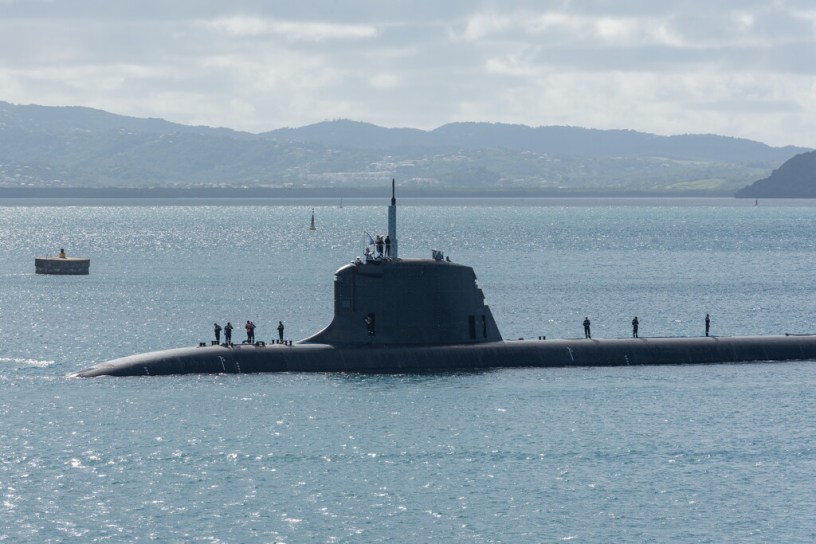
When at sea, the Duguay-Trouin is home to a crew of 70, of which 15 are officers and 55 are petty officers. Since last year, this includes six women in each of the Suffren-class crews, of which there are two for each boat. The Red and Blue crews rotate to ensure that the boats are in operational use as much as possible, because as we have discussed numerous times in this short series, nuclear attack submarines are rare and expensive, and you absolutely don’t want them sitting dockside any longer than absolutely necessary. As such, the boats spend roughly nine months in operations every year, with each crew doing an operational tour of four to five months, followed by a crew change either in port or at sea. The remaining three months when the boats aren’t operational are taken up by a ten-week annual maintenance period – the Duguay-Trouin was in the middle of this period when we visited, which was the reason she was readily accessible in a covered dry-dock in Toulon – followed by a two-week training period at sea before the boat and crew are ready to conduct operations. The crew rotation starts with an eight-week training ashore, followed by said two weeks at sea, and then the boat is off to spread the good news about honour, homeland, valour, and discipline to anyone that happens to come in the way of 5,000 tons of submerged power projection.

Life aboard a Suffren-class vessel is about as nice as you can expect from being aboard a submarine. Again, closer to serving aboard a fast attack craft than a WWII submarine, but you really should be comfortable with not having much in the way of personal space before signing on to serve aboard a cylinder spending most of its time below the waves. The commander is the only one to have his personal cabin. On the positive, neither the Rubis- nor the Suffren-class employ hot bunking, instead everyone has their own bed, so I guess that is something. A small gym with a bike and similar are provided, and in the messes you can find books (everything from Lucky Luke to essays on trawling), movies, the occasional card game, and so forth. The interior decorations are exactly what you can expect from a warship, appropriate posters share the walls with memorabilia from places visited and vessels encountered. The occasional glass is available – both beer and wine – though how much alcohol you get to indulge in and when you get to drink it is up to the commander and his judgement. Interestingly enough, allied submariners regularly join the crew for missions, further evidence of the tight-knit submariner community within NATO. The messes also double as offices, mission planning spaces, and everything else where you might need a table. However, exactly how much time and energy you have to sit down and ponder the adventures of the man who shot faster than his shadow is somewhat open. During operational deployments, the crew work 24/7 with no days off, with the length of watches varying depending on the situation, though they always are at least four hours. When asked if life aboard ever gets boring during patrol, commander François-Xavier just smiles and says “No”, noting the tempo of operations and watchkeeping means that you are always busy.
Oh, hello there, Royal Navy.
The Royal Navy (in)famously had none of its six operational Astute-class submarine at sea during significant stretches of 2026, in stark difference to the Marine Nationale who regularly is able to have three to four boats out of its five at sea (currently four of the six Suffren-class submarines are in service, accompanied by Améthyste, the last surviving Rubis-class boat). Navy Lookout provided a good overview of the situation in late June, which had seen HMS Audacious waiting for docking and then in maintenance since 2023, HMS Anson having just returned from an operational mission, HMS Astute in the queue for a drydock slot for a multi-year mid-life maintenance period, HMS Ambush having been inactive for four years and partially stripped for spares, HMS Artful hopefully being close to returning to service after having been in port since 2023, and HMS Agamemnon to be delivered to the Royal Navy in late 2026 (in addition HMS Achilles is still being built). In fact, availability has been so poor that French SSNs have been used to escort British SSBNs to and from their bases due to a lack of Astutes.
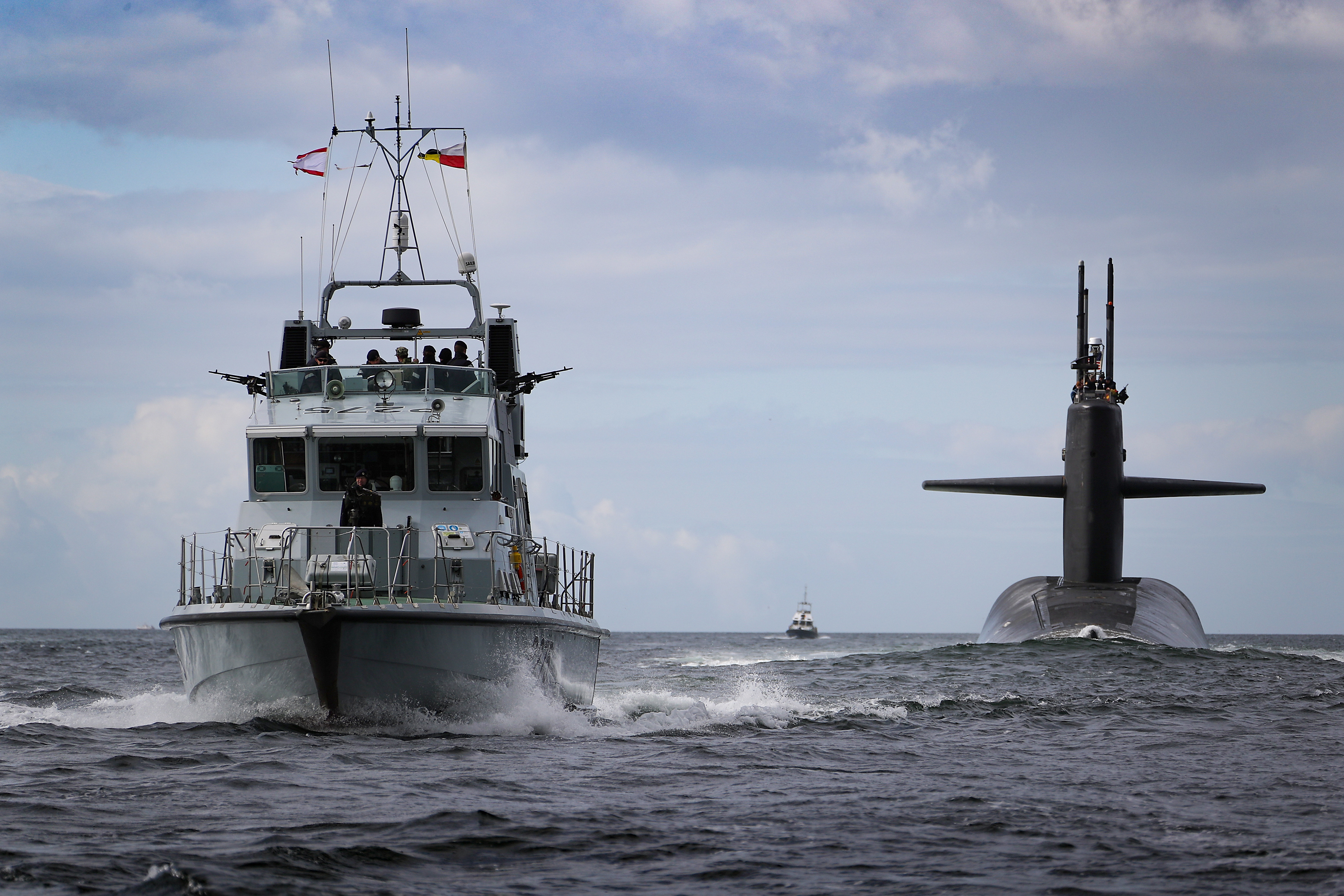
There is no one simple explanation to this discrepancy, though if you really want to get the short version of it it does come down to spares, infrastructure, maintenance processes, national priorities, or if you want an even shorter version: money.
The Royal Navy and British defence in general have been underfunded for decades, and at some point that will come back to bite you. Lack of clear and consistent long-term planning also means that you aren’t able to do the things that seem expensive in the short-term but will be beneficial in the long-term – such as ordering decent amounts of spares. Recruiting and personnel retention are other major issues, it is easy to say that you want two crews for every submarine, but where do you get the people? It is an almost too on-the-nose example that while the Navy Lookout article describe the lack of docks and facilities able to serve the nuclear submarine force, we entered the SSN facilities inside the Toulun naval base via a large brand new protected building, built explicitly to serve the needs of operations with the Suffren-class, while the base is also seeing significant expansion when it comes to new dry docks dedicated to the SSNs. In addition, as I discussed in my article on the FDI-class and how France manages a stunning 80 % availability rate for the frigates, the armed forces work in close cooperation with domestic strategic partners for maintenance and service. For the navy, Naval Group has a contract as the prime contractor responsible for in-service support throughout the lifetime of the ships, which include the submarines they’ve built. This they do in facilities owned by the navy inside the naval bases themselves, where they are permanently stationed. Having contractors do maintenance instead of sailors isn’t unique for France by any stretch of imagination, but apparently they are doing something right, as it doesn’t just add a middle-man adding costs and bureaucracy which tend to be the criticism in certain other countries.
However, a terrible maintenance record has never stopped anyone from building new stuff, and we have to end this discussion by looking at AUKUS. As is well-known to readers of this blog, Australia really has the operational need for a nuclear submarine, but they also have absolutely no submarine industry to speak about, literally no nuclear industry, and as such decided buying a conventional version of the Suffren’s baseline design to be built in Australia was the right idea (yes, you can question how they reached that conclusion).
That went more or less as well as one could imagine, until back in 2021 Australia suddenly made a shock announcement that they had a deal with the US and UK for a pact that included the country becoming the third largest operator of SSNs. The ‘at least’ eight SSNs is now set to include three Virginia-class submarines bought from the US as well as five SSN-AUKUS built locally, but for a country that hasn’t built a submarine since the Collins-class, and has no experience of nuclear ones, the price tag of 368 billion AUD (230 Bn EUR) over the next thirty years for Australia’s submarine programme is quite revealing. As said, that figure is the full programme, and should not be confused with a unit cost of 46 billion euros for the upcoming SSN-AUKUS class. Still, this is very much jumping into the deep end of the pool, as they made the decision in spite of the earlier mentioned lack of local submarine production facilities and nuclear industry (yes, you can question how they reached that conclusion)
A key item here is that the SSN-AUKUS-class is the British Astute-replacement, the former SSNR. Now, looking at the British availability of SSNs, and the fact that much of these issues rests on limits imposed by a lack of infrastructure and facilities, you might be correct to question whether Britain is the correct partner for Australia’s upcoming submarines. The answer is almost certainly twofold: No, it wouldn’t be a surprise if the UK is unable to keep their part of the deal and runs into delays or cost overruns, or if they end up cutting the number of submarines of the class they order for themselves, but at the same time it also seem unlikely to be the limiting factor considering the state of the (largely non-existent) Australian submarine industry.
However, on the positive side it deserves to be noted that SSN-AUKUS does seem to be the current flagship programme of the British defence industry – possibly outranking even GCAP in the minds of Whitehall – and as such can be assumed to receive the political backing (and funding) needed to keep the programme running, regardless of which party controls government.
There has been voices raised about whether SSN-AUKUS really is the best and cheapest way forward, with rear admiral (ret.) Peter Briggs of RAN recently raising valid questions in an article over at Navy Lookout. I say “raises valid questions”, because I do think the article does that. However, he also finishes by stating in no uncertain terms that “An SSN-AUKUS design based on Suffren would be cheaper in every dimension, an option that should be considered,” which I believe is where many dismissed his writings. No one has asked me, but you will get my opinion in any case.
Yes, for all the reasons quoted by Briggs the current SSN-AUKUS will likely be something of a nightmare programme and will take considerable time before it produces any operational submarines in Australian service (or British service, for that matter). If the Royal Australian Navy turned up in Cherbourg, mumbled something about being sorry, pointed at the Suffren and said “We’ll take five of those”, and wrote out a cheque for 11 Bn EUR they would almost certainly have an operational nuclear submarine fleet faster and cheaper. There is also the non-proliferation angle, where while technically legal from a treaty point of view, states acquiring submarines raises questions about nuclear proliferation risks due to the removal of highly-enriched uranium from IAEA inspection (see this recently published anthology for a discussion about both the Australian case and the more general fears). Here the French reactor design, employing uranium enriched to a significantly lesser degree, would be the preferable option (though it on the other hand will require refueling during the lifespan of the submarine, raising further questions).
However, and I can’t stress this enough, buying a French design off the shelf has never been an alternative for the Australians, not even during the days of the Barracuda. The Australians want to build the boats themselves, which is part of why the current programme is so expensive. They also want a bunch of US (and British) systems and weapons, which would be a huge change. Both of these add costs and complexity to the programme, and that is before we start asking whether the Australian’s would need that VLS-module installed as well. Whether an Australian-built Suffren with a US CMS and equipment setup would be less or more of an expensive nightmare than SSN-AUKUS is anyone’s guess, but experience from the Barracuda is not exactly encouraging. Submarines being extremely secretive, even among allies you don’t necessarily will find Paris, London, and Washington celebrating the idea of putting the systems and weapons of one nation into a boat designed and built by another one.
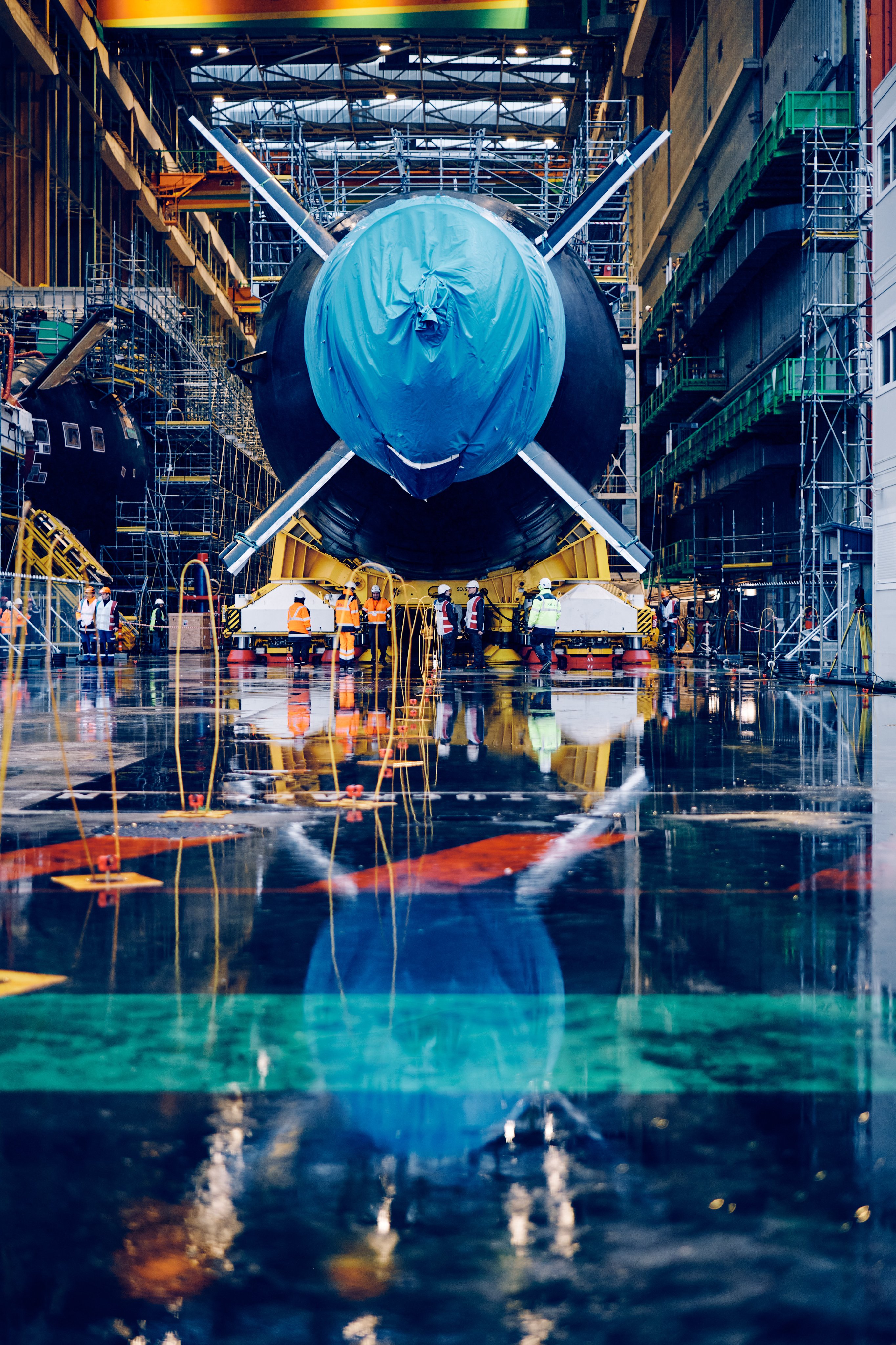
Finally, there is a very real question of whether France would be willing to export the Suffren even in its current form. When asked, Naval Group stuck to the official French line of SSNs not being available for export due to non-proliferation concerns, though the cynics among the readers may of course note that that was the official line in both the US and the UK as well until one day it wasn’t. Perhaps the more important question is whether there is room for exports in the nuclear infrastructure? France employs their naval reactors in their SSNs, their SSBNs, and in their aircraft carriers. That is a limited number of vessels, but still enough to keep the know-how, production lines, and life-cycle support services running at a healthy tempo. As described the boats are also expected to spend the vast majority of their time at sea, or at the very least ready to go to sea at short notice, with the maintenance cycles being a finely tuned process, which would require quite a bit of time and resources allocated to it to allow for the required adjustment to cater for five export boats without French availability suffering (and as we have seen, availability suffering is not something the French tend to tolerate). In something of a paradox, the very high priority placed on the French submarine force as a source of national capabilities tied to the French national deterrence might be what makes the Suffren stand out as the best option for anyone wanting to buy an SSN off the shelf, but it is also what makes it a significantly less likely and more unwieldy as an export item compared to someone who would place a higher importance on successfully exporting their SSNs – regardless of whether their starting point is better or worse.
In the meantime the Blacksword Barracuda is moving along. On the outside there isn’t too many differences – the slower speed of the diesel-electric setup means that instead of the foldable bow-planes the Blacksword feature sail-mounted planes and the pump-jet is gone in place of a traditional propeller – but on the inside the removal of the nuclear reactor obviously changes things up. In line with Naval Group’s design philosophy that API and “two weeks at 2-3 knots isn’t interesting” for a submarine with a littoral capability but a global reach, you need strategic mobility while maintaining stealth. This means that Naval Group has fitted the Dutch subs with large diesels and large LFP batteries (lithium ferrophosphate, or LiFePO4), which ensures the endurance, autonomy, and mobility the Dutch (and any other countries wanting a large SSK) are looking for. An interesting detail is that the weapon load and torpedo tube number has gone up, with six tubes and 24 weapon racks (again, the total weapons capacity of 30 weapons means you pre-load the tubes before heading out to sea, which limits the flexibility in that you need to fire off a weapon before being able to move things around, though you certainly can argue that often you want at least one torpedo on the ready, so loading a few torpedoes into tubes and then topping up the racks may be a reasonable option). The main weapon is set to be the F21 Mk2. The Blacksword lack the dry-dock shelter, but still has significant special forces capability – in part thanks to the lower crew requirement, Naval Group mentioning 35, or half of that of the Suffren – and there are growth margins with the ability to develop such a solution if there is an eventual requirement. When it comes to systems, the fixed arrays are the same on the Dutch and French submarines, while the Dutch have their own towed array in development.
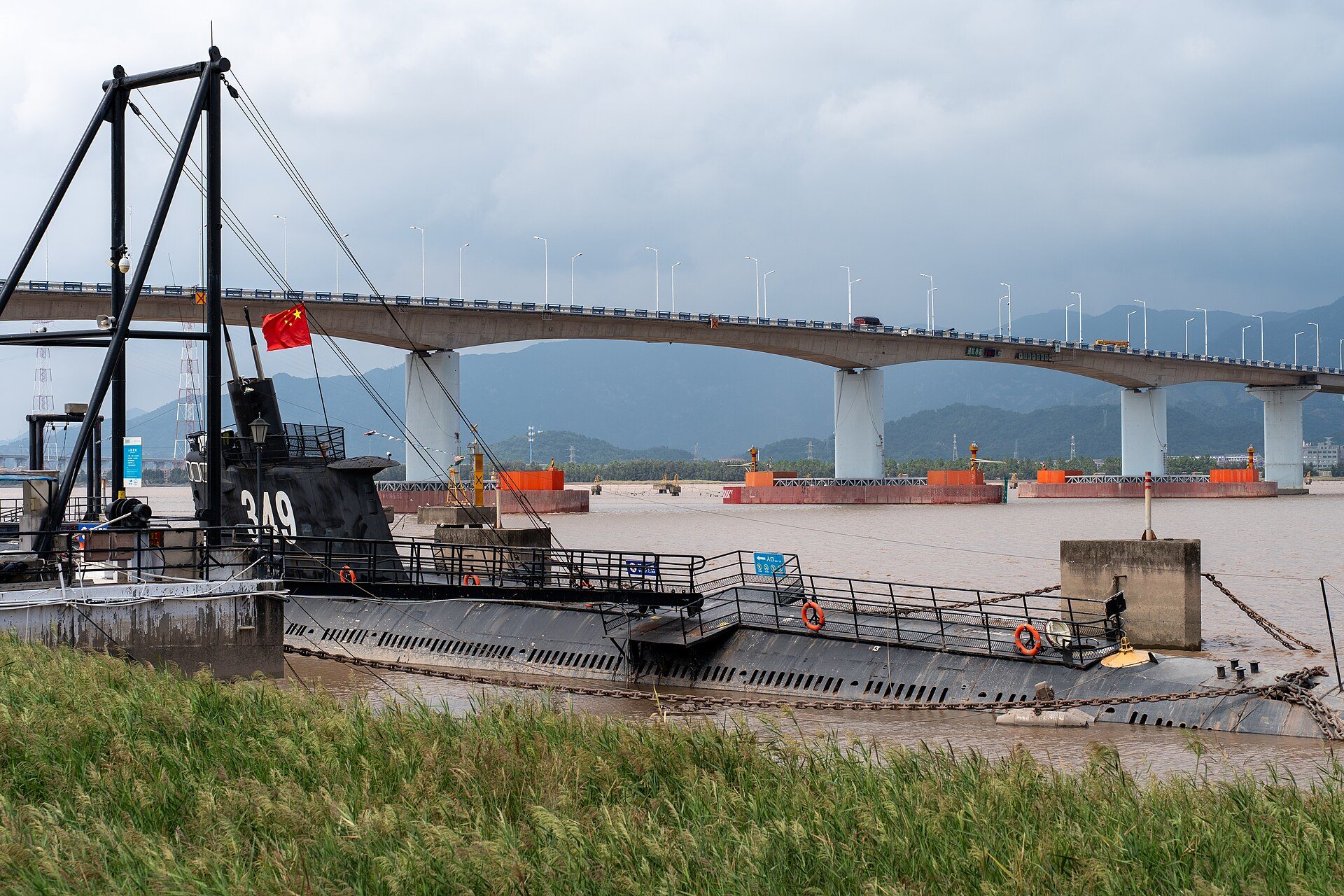
And in a really interesting twist: the Egyptian Navy – which already operate the Gowind, Fremm, and Mistral – is looking at the Blacksword Barracuda as a replacement for their four Chinese-built Romeo-class submarines. Let’s be clear, in case you haven’t heard about the Romeo-class, it is because it is such an outdated design that it hasn’t featured in any relevant national security discussions for quite some time. It is the first large diesel-electric submarine class launched after WWII by the Soviets (the programme that led to the Project 613 Whiskey having been launched during the war, even if the design was finalised only after it). The first boat was launched in 1958, and then China got into the business of building these boats, four of these (somewhat improved) Chinese Type 033 Romeos being the ones that are left in Egyptian service. However, they were upgraded further still (by the US!) in the early 1990’s, including reportedly getting the ability to fire Harpoon anti-ship missiles. Upgraded Chinese submarines of a Soviet 1950’s design slinging Harpoons is a frankly bizarre concept in the late 2020’s, but here we are. In any case, for any Egyptian submariner, the chance of upgrading from the Romeo to the Blacksword Barracuda would be the kind of jump from a MiG-19 to a Rafale that is enough to cause whiplash just from the rapid increase in capability. Both the Chinese and the South Koreans are apparently in on the competition as well.
This article is in large part based on information acquired during the EURONAVAL press trip, where the hosts funded travel arrangements (including food and hotels). No parts of the text has been shown to or discussed with any of the companies involved, nor with the organisations involved in EURONAVAL or the press trip.

