
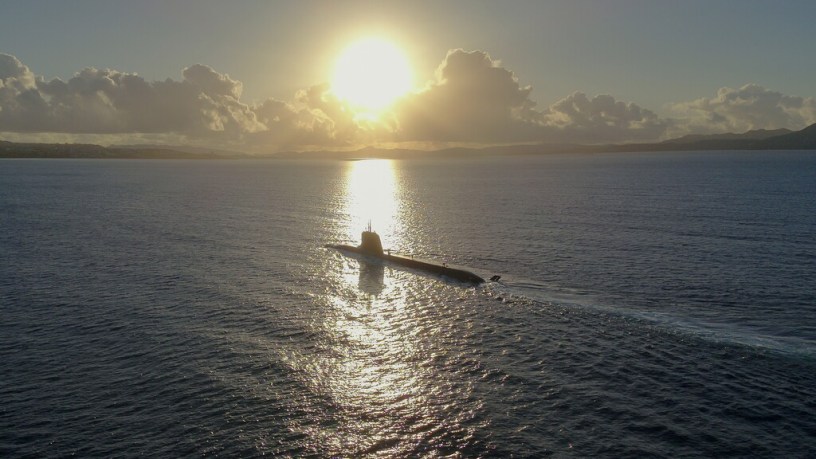
A program cost of approximately 10 Bn EUR (2014) is quoted in most cases for the programme as a whole, giving a unit cost in inflation adjusted figures of approximately 2.15 Bn EUR per boat in 2026 value. This can be in contrast to the Japanese Taigei class, which is something of the gold standard for a non-nuclear blue-water submarine, and which floats out of the shipyard to the tune of approximately half a billion euro. As always its good to take these numbers with a grain of salt, but, yes, in the most basic example you get four Taigeis for the price of one Suffren. A perhaps more relevant comparison is the conventionally powered version of the Suffren which was sold to the Dutch as the Blacksword Barracuda, which depending on which figures you use will see four boats delivered to the Dutch at a unit cost of somewhere 1-1.5 Bn EUR per boat. In other words: a very rough comparison is that powering your boat with crazy rocks costs in the neighborhood of half a billion euros per boat.
So why do you do it? Speed, range, power, and the ability to stay submerged indefinitely. Interestingly, as mentioned Naval Group is offering a conventional variant of the Barracuda-design (which include both the Suffren, the Shortfin that was being built for Australia, and the Blacksword which currently is the variant on offer and the one chosen by the Dutch). The Conventional Barracuda is however (like the smaller Scorpène) only offered with diesel-electric propulsion using Li-ion batteries and a dry snorkel that allows for the diesels to kick into action within a minute after arriving at periscope depth. It is not that Naval Group hasn’t been building submarines with AIP – the Pakistani Navy currently operate the Agosta 90B/Khalid-class with the French MESMA-system (an ethanol-driven steam turbine), and Indian Scorpène/Kalvari-class boats are set to receive DRDO-developed and -built fuel cell-based upgrades (all, and I mean all, the usual caveats about Indian defence procurement and domestic systems apply). Instead, the French question the value of AIP in a world where battery technology has made huge strides in recent decades, and with solid-state batteries on the horizon promising even greater rewards. In short, the critique of the current generation of AIP-systems can be boiled down to what Naval Group bluntly describes as “Two week at 2-3 knots isn’t interesting.”
Your opinion on that statement may vary – for a littoral scenario such as in the Baltic Sea, you can do a lot of interesting ISR-missions or covert minelaying at two knots, which allows you to sail from Karlskrona to Kaliningrad in under three days – but as mentioned I got that quote standing next to a drydock in France. And for France, the fact remains that their area of operations is truly global. If you have a fleet of six boats doing all those missions which submarines are uniquely qualified for, you will eventually have the meeting where your president asks “How soon until we can have a submarine outside Djibouti?”
That’s 5,000 km from the base in Toulon in a straight line, and you can safely add at least another 500 km on top of that due to the need to navigate around the major islands of the Mediterranean. Do that trip at two knots, and you will be at sea for more than two months before reaching your operating area.
I feel this is sometimes missed in the AIP vs nuclear-debate. Yes, different tactics used by different navies may mean that you operate your boats in such as way that the better sprint capabilities of a nuclear boat doesn’t really come into play. However, the higher speed a nuclear submarine is capable of in a tactical scenario is only part of the equation, the vastly superior strategic mobility is a very real difference that will be relevant in a number of different scenario in today’s world.
And it doesn’t stop there, as the better mobility of a nuclear-powered submarine isn’t just down to sprints or transit speed, but also the ability to move at higher speeds submerged without having to worry about when you have to surface. Add even a knot or two to you cruising speed while in the area of operations, and your tactical flexibility goes up quite a bit. Add the ability of just not having to think about how throttling up or down will affect when you have to surface and start the diesels next time around, and one can see why there is still quite a gap in capability between AIP boats and SSNs.
Okay, so the vessel is able to reach its area of operation quicker, and offer greater flexibility once on station. But what does it actually do? The answer might come as a bit of a surprise.
“Supporting the nuclear deterrent.”
A handful of different people, including commander François-Xavier, during different events at our press trip described the role of French attack submarines, and they all gave the same primary mission. France have four ballistic missile submarines in the form of the Le Triomphant-class, and has maintained a continuous at-sea deterrent since 1972. The role of these submarines in French national security is undisputable, in particular since the reductions in the nuclear arsenal that have taken place since the end of the Cold War. Their proudest moment in recent times came in early 2022, when the four-strong fleet surged in response to the Russian full-scale invasion of Ukraine and deployed three boats at sea simultaneously on operational missions, for the first time since the Euromissile Crisis of 1983. Let’s not get sidetracked into discussing the SSBN-fleet, the French nuclear doctrine, extended deterrence, or the upcoming SNLE 3G/L’Invicible-class – all topics which deserve posts on their own – and instead just note that no-one in the fleet seem to have any questions regarding what is the most important job for the Suffren-class. It is to protect the SSBNs, in particular when they are close to shore at the start or end of their patrols, where they are more easily detected due to the adversary (Russia) knowing roughly which area they are in.
Following that, the submarine is a true a multirole platform, and can take on more or less the full range of submarine missions. This includes ISR, where the submarine being equipped with the sensors discussed in the last post is able to stealthily approach foreign shores, vessels, or installations, and gather data on them. Special forces operations are also a key mission set, where the submarine has an air lock able to fit approximately five combat divers permanently installed aft of the CIC. This can then be supplemented by a drydock shelter on top of this, which can house different kinds of manned or unmanned vehicles.
Exactly which unmanned systems the Marine Nationale currently operate or plan on taking into service was not something the navy wanted to discuss in detail, but the international trends are well-known. The most obvious use case is for the ISR-mission, where being able to send out a sensor further away from the boat is of great interest. This is true particularly in dangerous locations or very narrow or shallow waters, where an SSN might be too large for it to want to come close enough to the intended target. Self-propelled mines or drones transporting mines are more in the ideas phase for the time being, but provide interesting concepts that are being looked into in different places. Cheaper drones are single-use and can be wire-guided, while for more advanced system some mode of retrieval is preferred. The gold standard for this would be a tube-launched and tube-retrieved system, though for the time being this remains an idea. Instead, the dry-dock shelter remains the practical solution for underwater systems.
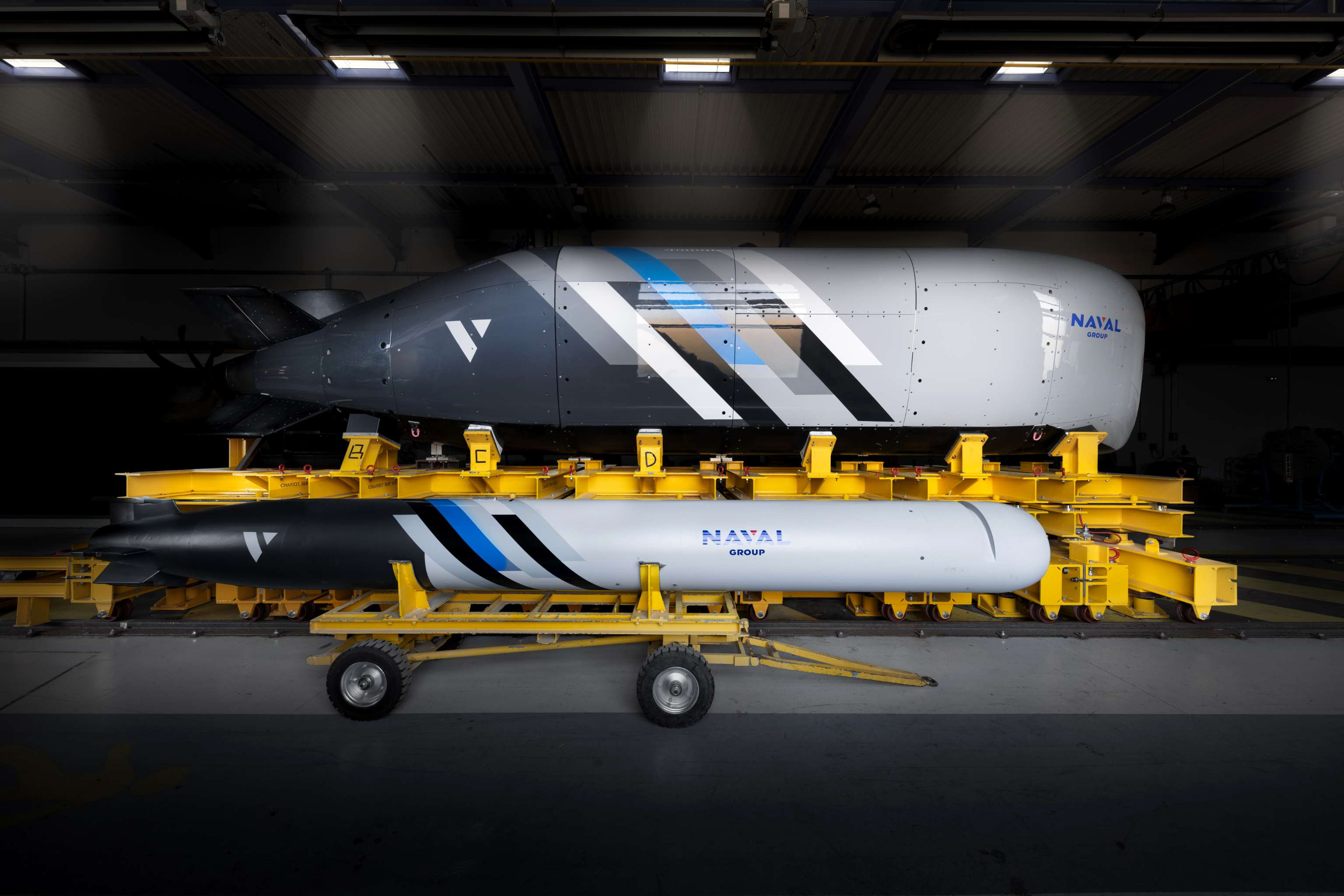
However, an interesting case of synergies is the Seagent M that Naval Group is offering, as it share quite a bit of commonalities with torpedoes. Exactly which are not discussed in details, but Naval Group “use the parts of a torpedo we think are interesting.” The only detail confirmed is that certain acoustic stealth features are borrowed. The Seagent M is made to enable platforms such as submarines to have additional capabilities, in the name of “Making more of the assets you have”. In particular for shallow and/or uncharted waters, exposed coastlines, or otherwise dangerous areas where you might not want to send your submarine, the Seagent M is able to provide combat environment evaluation and ISR-missions without risking the crew. To ensure significant range, the Seagent M has a 30+ hours endurance, based on the battery technology Naval Group has in-house following their acquisition of Accuwatt Technologies.
Small unmanned aerial systems offer another interesting option, either tube-launched, launched from a surfaced submarine, or then using the launch system ordinarily used for flares or smoke signals – either an external pre-loaded basket on French boats, or a tube that is loaded from inside the boat on German (and German-related designs such as those in South Korea). The benefits are obvious. Being able to get a sensor higher up to look further over the horizon is nothing new, but with the range and sensor capabilities of even small drones having grown significantly, the ability for a submarine to close into an interesting vessel or facility, and from a safe distance then send in a drone would add significantly to the ability to get interesting information compared to ‘just’ gathering intelligence through the ELINT systems and video feeds from the masts. Naval Group in their showroom demonstrated a version of the STEERIS, which employed an UAS as a sensor (leading to the enthusiastic statement “Here, my periscope is 80 meters high!”). STEERIS is their mission system and decision making tool for all unmanned systems integrated on a submarine. STEERIS is interesting here because part of the idea is that in its “STEERIS on-board” setups it shouldn’t be just a controlling software, but allow for autonomous operations and control to ‘Commander’s intent’-style orders, rather than ‘turn left and fly in that direction’. There is an interesting cross-over here, in that Naval Group has long experience with torpedoes, which already are systems that feature independent decision-making STEERIS is not yet operational, but on the verge of seeing operational trials with the Marine Nationale. However, for the time being these remains nicely rendered marketing videos, rather than operational capabilities.
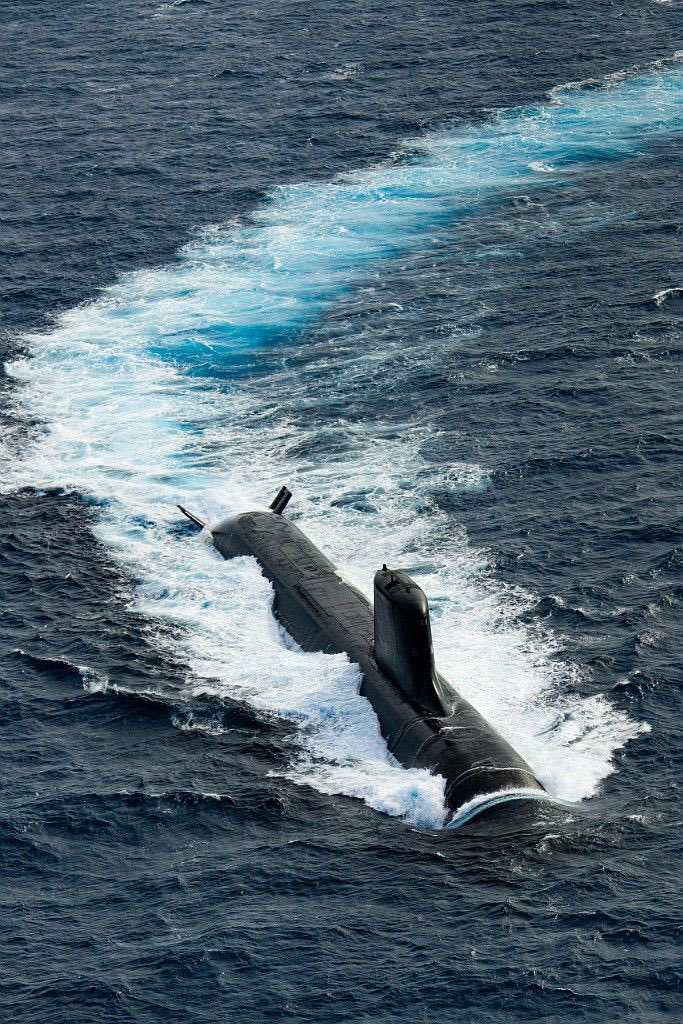
For bottom mapping and minehunting, the only active sonar onboard the submarine is found in the form of the MOAS – the mine/obstacle avoidance sonar – which also can be used to provide navigational fixes by comparing bottom images with the charts available. The system operates at a high frequency, which ensure an accurate image while also promising a low probability of detection. The importance of obstacle avoidance and accurate navigation fixes has grown as the littorals have become more interesting. The Suffren has X-rudders at the rear, a feature that provides better manoeuvrability compared to traditional rudders. The difference according to Naval Group is in the order of 10 % compared to a traditional layout, which if you cut that from the turning radius sits squarely in the ballpark of “not a huge difference, but not nothing”. An interesting benchmark for how Naval Group thinks about the difference is that they keep coming back to a relatively new feature in the operating environment of the submarines: windfarms. Currently, the Suffren-class is not regularly operating inside windfarms, but there is a clear understanding that it might be called upon to do so, which obviously means that you need to be able to navigate and manoeuvre very precisely. The navigation is already precise enough for that purpose, and in that scenario, the benefit of the X-rudder might suddenly be very relevant.
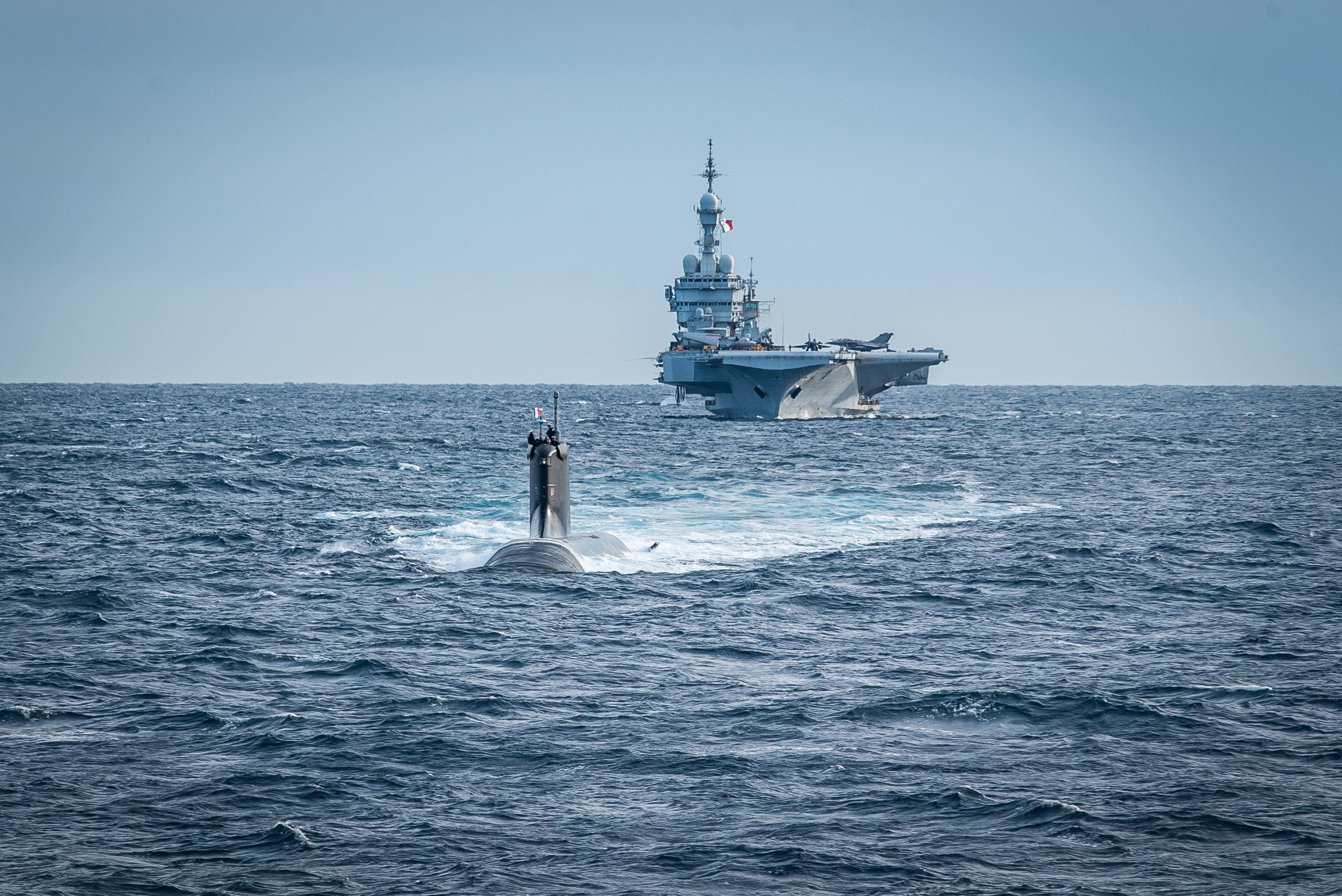
Finally, the submarine is able to blow things up, both enemy submarines (a key part of the SSBN protection mission in wartime), surface ships, and ground targets. It is, however, important to not think of a modern submarine as a lone wolf stalking the Atlantic looking for prey. Instead, the submarines operate as part of the overall French and allied forces in the maritime domain, putting an emphasis on joint operations and the communications they require. This ranges from the more exotic low-frequency bands typically associated with submarine operations to SATCOM, and depending on the mission set the submarine may communicate with the outside world at very regular intervals – such as hourly check-ins or every six hour – while on the other end of the spectrum are missions which will see the submarine stay silent for days. A key part of these missions is operating as part of the French carrier strike group, or in support of other larger surface action groups or amphibious groups, where the SSN can both offer a valuable ASW asset in the hunt for enemy submarines, or provide intelligence gathering far away from the surface vessels. In addition, the Suffren-class is able to sling cruise missiles significant distances.
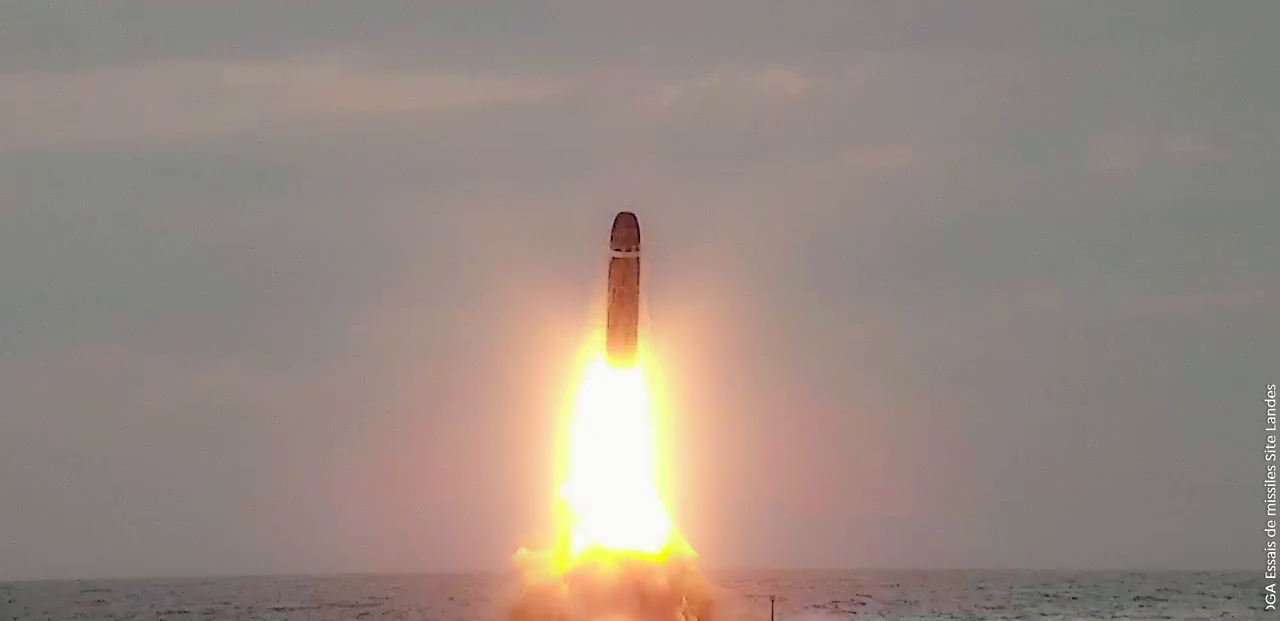
The arsenal of weaponry aboard the Suffren currently rests on three pillars: the F21 heavyweight torpedo, the SM39 Exocet anti-ship missile, and the MdCN cruise missile. Of these, the MdCN – or the Missile de Croisière Naval to give the full French name behind the abbreviation – is the new capability compared to Rubis. The long-range cruise missile draws heavily upon the experience from the SCALP/Storm Shadow air-launched weapon, and is one of the most modern stand-off missiles when hunting hard targets such as buildings. It has seen (limited) combat use in Syria, being used to strike the Him Shinshar chemical weapons bunkers (though ironically, the SCALP/Storm Shadow has also been used to bag the Russian Project 636.3 Kilo-class submarine Rostov-na-Donu which was in a drydock in Sevastopol, even if vessels due to their mobile nature are usually thought of as outside the target catalogue of the weapon). During the trip MdCN was described over and over again as “the French Tomahawk”, a clear answer to the US cruise missile having become the latest individual weapon system on which (social) media has become fixated – with the low-water mark being Financial Times’ headline “Can Europe develop an alternative to US Tomahawks?”. Branding issues aside (and honestly, “the French Tomahawk” really should be called the Francisca, but I digress), the MdCN is making something of a comeback with MBDA now offering the newer NCM/LCM MK2 which will be available in 2030, offering better range, better lethality, better anti-electronic warfare capability, and better survivability (including modifications to both hardware and software). All these things combine in a package offering 1,000+ km range and “Metric accuracy”, and MBDA talks cryptically about the possibility of “new mission sets”. However, even with the current version, the ability to strike targets on land increases the flexibility of the French SSN-force, and adds a capability that is rare even among submarine-operators.
The SM39 Exocet is the submarine-launched version of the classic French anti-ship missile, which as is usual with these kinds of missile share little besides the name with the weapon as it originally entered service during the Cold War. For the less-exotic Exocet versions the current variant is the Block 3c which comes with a new coherent J-band RF-seeker, which together with other tweaks has introduced better ECCM (electronic counter-countermeasure) capabilities as well as adaptive search patterns. This has not yet reached operational use aboard submarines, but MBDA is currently in discussions with the French DGA about the new SM40-version and the company is quick to confirm that the discussions are “Moving forward”. Compared to the current SM39 Mk 2 Mod 2, the SM40 brings improved propulsion to reach 120 km range, the same new J-band seeker as the B3c, while retaining the underwater launch vehicle of the SM39 to lower development and integration cost as well as maintaining the ability to fire the weapon both from “extreme depths” as well as from brown water-conditions. A missile to platform datalink is “being discussed”, make of that what you want.
Submarine-launched anti-ship missiles aren’t exactly unheard of, but they are still a somewhat rare capability. The ability for a submarine to stay hidden is as we have mentioned absolutely crucial, and if you suddenly throw a five-meter subsonic missile out of the water, you will create a lot of noise in the water and a radar contact above it. While impressive and very deadly, it ain’t exactly a restrained way of beating up someone. There is an argument to be made that with the improved methods of staying in contact and sharing information between submarines and other platforms, better sensor ranges, submarines these days can target vessels at greater ranges and simultaneously they do want to stand off further from vessels that may bite back compared to the Cold War, while finally also having an overall better situational picture which means they know when they can get away with blasting Exocets out of their tubes. Additionally, greater flexibility is always greater flexibility, and being able to attack an enemy with either torpedoes or missiles will always provide more alternatives to a submarine commander than having just torpedoes.
The torpedoes are however the main teeth of the submarine. The weapon carried currently is the Naval Group F21 Mk1, in use since 2019 not only by France but also exported to Brazil. Coming with the fascinating tagline of “The ultimate punch-effect for submarines”, the weapon is an upgrade in more or less all ways compared to the preceding F17. A key part of its improved lethality is that it is smarter, being able to create its own picture of the tactical situation in case the guidance wire is broken, identify the target, and then independently manage the speed to get the highest probability of a successful kill. The last part is important, as with all weapons there is a significant trade-off between speed and range, where the torpedo can swim out to 50+ km range at medium speed, but also sprint at 50+ knots which means no vessel will be able to outrun it if it gets close enough. The propulsion and complete rear-part of the torpedo is currently coming from a “European partner”. Naval Group declines to name this partner, but it is rumoured to be TKMS/Atlas Elektronik whose DM2A4 Seehecht happens to be a heavyweight torpedo using silver-zinc oxide batteries to propel it to 50+ knots or 50+ km at medium speeds. Naval Group however likes to do things themselves, and the upcoming F21 Mk2 will feature a new fully in-house designed and built rear part and propulsion solution. The Mk2 is currently in sea trials, and will provide similar energy, range, and speed. To the surprise of absolutely no-one, the seeker is a Thales product.
Interestingly enough, while it might not quite be a case of the classic “the French copy nobody, and nobody copies the French”, I was surprised to learn that Suffren does not employ swim-out launch of its weapons. Rather, in the interest of not starting any propulsion systems inside the torpedo tubes, they instead in the name of safety have a pneumatic ram which pushes the weapons out of the tube. A number of French weapons, including the F21, are however offered for swim-out tubes as well, with Brazil using their F21s from swim-out tubes.
Speaking of torpedoes, I was lucky enough to visit the Swedish torpedo development and manufacturing centre in Motala a number of years back. And while Motala is a nice city on the edge of Lake Vättern, it is difficult not to feel Saab’s and FMV’s people might feel a bit shortchanged when meeting their French colleagues working at Naval Group’s torpedo facilities. In Saint-Tropez.
The Suffren sports four tubes, all interchangeable and able to handle any of the available weapons. The torpedo room which is found at the bow on the middle of the three decks of the submarine has a total of twenty racks, with two levels of five slots on each side. All handling of the weapons is fully electronic, to ensure it remains silent and safe, and allows for just two to three people to manage all the work in the room. Reloading a single tube takes “less than ten minutes” according to Naval Group, and in theory you may sail out with the tubes loaded and a full set of twenty weapons in the rack, though this 24-weapon loadout did sound more like marketing than a capability Marine Nationale actually is seeing as a useful capability.
If the Suffren was equipped with mines or tube-launched drones, these might obviously be shorter than full-length weapons and as such more than one per rack could be carried – note that despite many sources mentioning submarine-laid mines among the weapons carried by the Suffren, the FG 29 or any other mine is currently not carried by the Suffren-class. The reasons behind were not given, but it seems to be a question of perceived operational need (or lack thereof) rather than any technical reason why the submarine couldn’t do so, and as such we might see the capability added in the future. The lack of any VLS tubes and decision to ensure that all tubes can do everything again speaks to the ‘multi-role nature with constraints’-philosophy of the submarines I touched upon earlier (active decoys are by the way another capability the French had aboard the Rubis-class, but which they aren’t using on the Suffren-class).
So how is life aboard a multi-role steel tube trying to remain undetected? That, and the somewhat touchy detail of why the Suffren are doing regular trips to Scotland, will be the topic of tomorrow’s post.
This article is in large part based on information acquired during the EURONAVAL press trip, where the hosts funded travel arrangements (including food and hotels). No parts of the text has been shown to or discussed with any of the companies involved, nor with the organisations involved in EURONAVAL or the press trip.

