

As 2030 comes around in the not too distant future, the striking force of the Finnish Navy will consist of four Pohjanmaa-class corvettes and four of the smaller Hamina-class fast attack craft. This force is large enough to able to create two distinct task units (though obviously having all eight vessels at sea at all times is not possible), as an example each with two corvettes leading two FAC. While the FAC are obviously less capable than the corvettes (significantly so in certain aspects) they offer serious flexibility to the unit commander when operating as part of a unit as individual vessels can spread out, offering a more complex and unexpected threat to the enemy by placing sensors and shooters in unexpected locations. This both ensures geographical coverage – in particular for roles such as ASW where detection of the threat at range is important and the range of the sensors are limited – as well as allowing certain vessels to remain silent to create nasty surprises for the enemy when the shooting starts. The changing nature of Finland’s national security considerations are worth remembering when looking at the future force structure. The Hamina-class was the outcome of a change from a focus on hit-and-run attacks and sea denial towards a more outward-looking doctrine where the protection of shipping, ensuring the availability of the seas for Finnish needs, and pushing the naval battle further out to sea got assigned greater importance. As such the, Hamina-class was larger than its Rauma-class predecessor, and with the Finnish NATO-membership the same trends are getting supercharged. The defence of Finland now include maritime – and crucially, joint – operations not only in the Gulf of Finland and the Archipelago Sea, but in the whole of the Baltic Sea, the North Atlantic, and the Mediterranean, among other places. While the Finnish contribution will be weighed heavily towards the Baltic Sea and the littorals, the ability to support allies in operations which constitute their key interests further afield is extremely valuable both for the alliance – which as a whole suffer from having a limited number of modern combat vessels – as well as for Finland – both to improve Finland’s standing in the alliance but also in providing valuable experience and intelligence gathering opportunities. At the end of the day, the global commons provide a unique domain where the armed forces of adversarial countries meet on a regular basis, and where the borders between diplomacy, exercising, deterrence, and operations often are a blurred mess.
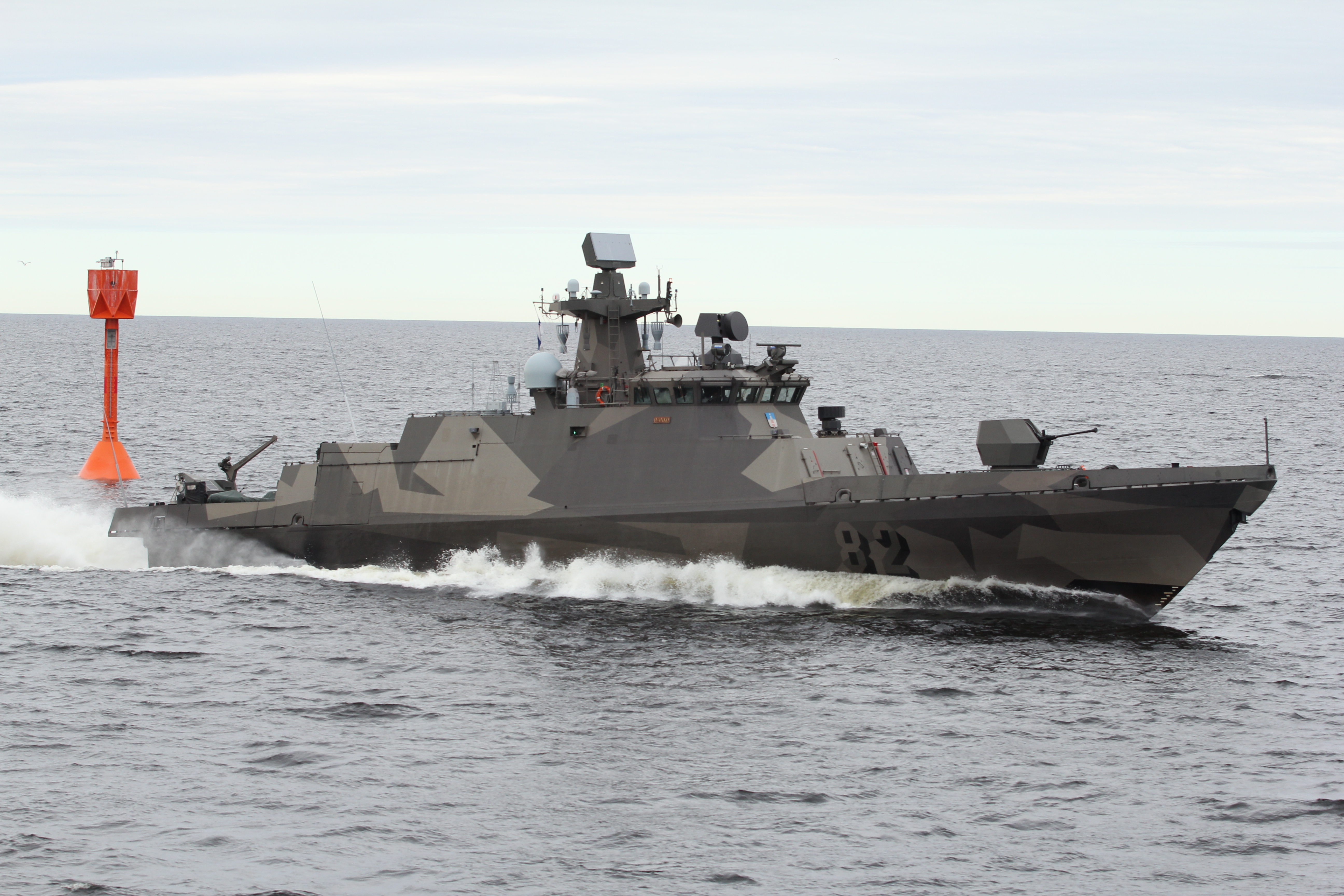
While the Pohjanmaa-class is still taking shape, the Haminas have recently undergone their mid-life updates, and as such are (more or less) in the form they will be during the rest of their service which is planned to stretch “into the 2030s” according to the Finnish Navy. As such, the question of what will replace the capabilities of the Hamina in the Finnish Navy’s contribution to this brave new world is starting to become relevant. It sits and simmers at the point where it isn’t exactly urgent, but you know that someone at some desk somewhere is doing preliminary studies and figuring out what the limiting factors and requirements will be. As far as I am aware, the official line is that everything is still on the table, but some of the premises can be guessed at based on the situation as described above.
To begin with, there is a value in quantity. The maritime domain is still a physical one, and even the most capable vessel can only be in any one location at any given time. With the reduction in hulls when the mineships and Rauma-class FAC are rolled into a single class, a further cut in the number of platforms would hurt the Navy’s ability to be present – a key aspect in more or less all missions taking place below the threshold of all-out war – and limits the tactical flexibility discussed above.
The value of operations further from own shores is increasing yet further. The Finnish Navy will still be one that is at home in the confined waters of the littorals, but not being limited to the archipelago or even the Baltic Sea is extremely valuable at all levels on the conflict ladder – from absolute peace through hybrid scenarios and up to peer versus peer wars. This require endurance and seaworthiness, two factors somewhat lacking in the Hamina-class.
No domain is an island, and the Navy needs to be able to slot into joint-operations both for it to be able to conduct its missions more efficiently, as well as to be able to provide value to others. This include the ability to e.g. take part in the air battle with the air and ground forces, but also being able to e.g. feed the joint intelligence gathering efforts with data. Any new platform will face the question “How does it help us?” both from other naval units, from the rest of the defence forces, as well as from the leading political decisionmakers.
However, while the three factors above seemingly point towards a further class of four corvettes, the situation is more complex than that.
While the current trend does point towards a high level of defence spending continuing for the foreseeable future, the Finnish Navy can’t expect significant increases in funding considering the added funds already having been made available for the Pohjanmaa-class and the pressing needs found in other parts of the Finnish Defence Forces. Both acquisition and operating costs will likely come under scrutiny.
A key part of operating costs, but also a question in its own right is that of personnel. While the Finnish Defence Forces thanks to conscription and a high will to defend the country is in better shape than many, being able to hire the crews needed to actually keep platforms moving is a key issue (read: headache) for many navies, and even with the lean manning of the Pohjanmaa-class the crew of 70 is over two and a half times that of the 27 souls found aboard a Hamina. Finding another 170 persons needed to replace the fast attack craft with corvettes might not be impossible, but would be a significant shift.
As such, the sum of the requirements is seemingly a platform delivered by 2035, able to conduct prolonged operations at sea, procured in numbers (preferably four), with a crew of approximately 25-30 persons, one small enough to be at home in the littorals, and preferably available at a bargain. A rather tall order, that at first glance looks like one unlikely to be filled by any single existing or planned platform.
Except, the answer seemingly rests at Eckernförde.
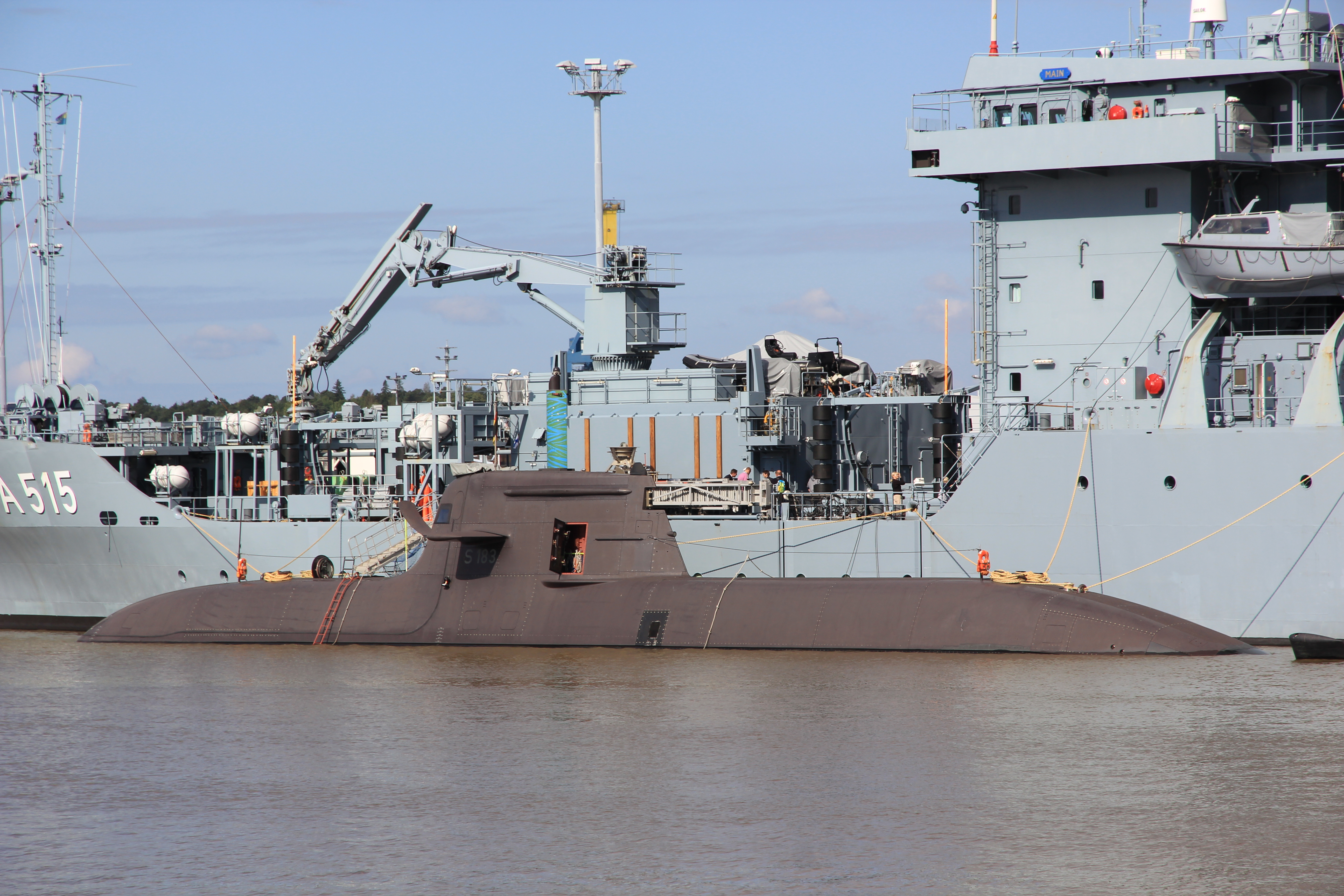
The old port city sits on the eastern shores of Schleswig, close to the Danish border, and what sets it apart from other comparable cities is that it is home to 1. Ubootgeschwader and the six submarines operated by the German Navy. These are made up of four Type 212A from the first batch, commissioned in the 2005 to 2007 timespan, as well as two of the later and slightly enlarged Type 212A Batch II which were commissioned a decade later. The Batch II sports a number of improvements largely centered around their ability to do special forces work, such as an enlarged air-lock, mounts for a SOF-container, and an enlarged torpedo tube functioning as a multi-mission lock. In addition, a mast for an underwater communications buoy is also fitted.
That the German Navy is down to just six submarines compared to the vast fleet of Type 205 and 206 that roamed the seas during the Cold War further underscores the low numbers of high-end platforms in NATO and the need to replace the Haminas on a one-to-one basis, but for the German Navy that is where they are, and the Zielbild Marine 2035+ envisions a submarine-fleet of six to nine boats by 2035. There are a number of ways to get from six Type 212A to those numbers, and the key factor here is the Type 212CD (the abbreviation designating Common Design). We’ve briefly touched upon the program earlier, but in short it is a joint Norwegian-German program, under which both countries will buy a similar submarine design and cooperate on the operation of these. Following the recent Norwegian long-term plan for defence, a total of six vessels will be bought by Norway. This is contrasted by a firm German order for just two vessels, although the German Minister for Defence Boris Pistorius has repeatedly been stating that the aim is for six boats for Germany as well, most recently having said so during a visit to Eckernförde a few weeks ago where he spoke about still during this year looking into the schedule for deliveries and details regarding how the order for additional vessel could look.
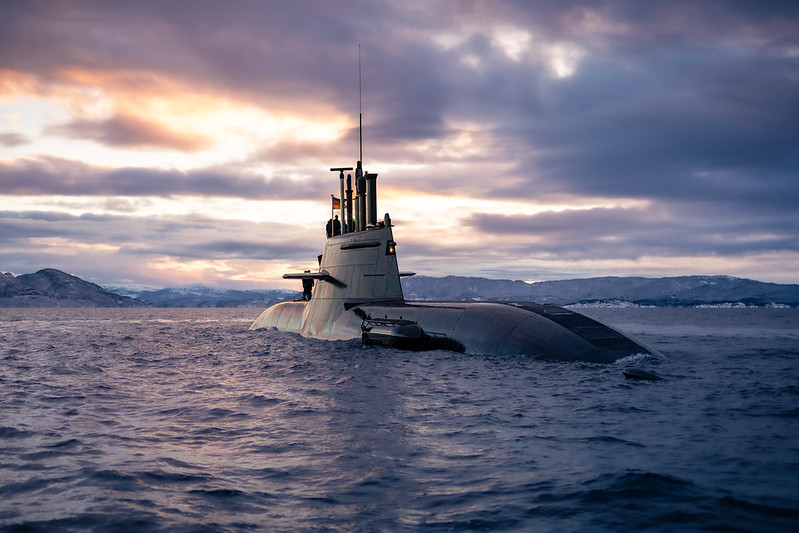
The exact wording was somewhat non-committal and vague, but ordering the four ‘missing’ Type 212CD for the German Navy does in my book currently look more likely than not. This is in part due to the needs of the German Navy, but also because the order makes eminent sense from the viewpoint of German industry, domestic politics, and the whole Zeitenwende-idea. Currently the first two German boats – U 37 and U 38 – will be delivered late in the first half of the 2030’s, and with the yard looking at a build rate of roughly one boat rolled out each year, it might well be close to 2040 before all twelve boats for Norway and Germany are commissioned, in particular if any of the export pushes currently underway succeeds.
Still, acquiring six Type 212CD leaves the German Navy with something of a conundrum. While twelve boats isn’t in any way unprecedented – in fact it has reportedly been seen as a requirement back at the dawn of time – no-one seems to believe Germany can crew twelve submarines, nor is it expected that the funding will be approved for operating a fleet twice the size of today’s. A moderate growth might be possible, say to the nine boats seen as the upper boundary in the Zielbild Marine, but anything above that would honestly be radical. Which leaves the question of what to do with the surplus Type 212As?
While the Type 212CD is more modern and capable, the Type 212A is no slouch either. Fitted with air-independent propulsion in the form of hydrogen fuel cells, the boat was the gold standard for non-nuclear submarines when first launched, and is still in many ways one of the most modern vessels of its kind. In particular, the smaller size compared to the Type 212CD – and many other more recent AIP-submarines – means it is more at home in narrow seas such as the Baltic Sea. However, while still extremely capable, by the 2030’s the first batch of the Type 212A will need a thorough mid-life update, something that costs money. The need to fund an MLU likely puts a further nail in the coffin when it comes to the idea of retaining all six 212As in German service.
This then leaves three possible options for the vessels: scrap, mothball, or export. Mothballing only makes sense if there are serious plans for ever reactivating the vessels, which would seem unlikely in this case. Scrapping them is the easy way out, and as opposed to mothballing you actually get some money back instead of just paying to keep something in running order. However, scrapping some of the better submarines around after a service life of just twenty-five to thirty years does seem wasteful. The 80-year lifespan of the WWII-era submarines in Taiwanese service might not be the goal, but e.g. the Sjöormen/Challenger-class built in the 1960’s saw a almost half a century pass between commissioning in the Swedish Navy and retirement in Singapore, and quite a few of the export-specific Type 209-class boats seem set to pass that mark. With the trend being for ever longer service life of platforms, the Type 212A could certainly be expected to serve deep into the 2050’s.
Which ironically brings us back to the problem of them being in some aspects too capable. The Type 212A was a joint project with Italy, but the basic design was never released for export. Instead, even allies and partners such as Portugal, Greece, Turkey, and South Korea had to contend with the export-derivative Type 214. Not a bad design, but not on par with the Type 212A. The number of countries which could be approved to buy the Type 212A – even a quarter of a century following it entering service – is still limited. Especially once you discard the ones to which Germany instead would want to market new-built 212CDs.
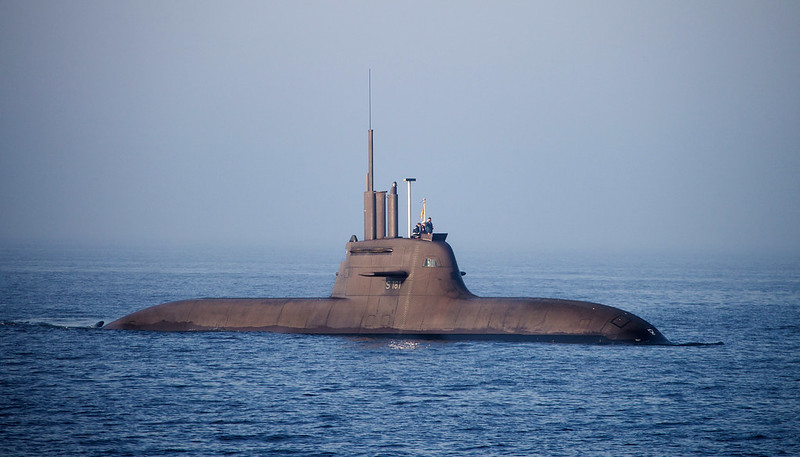
Another issue with retiring the 212As is that the Baltic Sea is important to Germany, and the number of NATO-submarines regularly operating in the sea is diminishing. The German Navy has always had something of an issue with being split between the North Sea/Atlantic and the Baltic Sea, and while the Type 212CD certainly is capable of operating in either, its design and the Norwegian connection does represent a tilting of the scales towards the open seas compared to the Type 212A. Following the retirement of the last Danish and Polish submarines (the Poles are planning to get back in the game, though the Orka program is beset by delays), the sole non-German submarines in the Baltic Sea operated by NATO is the Swedish ones. The Swedish boats are capable, but still only four in total (set to grow to five with the introduction of the A26 Blekinge-class). A German submarine-fleet focused on the Atlantic – where there certainly is no lack of tasks either – could quickly leave holes in NATO’s underwater posture in the Baltic Sea at a time when seabed warfare is increasing in importance. After all, the Type 212As currently represent close to a fifth of all non-nuclear submarines in European NATO outside of the purely Mediterranean countries. Germany also has a military interest in the Baltic Sea at large, with the quick and easy supply line for the German brigade in Lithuania going through a potentially hostile sea.
Let’s make this thing absolutely clear: there is an extremely low probability this will happen – I give it something like a one-in-twenty chance – but there is a rather interesting alignment of interests here.
Germany seems headed to a situation where come the mid-2030’s between three and six of their submarines will become surplus – with four perhaps the most likely number.
Germany would likely prefer to export them, but would need that export customer to be a close ally. This ally would also need either to have a littoral emphasis or place a key on operating costs to ensure that it isn’t interested in a larger new-built submarine.
Germany likely prefer the surplus boats to stay in northern NATO with a tasking that include at least some presence in the Baltic Sea, freeing up the larger 212CD for North Sea/North Atlantic operations.
Finland needs a new platform replacing the four Hamina-class FAC in the mid-2030’s, and one able to provide value both in the maritime domain as well as for joint operations.
Finland would prefer at least four hulls, able to operate both in the littorals as well as on the open seas, and with longer endurance compared to the Haminas.
Finland would prefer a rather small platform, with a crew of less than 30.
Finland would ideally be able to offer the alliance capabilities that are rare and/or highly sought after.
The Type 212A is a 56 meter long submarine with a crew of 28 (compared to 51 meters and 27 strong crew for the Hamina). It is built with an eye to operations in the Baltic Sea, able to maneuver in shallow and narrow waters, while also being capable of true blue water operations.
The submarines’ two key capabilities are the collection of information using long-range sonar and the engagement of submarine and surface targets. Although developed for worldwide deployment, their size, design and maneuverability make the submarines particularly suited to operations in shallow and littoral waters. Their air-independent propulsion enables them to stay submerged for extended periods of time, for example to covertly gather information on the situation in a specific sea area. The submarines can also be used to covertly deploy special forces, for example for rescue and evacuation missions.
The general capabilities provided by modern submarines is no secret, and while generally agreed that submarines would be useful for Finland, it has also been the general consensus that they are too expensive for the capabilities provided. Type 212A does represent something akin to the very best capability-wise, but it is thanks to the almost spooky fit in detailed requirements and timelines that the Type 212A in Finnish service could become a reality. A German sale for a only-for-you-my-friend price tag of the basic vessels coupled with a Finnish order for a MLU from TKMS – possibly as a joint order with an MLU for the two remaining German boats if the future 1. UG is to consists of six Type 212CD and two Type 212A – could represent something as rare as an affordable four-boat submarine fleet.
Getting a partner paying for 2/3 of the non-recurring costs of the MLU could be a major part of the difference between having to retire all vessels or growing the fleet to eight boats in line with the visions, and it would secure maintenance work for TKMS on four Finnish boats stretching over at least two decades – a very tempting proposal from an industrial policy point of view. Which four boats Finland would get would most likely depend on whether Germany would plan to retire the Type 212A-fleet completely. The two Batch II vessels would certainly be of interest to Finland thanks to their better SOF-facilities, but it is equally likely that these are of greatest interest to Germany as well. The most likely outcome in my mind is that Finland would get the Batch I and Germany staying with Batch II, but if Germany would be very keen on seeing Finland join the happy family of TKMS-customers they might be willing to part with one or both of the Batch II boats (don’t expect the German Navy to be happy with that solution, though). This one would largely come down to how much the German leadership would appreciate the value of facilitating a Finnish submarine-force highly integrated with their German counterpart.
Because highly integrated the force would be. Finland would e.g. almost certainly not set up an independent training pipeline, instead buying into the German one for important parts. The German submariner training program is tried and tested, and include the appropriate facilities (check out this deep dive into the Type 212A system by Matus Smutny which include more details on the training system employed). The work would start to take shape already well before the transfer of the vessels, with Finnish crew members serving aboard German boats to ensure that Finland is able to crew and operate the vessels – both when it comes to the technical details and handling, but also in a tactically sound manner. All to make sure that the Finnish Navy would be able to get the most out of them once they would arrive in Pansio in the mid-2030’s.
It is worth remembering that Germany is set to be the unofficial but clear lead-nation in the Baltic Sea thanks to their significant fleet and the expected creation of a NATO regional maritime command in some form in Rostock. As such, a closely integrated Finnish-German submarine force (with the occasional Norwegian involvement) would certainly serve Finnish interests as well as being a valuable alliance asset.
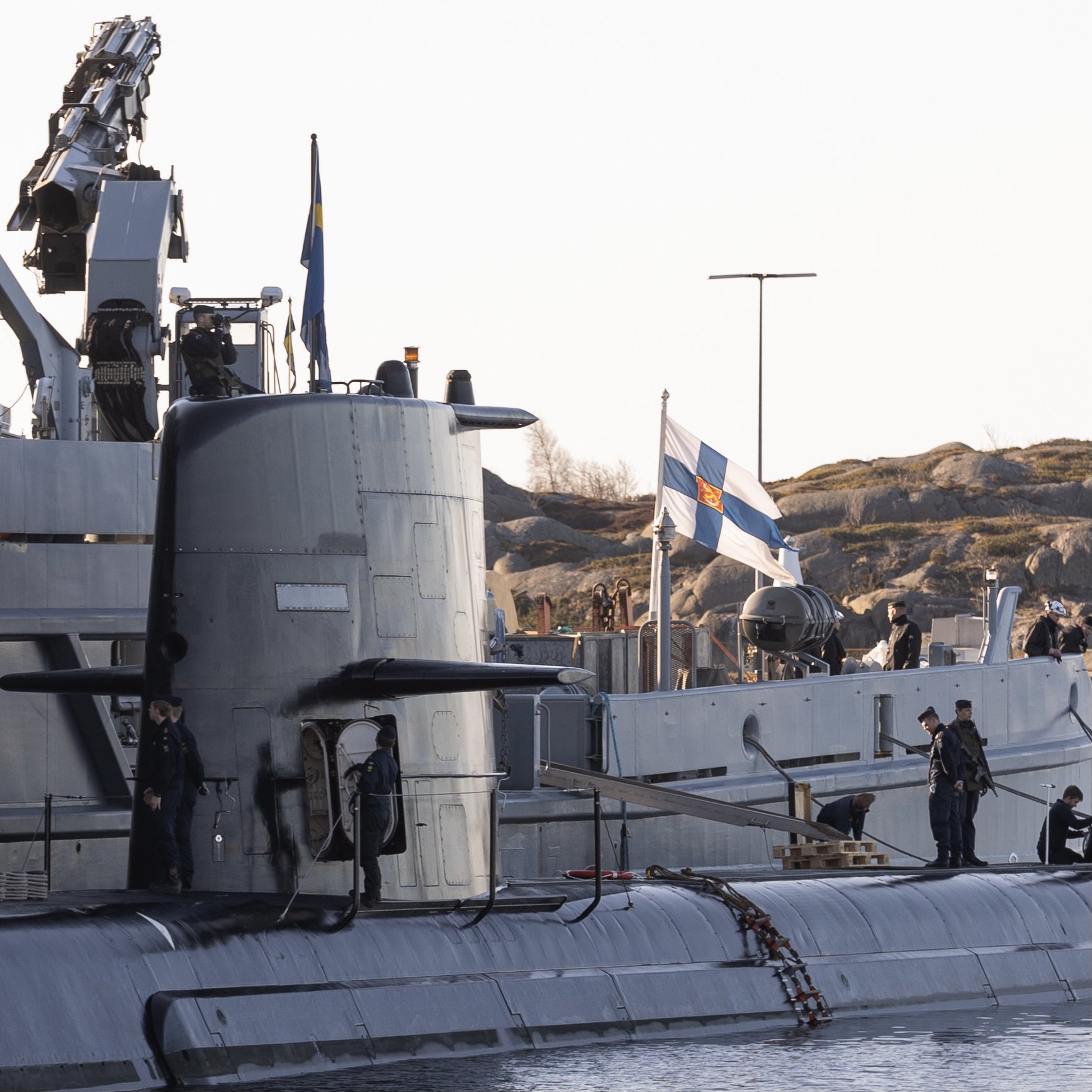
Would Finland acquiring four Type 212As be a perfect solution? No, there are certainly a number of issues. As mentioned, the vessels would need a rather deep MLU by the time any transfer would be topical. While it certainly could benefit from lessons and subsystems developed for the 212CD and while Germany might be happy to sell the boats themselves cheaply acquiring them would still be costly. Operating submarines would also be more expensive compared to a fleet of heavy FAC or light corvettes, both as it would require certain unique supporting capabilities (notably in the case of the 212A the supply chain of the reactants. Hello, hydrogen economy!) as well as a lack of synergies between the surface and underwater fleet when it comes to subsystems, weapons, and sensors. The training and personnel pipelines would also differ rather drastically, diminishing flexibility in a small force. It also needs to be noted that while a submarine can do a lot of things, it is objectively worse at a number of key missions of the Finnish Navy. This includes not being able to do escort missions, the anti-aircraft capability is poor to non-existent, and you can’t fly the flag in the same kind of presence-missions as you can with a surface vessel. To sum it up, leaving the Finnish Navy at just four surface combatants would be bad for all the reasons mentioned at the top of this post. The Hamina-class crews might also be of the correct size, but the roles of individual people aren’t corresponding one to one (and the psychological profile of a fast-attack craft sailor and submariner doesn’t necessarily correspond either).
And yet, for all that it would cost, the submarine would provide Finland with huge benefits and capabilities not found anywhere else within the FDF – and which are scarce even within NATO as a whole.
The ability to watch things without being seen is the first obvious benefit of a submarine – and the AIP means the Type 212A can reportedly spend three weeks completely submerged (i.e. non-snorkelling). As opposed to many other intelligence gathering platforms where the targets knows they are being observed, the nature of the submarine provides the submarine operator with valuable intelligence and creates uncertainty as the target never quite knows how closely watched they are. This has obvious value both in peacetime and wartime, and is often something that constitute the bread and butter of submarine operations. As an example, during the Falklands War the most famous achievement of the British submarine force without doubt is the sinking of the cruiser ARA General Belgrano, but a significant contribution to the war effort was made by HMS Valiant which patrolled outside of Patagonia, reporting when Argentinian fighters launched towards the islands. Lacking airborne early warning, this was one of the few ways through which the British forces were able to get any kind of indication of upcoming raids, and while far from perfect, the signals provided valuable intelligence to both the vessels in San Carlos Bay as well as to the carrier battlegroup – the Commodore Amphibious Warfare Michael Clapp, describing it as “information being received was proving reasonably accurate and timely“. Finland might not need a submarine to keep track of Russian air activity, but it shows the unconventional possibilities submarines provide.
The second value a submarine provide is obviously what in mil-speak is termed kinetic effects, i.e. blowing stuff into pieces. The modern torpedo is extremely effective against surface ships and submarines alike, and the ability to approach targets without being seen offer opportunities which anti-ship missiles and air strikes doesn’t. Another weapon which can cause serious damage is the submarine-laid mine. The stealthy nature of offensive mining by submarines have the added benefit of the adversary never knowing if, where, and how many mines suddenly can appear at their coast and in key chokepoints. While the effect is often more a factor of resources and time having to be allocated to counter the threat and shaking up morale among enemy crews, submarine mines also have had some significant successes throughout history – ironically, one of the more well-known being claimed by the WWII-namesake to Type 212A leadship when U-31 laid a mine which saw British battleship HMS Nelson severely damaged.
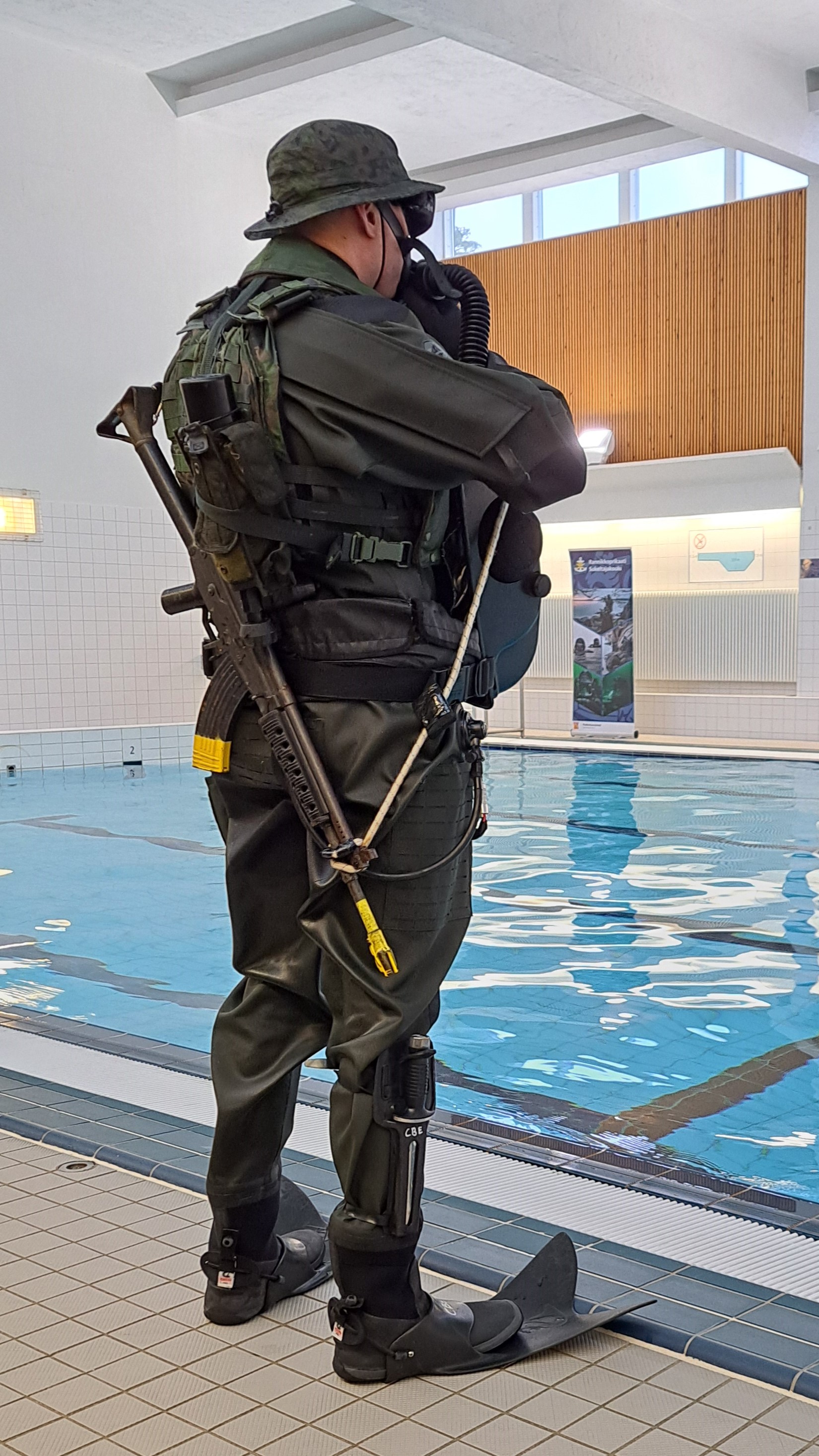
But while ships can be sunk and intelligence gathered by other platforms, a role where the submarine offers perhaps the most unique capabilities is as a platform for special operations. The inherent stealthiness of the submarine coupled with its ability to travel vast distance and appear in unexpected places means that it is one of the premier ways of inserting and extracting special forces. And as humans like to live by the sea, it also well established by now that a large number of valuable targets for SOF-units – be it intelligence gathering or more destructive missions – are often found within walking distance of the shoreline. As mentioned, the Type 212A Batch II sport a number of improvements to further aid in the role, but even the baseline 212A would offer the Finnish combat divers capabilities which are far beyond anything currently available or planned for.
It is difficult to overstate the change a Finnish submarine force would bring to the Finnish Navy. More or less everything from the concept of operations to tactics to training procedures would have to be revisited, and adjusted to a force structure where half of the combat vessels are doing things the Navy currently is unable to do (and conversely, half the vessels are unable to do a number of the things the Navy currently is doing). At the same time, it is difficult to overstate the changes the Navy already is going through, with the introduction of heavier true multirole platforms bringing new capabilities on the equipment side and NATO bringing new missions and a new level of cooperation with allies both on and off the battlefield. It is impossible for an outsider such as myself to say what the cost of introducing the Type 212A into Finnish service would be – there is nothing to say the Germans would be interested in selling them to begin with – or whether Finland would be better served by a force of four corvettes and four modern FAC as opposed to four corvettes and four submarines.
But it has to be said, if Finland was ever to re-introduce submarines, there won’t be a better fit than this.
 Corporal Frisk
