

The Swedish and Finnish firearms programs are steadily moving forward, and a few key events have taken place since we last discussed the topic. As such, and with much of the information only being found in non-English sources, a revisit is in order.
The first thing to clear up is that SSV 24 as a designation is dead. For non-Swedes this might be a non-issue, but the original designation for the short-barreled 5.56 NATO carbine did ruffle a few feathers. In short, the nomenclature in Swedish and English does not translate one-to-one, with both the G3 and the FNC being known as Automatkarbin (AK, automatic carbine) in Swedish. For the shorter weapon, it was felt by someone at some point in the project that it was more properly described as a Personal Defence Weapon, PDW, an established phrase in English. However, it must be said the way the term is used in English – a PDW is a compact sub-machine gun like weapon firing a faster and smaller bullet compared to SMGs, think MP7 or P90 – doesn’t really match this Swedish usage. However, the role envisioned by the Swedes as a weapon packing a punch but still small enough to be carried by personnel whose primary task isn’t to fire a rifle does match the general idea behind the PDW-concept. And with the word ‘carbine’ already used by everything up to and including G3s, translating PDW into Självskyddsvapen (SSV) probably seemed straightforward enough. However, a lot of people didn’t agree, and thought the phrase sounded like the carbine was either A) a ‘true’ PDW, or B) something along the lines of mace or a taser. Neither of these interpretations made sense, and as such it was decided earlier this year that since the carbine was in fact a carbine, it was renamed as AK 24 in line with earlier Swedish weapons.

However, the majority of Swedish soldiers won’t get the AK 24, which is the 11.5” variant (sometimes referred to as 12”, though my understanding is that the length is in fact 11.5”), but instead the AK 25. The big news on the Swedish front during the last twelve months is that the configuration for AK 25 – including calibre – is completely open. As is well-known by now, a quite significant number of soldiers were slated to get weapons chambered in 7.62 NATO as their main firearm, the result of a number of studies made by different Swedish government agencies and research facilities in the 2010’s. This was not a development that was greeted with open arms on social media or among those serving around Sweden, and in January the Swedish Armed Forces announced that Chief of the Army, major general Jonny Lindfors, had given orders to do a review of the calibre choices. The decision was made based on a number of factors having changed since 2018 – including both when it comes to technology, but also Sweden becoming a NATO-ally and the general security situation in the world having undergone rather drastic changes – but also included a line about the original reasoning behind the decision not having been communicated clearly enough.
That is the official line, and while it certainly hold true, the fact is also that a number of key personnel involved in making the original decisions based on the testing and research back then have since moved on to other positions or retired.
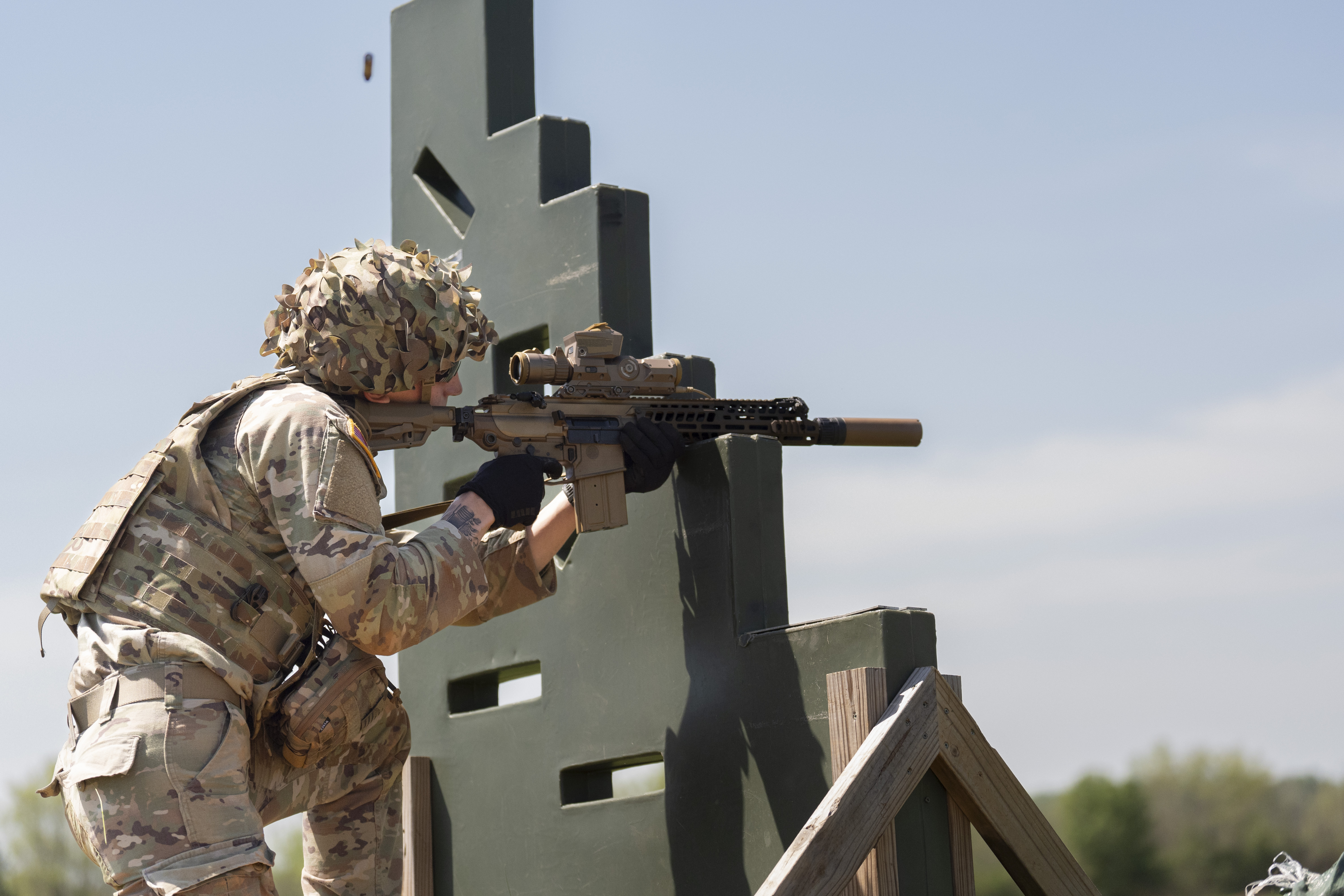
While the wind does seem to be blowing in the direction of 5.56 NATO being adopted for AK 25, at least officially the decision has not been made. It has widely been reported that the Home Guard has opted for 5.56 NATO as their primary calibre (note that HV currently uses 7.62 NATO extensively as the G3/AK 4 is their main weapon), but as colonel Michael Carlén – commanding officer of the Swedish wartime 4. Brigade and the one responsible for ensuring that the introduction of new firearms goes smoothly in his post as Införandeledare för nya eldhandvapen – noted in a podcast interview, that is not up to the Home Guard to decide. The Army is responsible for personal firearms, and while they obviously listen to and cooperate closely with HV (which is an independent fourth service branch in Sweden) the final decision rests with the earlier mentioned major general Lindfors. Those who have been following the world of service firearms are also bound to notice that the single most important technological development since 2018 has been that Sweden’s now-ally the US has (maybe) finally found a replacement for the M4 and M249 among combat troops in the form of the Next Generation Squad Weapons (NGSW) Program and the XM7 and XM250. The weapons chambered in the new 6.8×51 mm Common Cartridge (also known as .277 Fury on the civilian market) has raised question, but the fact is these are now being rolled out to combat units, with parts of the 506th Infantry Regiment of the 101st Airborne Division (of Band of Brothers-fame) having received their first weapons this spring. And the thing with 6.8×51 is the ease with which you can convert a rifle (capable of handling the pressure) between 7.62 NATO and 6.8 CC, allowing for cheaper rounds and less wear when training with the old reliable 7.62 NATO and then switching to 6.8 CC for combat. And as reported earlier here and confirmed by the court case documents released since then (we’ll get to those), Sako is an option here. While Carlén doesn’t want to guess what calibre AK 25 will feature, he did comment that he expect a decision during this year, with first deliveries of AK 25 taking place in 2026. The option of sticking with 7.62 NATO for a number of roles – and trying to communicate the reasoning behind it – is apparently still on the table.
In the meantime while waiting for first the decision on and then deliveries of the AK 25 (and the designated marksman rifle which is expected in the 2026 to 2027 timespan), the AK 24 is closer in time. The first batch of approximately 200 weapons for unit trials will enter tests with four different units (the jaegers of K 4, the F 21 fighter wing, the marines of AMF 1, and the mechanised infantry of P 7) to allow for real-world experience being gathered from diverse geographical conditions and use cases. In total “at least” 15,000 weapons will be delivered to Sweden during 2024 and 2025, with FMV getting their hands on half of those this year. One of those who have gotten to try the weapon is nickname Verkan of the Swedish Air Force, who did a podcast on his experience of putting 400 rounds downrange at HVSS as part of his conversion training.
For anyone understanding Swedish, I recommend you go and listen to the whole thing, but in short he quite likes the weapon. This is noteworthy as he himself notes that he was a sceptic when Sako was first announced as the supplier, and because he is an avid shooter in his free time with significant round count on a number of different AR-type platforms his opinion is worth listening to. In general he notes that it is an extremely rigid platform, which hits where you expect it to once you squeeze the trigger. It is also accurate enough at 300 meters that the main issue is the size of the red dot and the eyesight of the shooter. The weapon gives a “premium feel” resembling high-end competition rifles, has fully ambidextrous controls, and as a piston-design it was very clean after a 600-round day. When it comes to technical details, the 11.5” barrel has a 1:7 rifling and provided a “very fast” average V0 of 857 m/s when firing the Swedish standard Patron 5 (presumably the updated ‘green’ 5B which is a 59 grain steel-core bullet) – as a comparison, the Estonian 12.2” Rahe R-20S is quoted as having a V0 of 850 m/s, though conditions and ammunition behind that number isn’t specified. Verkan also describe the equipment which will be included with the weapon, including three 30-round PMAG (windowless) and a single 20-round PMAG (also windowless). The reasoning behind the latter is mainly to be able to fit the weapon with a magazine inserted in some tighter vehicle mounts. The current barricade stop might be replaced with a small angled foregrip, but in either case something will be attached up front to ensure the shooter doesn’t accidentally put the fingers in front of the short barrel. Suppressors will not be delivered as standard with the weapon, but some will be acquired mainly for use on firing ranges with strict restrictions on sound levels. These and the muzzle devices which will be used with the new blanks (say goodbye to the old wooden-projectiles currently used) are to be based on Ase Utra’s BoreLock-system. Interesting enough, the Finnish Defence Forces have apparently not been happy with the Ase Utra used for the updated Rk 62M3, but Sweden seem to go for Sako’s supplier of choice.
However, at this point one should remind everyone that Sweden is in fact pressed on time, and with a wartime organisation approaching 100,000 in total, Sako products won’t be enough found for everyone before some time into the 2030s. As such, an undisclosed number of Colt M4 will be acquired as an interim solution while waiting for AK 25. This is something to keep in mind when colonel Carlén on the question of roll-out of the new weapons stated that it is low-hanging fruit that the battalion heading to Latvia as part of NATO’s Forward Land Forces next spring will be equipped with “AK 24 or another weapon”. He also noted that regardless of whether they get AK 24 or something else, the unit will then have to be reequipped with AK 25 when that comes online. With regards to the marching order in general for the new weapons, Carlén noted that a number of different factors come into play. Certain units are the tip of the spear in case of war, and as such have a good claim to the latest and most lethal equipment. At the same time, other units such as security detachments are solving their primary tasks every day, and doing so in an increasingly hostile environment. Yet a third factor is that training conscripts on the new weapon is a rather efficient way of introducing it, as it removes the need to retrain these later and lets them replace soldiers trained on older weapons in the wartime organisation.
Meanwhile in Finland, the most important event was that the Finnish Market Court gave their ruling in May regarding the Heckler & Koch claim against the Finnish Defence Forces. As opposed to the German case where HK managed to get the somewhat spectacular decision to award Haenel the contract for new assault rifles overturned over patent infringement, the Finnish case was a pure matter of acquisition law. In short, FDF had argued SEUT 346 Article 1 (security of supply for defence equipment) as reason for acquiring the rifles straight from Sako without a competitive tender. HK argued that this was illegal, and a competitive tender would be needed. There are further details to the case, but in the end what matters is that FDF was rather confident in their assessment, and when the decision was made the only thing HK got out of it was a somewhat tarnished reputation and an invoice for the legal costs of FDF and Sako (which was heard as an expert witness), 48,262.50 EUR to FDF and 28,732.50 EUR to Sako respectively. However, unsurprisingly there has been an request to have the Supreme Administrative Court look into the case, the status of which I’ve been unable to figure out despite spending more time than is generally seen as proper for a Saturday night on home pages of government agencies.
Perhaps the more interesting detail was that the documents included the scope of the Finnish order for trial weapons acquired during the period 2023 to 2026 (though my understanding is that no weapons from this batch were delivered during last year):
- Assault rifles 7.62 NATO, 16”, 20 pcs, with equipment
- Assault rifles 5.56 NATO, 16”, 50 pcs, with equipment
- Assault rifles 5.56 NATO, 14.5”, 20 pcs, with equipment
- Personal defence weapons 5.56 NATO, 11,5”, 50 pcs, with equipment
Notable is the Finnish love for long-ish barrels, with the largest batch of the assault rifles being the 5.56 NATO with 16” barrel. The 1.5” difference compared to the 14.5” is a grand total of 38 mm, which isn’t huge but still significant. As a comparison – and let’s use the M4 as a baseline since I don’t have any official numbers for the Sako rifles – a 14.5” barreled AR-platform is approximately 84 cm long, with stock extended, while the current RK 62M is 94 cm long. As such, even the 16” version is likely something along the lines of 4-6 cm shorter than the current weapon of the FDF soldiers, although it might be worth remembering that it is likely that we will see more ARs than RKs with suppressors which obviously will add centimeters to the weapons for anyone getting a can. I am still somewhat surprised by the apparent pole position of the 16”, in a time when shorter-barreled carbines backed up by designated marksmen rifles have been all the rage for quite a while. However, the FDF stresses that the final configuration – including both calibre and barrel – are still very much open. And that includes having 6.8 mm in the mix. This is also confirmed by the court documents which open up that the Implementing Arrangement for Joint Procurement of Small Arms Family signed by Finland and Sweden 18 May 2022 cover the following weapons:
- Assault rifles (7.62NATO/6.8/5.56)
- Semi- and full-automatic rifles (7.62NATO)
- Personal defence weapons (PDW, 5.56)
- Manual-action sniper rifles (8.6LM, 7.62NATO ja .22LR)
- Military shotguns
Yes, there’s some interesting non-standard terminology there, and don’t ask me why some calibres get a specific designation and some just the diameter. But the big reveal is that we get the first(?) official document that include 6.8 as a possible future round for the Finnish and Swedish rifles, even if it has been described as “not ruled out” in earlier interviews. Also, whoever thought to include military shotguns should get to take an extra cookie next coffee break, considering how the shotgun suddenly has found a role on the battlefield again in the form of a last-ditch anti-UAS weapon.
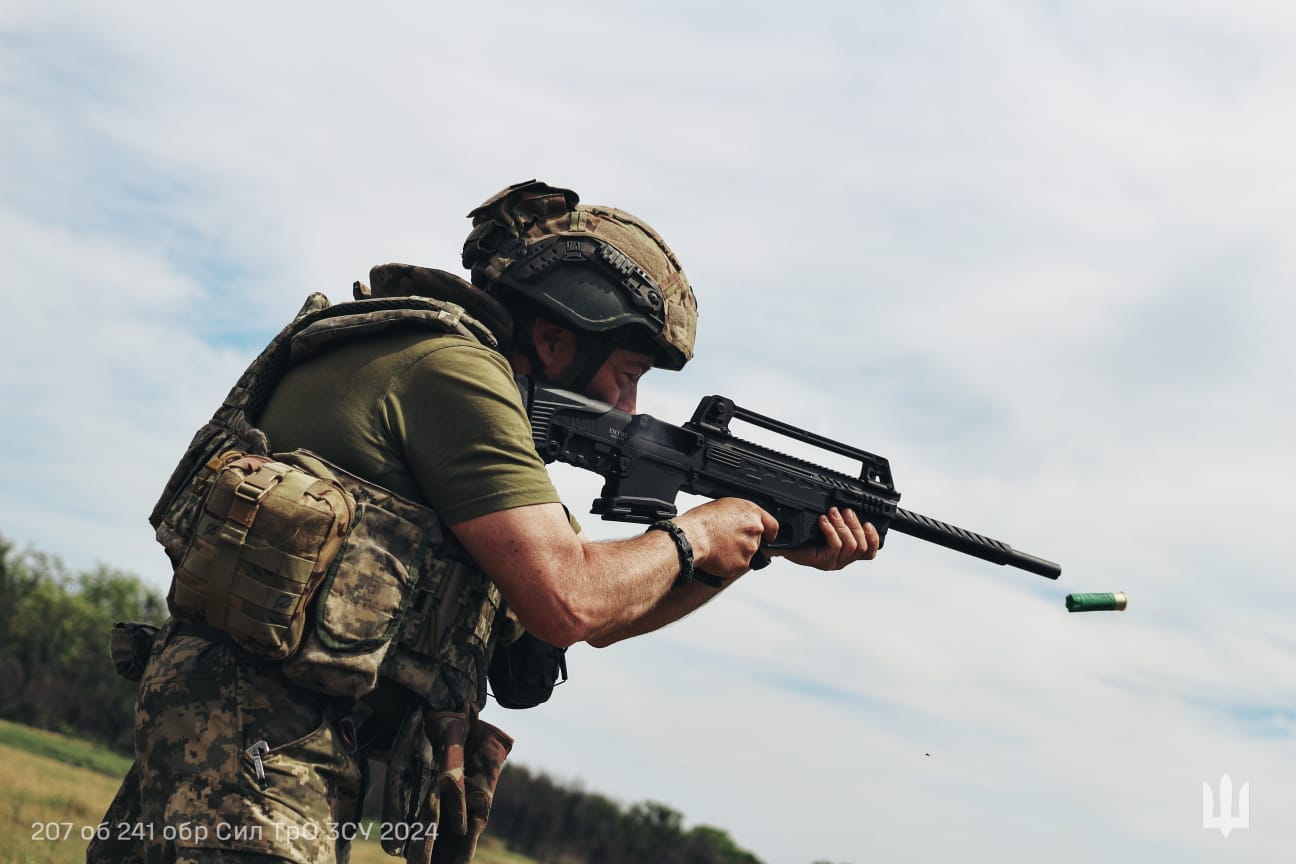
For Finland, the decision on future calibre is also expected during this year, meaning that it matches the schedule of the Swedish AK 25 decision – although it deserves to be repeated that neither country is bound by the decision of the other one, even if both obviously appreciate the possible synergies. The first batches of new assault rifles is then expected during this decade, although the fully mobilised wartime force can’t expect to see the last RK 62 retired for a number of decades. The designated marksman rifle is however already ordered as the KIV 23, and as such will enter Finnish service before Swedish.

