
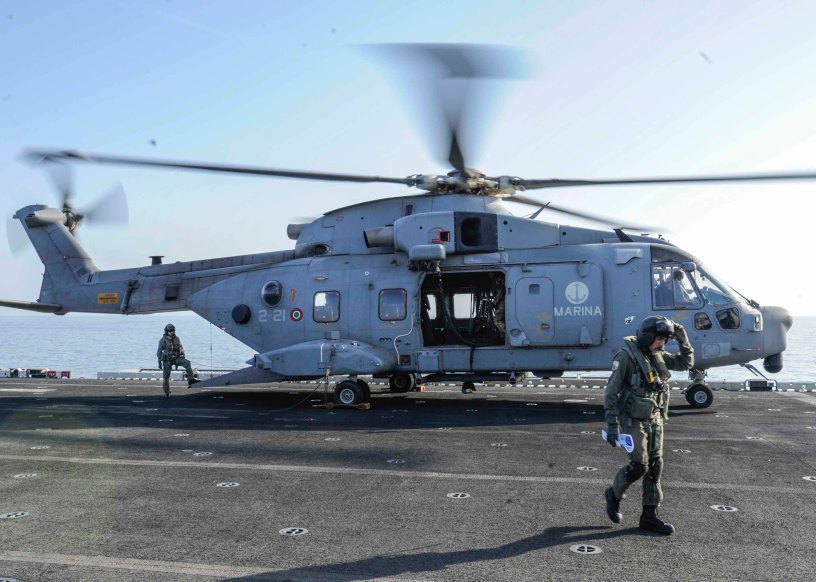
In part two of me being interviewed by Ville over at Mighty Finland (podcast in Finnish only), I made the statement that if the MoD suddenly called and handed me a bag of money to invest in the Finnish Navy, despite the usefulness of submarines I would not buy them, but rather their archenemy – the ASW-helicopter. While we briefly went over the options on the market – and I showed my age by referring to the AW101 as the EH101 initially – the topic is naturally complex and deserves a little more depth (pun intended), so here goes.
A brief scene setting: any Finnish ASW-helicopter would likely primarily operate from land-bases around the Baltic Sea in relatively shallow waters, but the Pohjanmaa-class would also play a major role both for teaming up during the hunt as well as with helicopters doing shipboard operations. The flightdecks of the Pohjanmaa-class aren’t exactly huge – coming it at approximately 16 meters wide and 20-25 meter in length – but they are certainly adequate for all current ASW-helicopters landing and being rearmed or refuelled, or even strapped down on the deck for somewhat longer stays. However, for true basing aboard a hangar is needed to ensure protection from the weather and allow for maintenance under somewhat civilised conditions. The exact specs of the hangar on the Pohjanmaa are unclear – some sources mention just unmanned systems, others MD500-sized helicopters (9.3 m long, max take-off weight of 1,360 kg), and there are references to “telescopic” functions – but safe to say it won’t be particularly impressive. Still, the value of having a flightdeck and the possibility of storing weapons and aviation fuel aboard shouldn’t be underestimated, both for independent littoral operations and in a blue water task group context.
With that out of the way, here is a list of all more or less serious options available to us when Häkkänen calls, ordered roughly by size and capability. Note that the numbers given are meant to give a rough idea about size and performance, and varies depending on exact configuration and definitions of how to measure.
Bell 412EPI ASW
Length 17.1 m, Maximum take-off weight 5,397 kg, Max cruise speed 228 km/h
While there has been smaller ASW-helicopters in history, perhaps most famously the Westland Wasp and the Agusta A106 (which is more successful as a niche avgeek meme than as a weapon system), among the smallest ones today is the latest version of the long line of Huey-related helicopters . In short, the original UH-1 Huey (also known as the Bell 204) of Vietnam War-fame got produced in a two-engined version for a Canadian program back in the late 60’s and ended up as the Bell 212 (or UH-1N if you ask the US armed forces), which then became the Bell 412 once a four-bladed rotor was slapped on top of it.
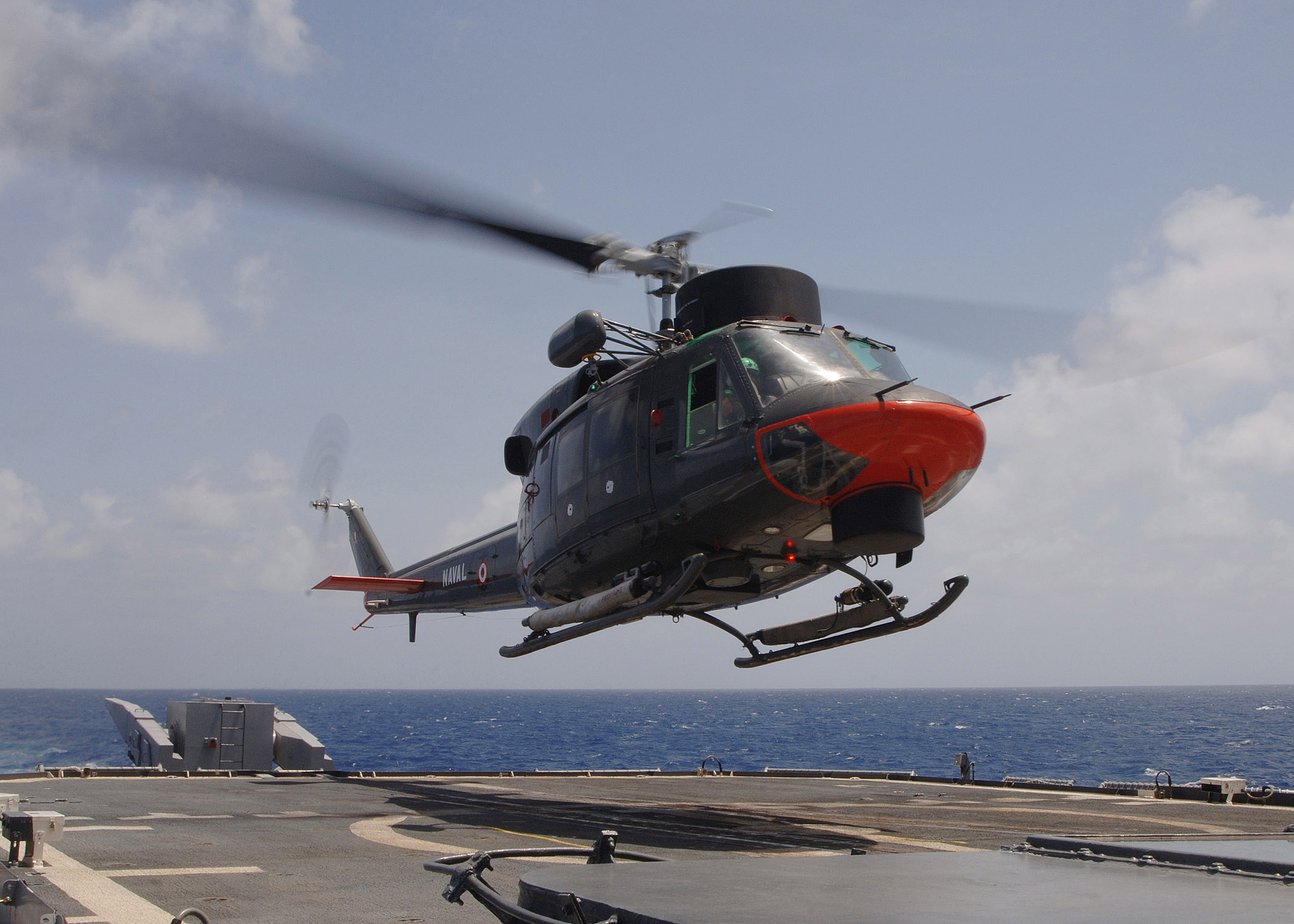
The latest version of the family, the Bell 412EPI and closely related Subaru-Bell 412EPX, are interesting in that on one hand they share little in common with the original Huey besides the general shape, while at the same time being evolutionary outcomes of decades of experience with the helicopter in everything from the Arctic and the high seas to the jungles and urban landscapes. It offers an intriguing combination of a truly tried and tested design, married with the latest technology in the form of a modern glass cockpit, digital engine controls, and everything else that you expect out of a modern helicopter.

The Bell 212 has flown in the ASW successfully for decades, while the Royal Moroccan Navy is the sole operator of the Bell 412EPI-variant in an ASW-configuration. While the small size will put some restrictions on the capability compared to some of the offerings discussed below, it also means that the helicopter is significantly cheaper to operate and easier to handle on small vessels. There is also an existing Finnish maintenance pipeline, with the Finnish Border Guard being a long-time operator of the Italian-built AB 412 (albeit looking at retiring the type in the medium-term) and Patria together with Kongsberg playing a key role in the maintenance and upgrade work of the Bell 412 of the Norwegian Air Force. If you are looking to get in the ASW-helicopter game, the Bell 412 offer considerable capability for a relatively moderate price tag, and it is a known commodity for both Finnish authorities and industry.
Leonardo AW159 Wildcat
Length 15.2 m, Maximum take-off weight 6,050 kg, Max cruise speed 264 km/h
Speaking of helicopters with a long pedigree, the AW159 Wildcat traces it roots to the Westland Lynx which first flew in 1971, and is renowned for being the world’s fastest helicopter and for quite spectacular airshow appearances thanks to its rotorhead. The Lynx has been developed into a number of different versions, of which the AW159 eventually was the one to shed the ‘Lynx’ moniker in place of the current ‘Wildcat’ name – despite starting out as the Future Lynx-programme.
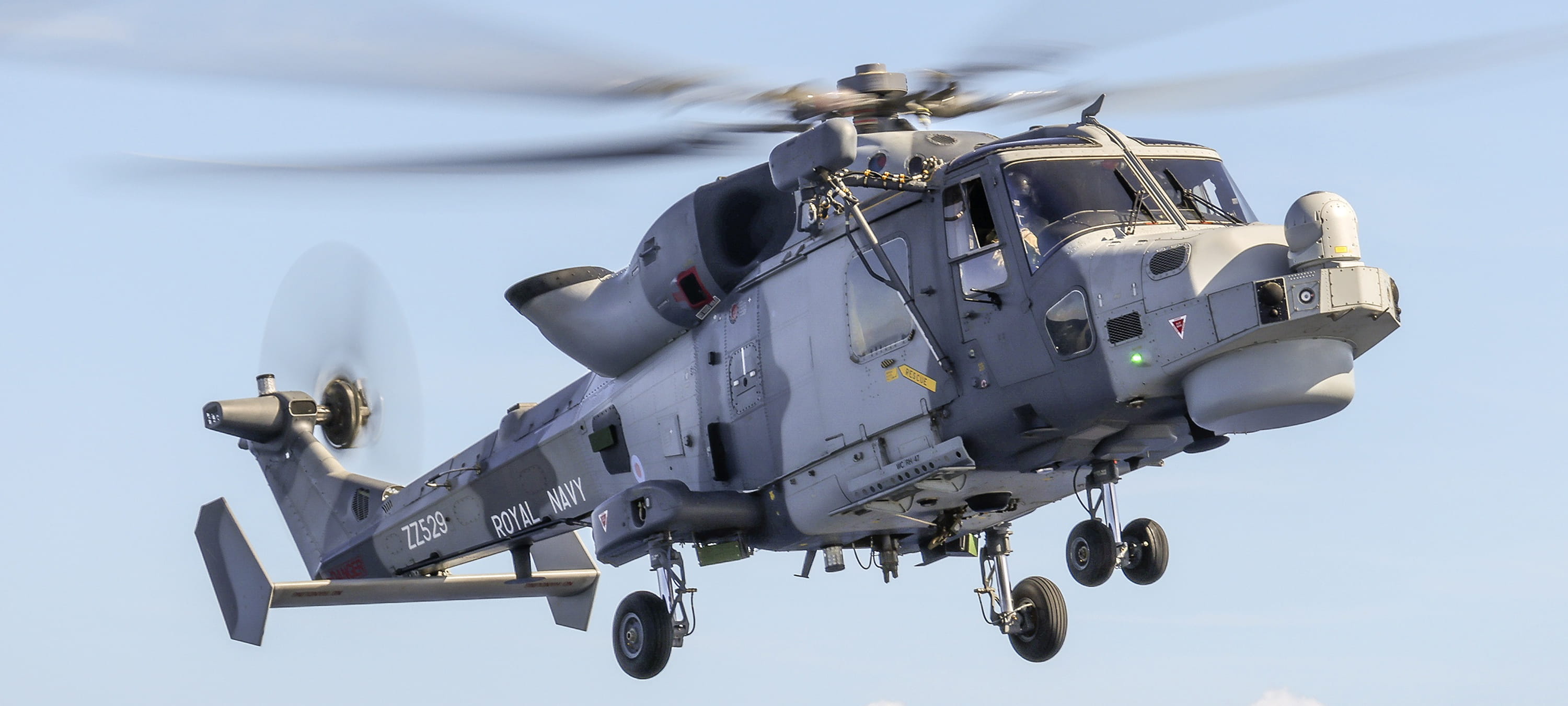
The Lynx has seen service in navies around the world, including the German, Norwegian, and Danish ones, and scored some of its first notable successes in the Falkland’s War with two Lynxes being responsible for the attack which badly damaged the patrol ship/tug ARA Alférez Sobral. While the Lynx had great success on the export market (you know it’s going well when the French buy British equipment), the Wildcat has had a tougher time finding a market outside the UK. However, the key export order is the one to South Korea, which uses their helicopters in the ASW-role with the Thales FLASH dipping-sonar, torpedoes, and sonobuoys. This is in contrast to the UK, where the Royal Navy uses them purely against surface targets and for transport missions (even if they are able to carry ASW-torpedoes). However, the Wildcat has been marred by accusations of bribery in the deal to South Korea, and subsequently failed to secure a follow-up order for a second batch of naval helicopters.
On paper there isn’t anything wrong with the Wildcat – it offers impressive performance in a relatively small airframe with the sensors and weapons to do the mission effectively. The main question is which features set it apart from the competition? Or is getting another design with a larger userbase simply more cost-effective, regardless of how capable the helicopter itself is?
Airbus H160M Guépard
Length 14.0 m, Maximum take-off weight 6,050 kg, Max cruise speed 263 km/h
The H160M is everything you want it to be. A top-modern light helicopter, available in maritime and ground force configurations, built and operated by an important ally Finland would like to get even more invested in the Baltic Sea.
Except it isn’t equipped with any ASW-related weapons or systems.
I still feel it might be prudent to mention it here, as it promises to fill the same role in La Royale as the Wildcat does in the Royal Navy, and like the Wildcat it is only an export order away from being fitted with a dipping sonar, a work station or two, and some torpedoes – something that Airbus is happy to confirm in their marketing. All other things equal, the Guépard would be perhaps the best fit as an ASW-helicopter teaming up with the Pohjanmaa-class, but in the real world all other things rarely are equal. Being the sole operator of an ASW-configured H160M probably wouldn’t come cheap, so any deal would likely hinge on either France (or some of the other manufacturers) getting in on the project for industrial/political reasons, or at the very least another export customer becoming the launch one. The one positive here, is that Thales – the one company you absolutely want onboard to build any ASW-helicopter – is already heavily involved in the H160M in its current maritime configuration.
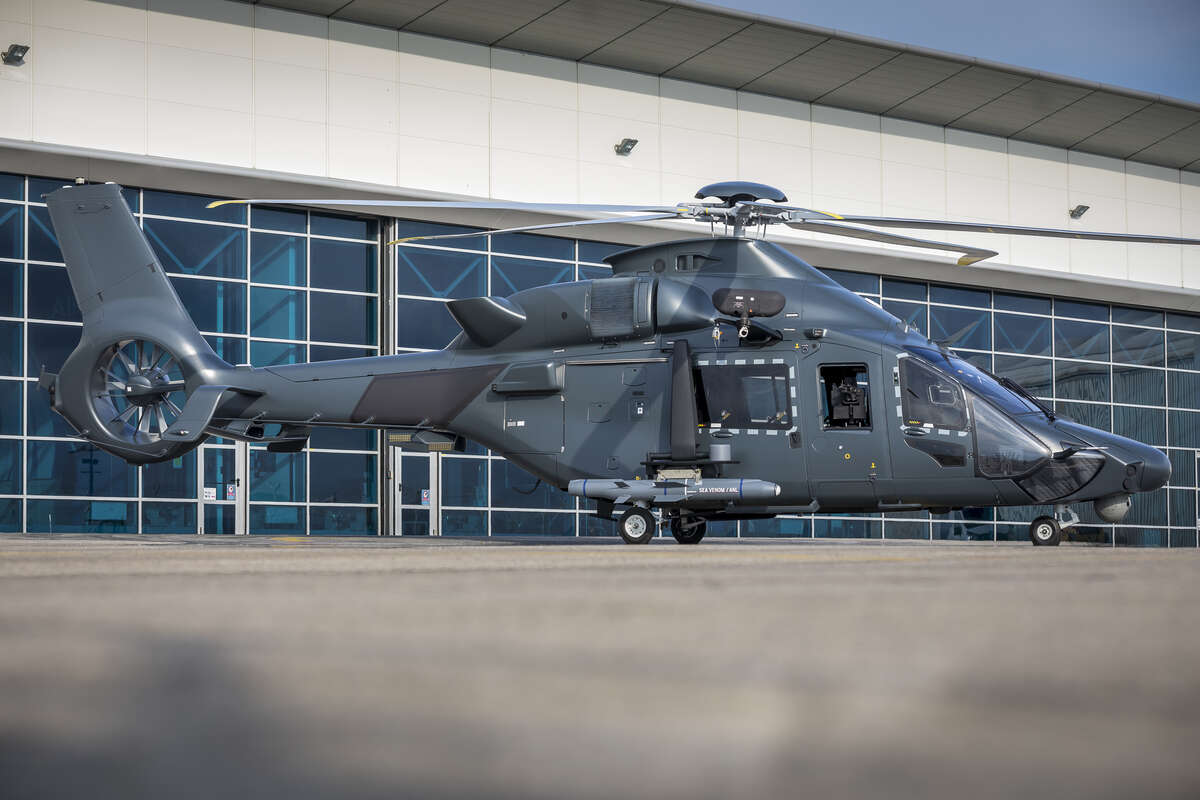
And as usual with French designs, it is perhaps the best-looking platform on offer.
Lockheed Martin MH-60R Seahawk
Length 19.8 m, Maximum take-off weight 10,660 kg, Max cruise speed 267 km/h
Getting back to the pattern here: in 1974 the Sikorsky S-70 first took to the air, and eventually evolved into the YUH-60 which won a competition for a UH-1 replacement. As noted the UH-1-family refused to be completely replaced, but the eventual UH-60 Blackhawk quickly became one of the most important military helicopters, with a worldwide userbase and spawning a whole tree of different variants, and in 1983 the US Navy accepted the first ship-going version – the SH-60B Seahawk. This has in turn gone through a number of different version, with the MH-60R Seahawk (or ‘Romeo’) being the standard today, and in many ways the Romeo has become the ASW-helicopter and general purpose maritime helicopter of western navies.

The Romeo is the first of the Seahawks to ditch the SH-60 designation and replace it with the MH-60 designating a multi-purpose platform – something that is based on the vast mission set it is capable of handling, which as described by the US Navy include “primary missions are anti-submarine warfare, surface warfare, electromagnetic warfare, command and control, and non-combat operations. Secondary missions include naval surface fire support, medical evacuation, search and rescue, logistics, special warfare, intelligence, surveillance and reconnaissance”. To be fair most maritime helicopters capable of doing ASW has at least some capability in the other roles as well, so it isn’t as much of a sales pitch as it might seem to be at first glance. Still, there’s no denying that compared to the smaller platforms mentioned here, the Seahawk is a more versatile one, and the huge number of operators is a significant bonus – in particular as it is in service with or chosen by both Denmark and Norway, as well as the likely frontrunner in Sweden. At the same time, if you really want to unlock the synergies of scale you are to some extent getting a helicopter tailored for the needs of the US Navy (i.e. true blue water operations), even if more or less all export orders have at least a measure of localisation. Notable is also that while a plus when it comes to the versatility, the size brings additional operating costs as well as a larger footprint aboard vessels, which might become an issue on smaller vessels such as the Pohjanmaa-class.
Airbus NH90NFH and HKP 14F
Length 19.6 m, Maximum take-off weight 10,600 kg, Max cruise speed 300 km/h
Matching the Seahawk closely in size and paper performance, the NH90 is in Finnish service as the current medium transport helicopter of the FDF, and it is the first helicopter found in ASW-configuration on this list not to trace its roots back to the 70’s (or further). Besides the TTH (Tactical Transport Helicopter) version used by the Finnish Army, the other standard version is the NFH (NATO Frigate Helicopter). As the name suggests, this is a completely marinised version dedicated to the ASW-role, including fancy tricks such as a deck traversing system and an automatic blade and tail folding system.
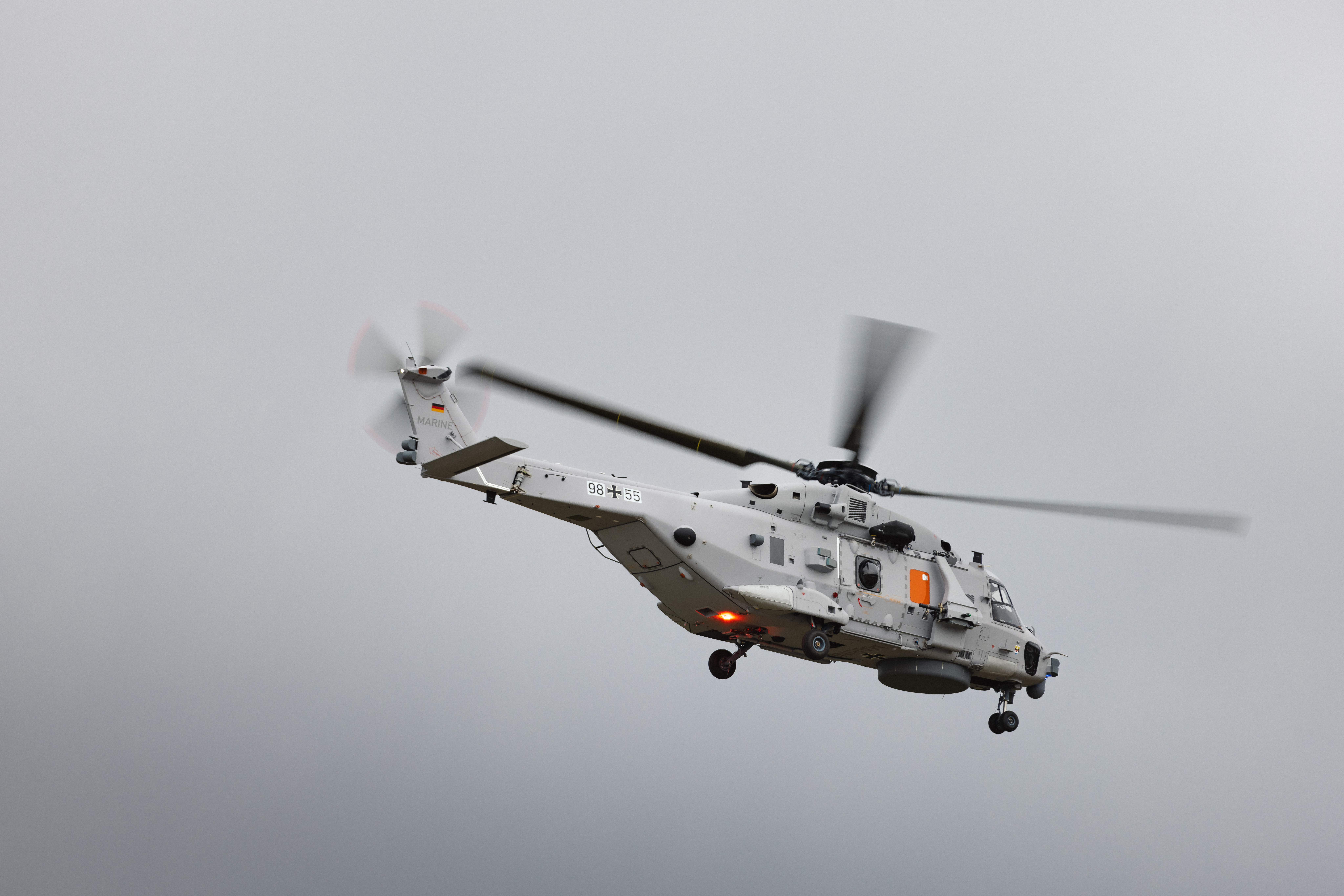
No less than six European NATO-countries operate the NFH, an impressive number considering the relatively small number of countries with a navy needing the kind of capability it offers. As is well-known, Norway was less than impressed by their helicopters, to the extent they shipped them back to the factory and is getting the MH-60R instead – at least for the SAR/maritime patrol role for their coast guard, the eventual choice of ASW-helicopter for their frigates is open as far as I understand. At the same time, Germany was happy enough with their more limited SAR/maritime patrol capable NH90 Seelöwe, to order an ASW-capable variant as the NH90 Seetiger to replace their Lynxes in the role – squashing the hopes of Leonardo for a major Wildcat-order. The Seetiger – largely on account of being the latest – is the most advanced of the NFH-versions, sporting among other things a new electro-optical system and improved Electronic Support Measures (ESM).
I have for years tried to get a clear picture if the NH90 really works as well in Finland as the official party line says, and I have in fact not been able to get anyone to even off-the-record admit to it suffering from anything like the Swedish or Norwegian issues (now that it has turned the corner on the teething troubles, no one denies it had those). The NH90 as such is extremely capable and would slot into the current training and maintenance pipeline with relative ease (though remember that the TTH and NFH will have differences), but like the MH-60R we are still talking about a helicopter that is twice the maximum take-off weight of something like the 412, with everything that brings when it comes to operating costs and handling aboard smaller vessels.
A special case are the Swedish HKP 14F. As has been described on the blog earlier, these are not NFH, but rather a unique version of the already unique High-Cabin Version of the NH90TTH. As such, you lose some of the maritime tricks, but they are simpler to operate (read: cheaper) as long as you don’t plan on fitting them into a hangar (as they wouldn’t in any case aboard the Pohjanmaa). Their sensor and weapons set is also tailored towards littoral conditions, and the last major missing pieces are in the roadmap for the coming years.
But it seems like the retirement of the land NH90TTH (HKP 14E) will pull the rug out of the HKP 14F as well, at least according to the plans currently communicated (there’s another defence whitepaper inbound soon, whichmight shake up things further).
If Sweden really is ditching their HKP 14F, they are likely available on the cheap (as opposed to Norway, Sweden isn’t claiming breach of contract on the part of the supplier and voiding the contract while demanding their money back. They just want them gone). The theoretical possibility of slotting nine ASW-roled NH90s into the Finnish Helicopter battalion at whatever the going rate for spares hulks are these days certainly may look tempting, until you realise that you would become the sole operator of a unique configuration, which while it would be tailored for your main operational environment, also means you can forget about any economics of scale (though there are interestingly enough certain limited commonality with the Finnish surface fleet and their ASW-capabilities, where Saab is a key supplier).
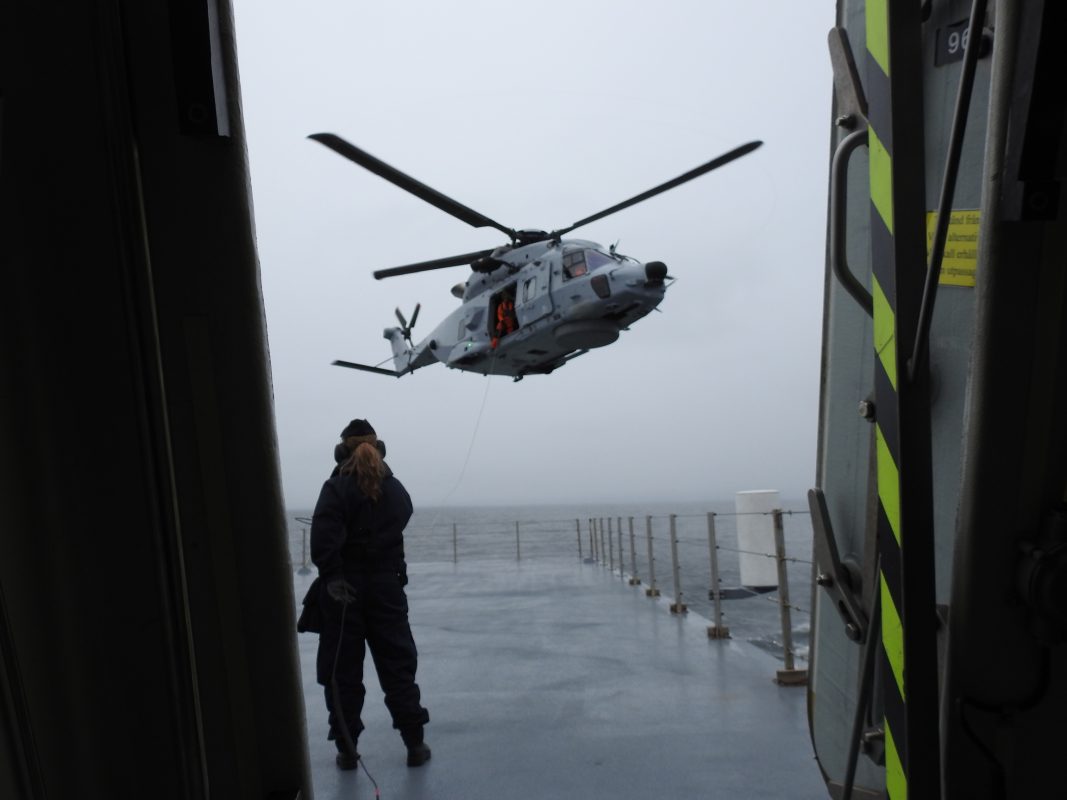
At this point when discussing the difference between different NH90 versions, it might also be worth noting that many of the differences/similarities aren’t immediately obvious, and often classified. As an example, the Thales FLASH is by far the most common dipping sonar in the West (including as the ALFS in US Navy service on the MH-60R), but the exact performance and details varies between countries. As Thales describes it: “The Thales ALFS systems are from the same product family of airborne anti-submarine dipping sonars as FLASH and Compact FLASH but each product has variances due to system destinations and the technological requirements”. As such, a FLASH-version destined for a country with an emphasis on the littorals such as the FLASH-S of the HKP 14F would in all likelihood perform better in the Baltic Sea than your average kit, and in general a newer and more trusted customer could expect better performance than an earlier and not-as-trusted one could. However, and this deserves to be emphasised, the kit is only part of the equation. Hunting submarines is still something of an art, and only through frequent training against skilled submariners will the hunters become and stay proficient. You can’t overlook the importance of good tools, but equally true is the fact that you can’t buy skill
Leonardo AW101 Merlin
Length 22,8 m, Maximum take-off weight 15,600 kg, Max cruise speed 277 km/h
Until the US Marine Corps gets some crazy and ideas and as part of their pivots include fitting a sonar on the CH-53K King Stallion, the AW101 Merlin is and will remain the largest modern ASW-helicopter. Sporting an empty weight on par with the maximum take-off weight of the NH90 or MH-60R, and with a theoretical endurance closer to eight than seven hours, everything about the Merlin is huge. A large platform offer undeniable benefits over the seas in general as well as in the ASW-role – in particular when it comes to the ability to stay on station for long times, carry a lot of sensors, and often a larger hull offer better working conditions.
Of course, the opposites of all the nice things we’ve said about the lighter helicopters – how cheap they are to operate, the ability to handle them with relative ease aboard a smaller vessel, and so forth – are the drawbacks you get when ordering a three-engined monster.
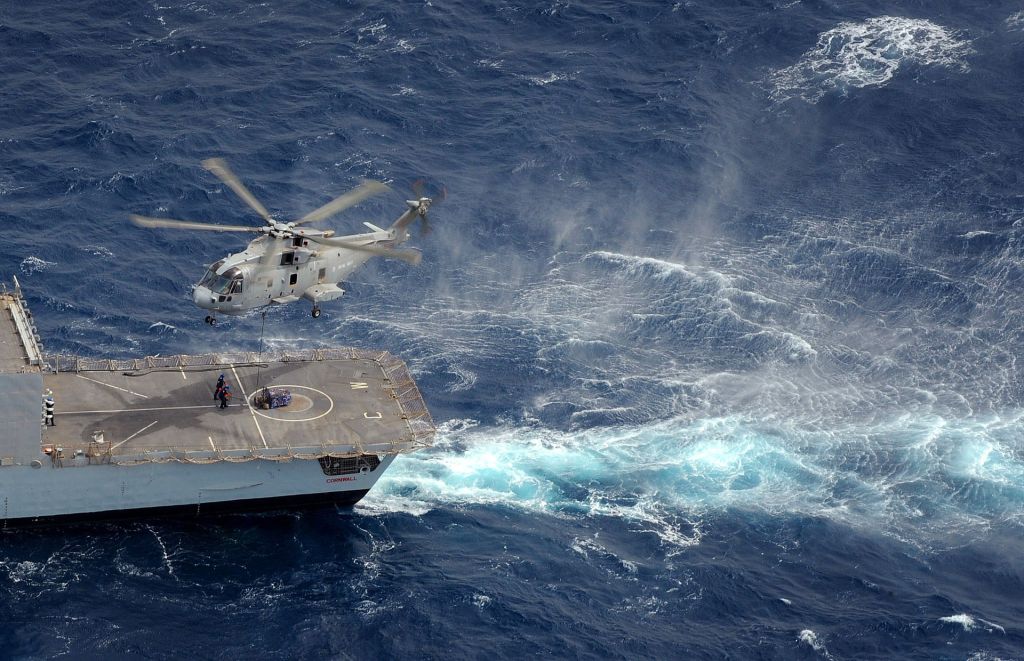
An interesting detail is that the Italian ASW-version is one of the rare contenders on this list which uses not the FLASH, but L3HArris’ competing HELRAS-family of products. The company has a long and rather successful run with different dipping sonars, including the AN/ASQ-13/18-series, which equipped helicopters such as the SH-60F Seahawk (replaced by the FLASH-equipped MH-60R Seahawk) and the German Lynx (replaced by the FLASH-equipped NH90 Seetiger). While the L3Harris-offering isn’t necessarily worse – to the extent an objective judgement like that is possible to begin with, you won’t be able to draw such conclusions based purely on open sources – that is a trend to note. The Royal Navy Merlin HM.2 – which in the extremely unlikely scenario of a Finnish Navy AW101-order would likely be the configuration landing here – is however equipped by a FLASH-dipping sonar, so order is restored.

So, which one should we get?
Well, to begin with, let us remember that currently there is no budget nor project to get ASW-helicopters.
With that said, which helicopter would make most sense depends on a number of factors, almost all of which are to be found in a number of classified documents (such as the Finnish Navy concept of operations for 2030 and beyond, the NATO capability targets coming our way, the specifications of the helicopters and their systems, and so forth) and in sealed answers delivered as part of a RFI/RFQ. If the FDF were to order helicopters, I’d be confident in their judgement of which system best would answer their needs.
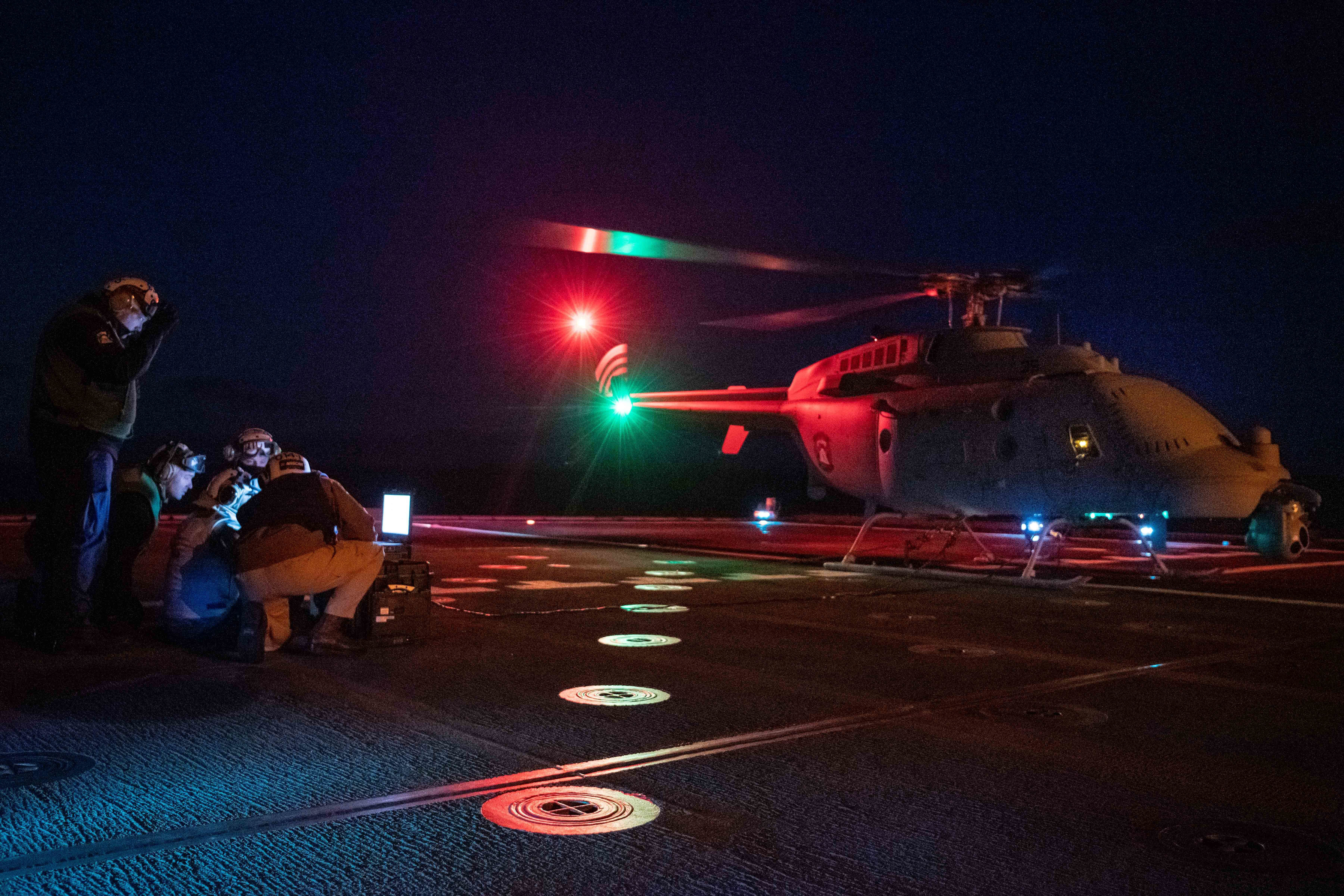
If I’d have to make a guess – and let’s stress this is nothing more than a somewhat educated guess on how a currently unlikely scenario would play out – I’d either go on the cheap as most use-cases would be in the littorals and the difference between having any ASW-helicopter at all or having none is vastly greater than the difference in performance between the candidates presented here, or then negotiate with Airbus to have them churning out four to six additional NH90 Seetigers at the end of the current German order. This isn’t necessarily based on that configuration being optimal, as much as a on a combination of the NH90 already being the mainstay of our helicopter force, and the Germans likely being open to a joint program a’la Type 212CD under which we could achieve synergies in both maintenance, operations, and upgrades by running the same exact configuration. That would also help with the role-specific training as we probably could send our crews to the German operational training squadron of Marinefliegergeschwader 5, or even having the whole training pipeline be the same. As a matter of fact, Sweden does their primary helicopter pilot training in Germany through the Internationale Hubschrauberausbildungszentrum (IHAZ), and while primary training isn’t the same as learning how to hunt submarines and land on rolling decks, one would assume that experience means the Germans have an idea about how they would implement a Finnish maritime helicopter course. Getting close cooperation with the leading Baltic Sea-country when it comes to ASW-helicopters would certainly provide benefits, and if nothing else, the Finnish students would get a greater cultural understanding of our NATO-allies by getting to experience German cuisine.
 Corporal Frisk