
With Sweden making great strides in digging themselves up from the dark ages of not really having much in the way of ground-based air defences, the question was asked what is the state and future of the Finnish branch? This sparked a long Twitter-thread, which is one of those that also deserve to be pasted into post form, so here it comes.
A general word to begin with. This post focuses heavily on the systems that actually throw up stuff in the air to make sure something flies into them and then is brought down. That is a small part of the complete air defence picture, which also include ship-based air defences, the fighters of the Finnish Air Force, the sensor network, electronic warfare, and crucially the command and control structure. However, much of that is either shrouded in secrecy or has been discussed at length here on the blog earlier as part of the coverage of the Navy and the HX-program, so we’ll focus on the ground-based weapons. Secondly, the Finnish ground based air defence – like the Army in general – is facing a significant challenge in there being a lot of Finland and relatively few Finns to defend it. This has meant the emphasis has usually been on systems that can be fielded in numbers, to ensure geographical coverage through the number of systems fielded rather than by increasing the range of the individual batteries. Even so, you will very quickly realise that the number of units available is rather small once you start factoring in how many important units and facilities there are. As such, the role of the Air Force’s fighters and the air defence capabilities of the Navy when operating close to the population centra on the south shore. With the growing UAS threat and proliferation of ballistic and cruise missiles seeing an expansion of the Finnish GBAD-system over the next decade feels to some extent inevitable (although there should also be pointed out that there is no shortage of competing needs either), and with the changing face of the threat the mix of systems within the system can also be expected to change to reflect this.
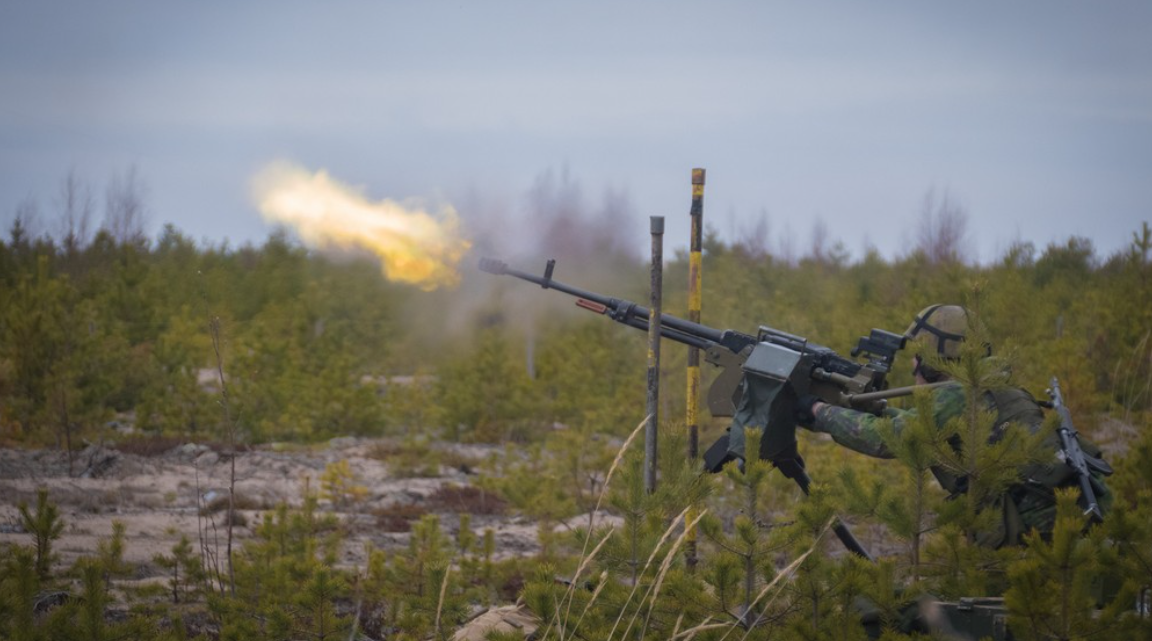
Everything starts with the humble 12.7 mm NSV, the Soviet machine gun that is more or less corresponding to the M2 Browning. Formally an air defence machine gun, the value in that role is somewhat dubious, but you might scare away the occasional unarmoured helicopter. It has a tad more value against drones, but as a self-defence weapon against FPV-drones and other lighter systems, an argument can likely be made that rate of fire is more interesting than the range and punch of the heavier round, making a lighter faster-firing weapon more preferable. Notable is that as part of the large modernisation for rifle-calibre weapons – the most widely reported part of which is the switch from 7.62×39 mm RK 62/95-family to the new SAKO AR in 5.56 NATO – the 12.7×99 mm/.50 BMG will over (a long) time replace the 12.7×108 mm. I should stress the time scale, the NSV is more or less indestructible, and even if no new buys are made, it will take years until the older weapons are worn out and/or the ammunition runs out.
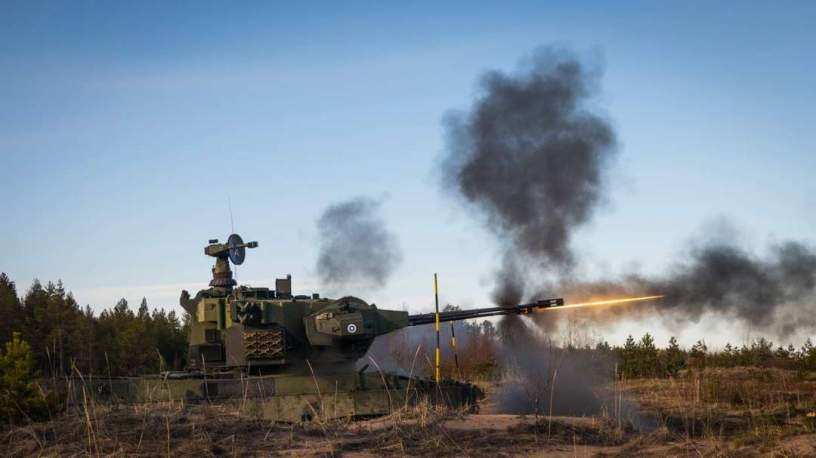
The lightest ‘true’ air defence weapon is the ZU-23-2, lovingly known as ‘Sergei’, which is a Soviet-era twin-barrel 23 mm autocannon. They are found in significant numbers for close in defence as the 23 ITK 61 and the 23 ITK 95. The difference between them is that the 23 ITK 95 is a Finnish upgrade that adds an aiming computer, thermal camera, and laser range-finder to enhance the accuracy, making it one of the better cheap counter-UAS solutions out there in number. There are also two distinct versions of the 35 mm Oerlikon, in the form of the towed GDF (35 ITK 88) and the Marksman SPAAG (35 ITPSV 90). Of these the Marksman actually spent some time mothballed due to the age of their original T-55 chassis, but are now back on Leo 2A4-chassis which were made available following the Leopard 2A6-buy.
The original plan was to replace all guns with missile-based systems when they start to be retired due to age. It is however safe to say that the war in Ukraine has raised some doubts about that idea, and I do not expect that we have seen the last of the ‘ITK’ (anti-aircraft cannon) designation in Finnish service. The 35 mm will probably live on for a while, as it is currently one of the smallest calibres for which effective airburst and smart rounds can be made. The 23 mm is more problematic, both in that the weapons are getting old, but also that the ammunition isn’t really one found in numbers in the west.
I can’t remember having seen any direct comments about what will replace the Sergei, but a new 35 mm system seems like a possible solution. This is where my Swedish followers will start posting links to the Loke and Tridon, and they are certainly options. Tridon might be too expensive and heavy as a direct Sergei-replacement, though the concept is certainly interesting and the basic 40 mm Bofors-turret is already in Finnish service on the modernised Hamina-class. Loke is probably closer to filling the same niche, and the Finnish Border Guard has already signed on for the Trackfire ARES which offer improved counter-UAS capability compared to the older systems, and is able to mount weapons up to and including the 30×113 mm M230LF Bushmaster chain gun.
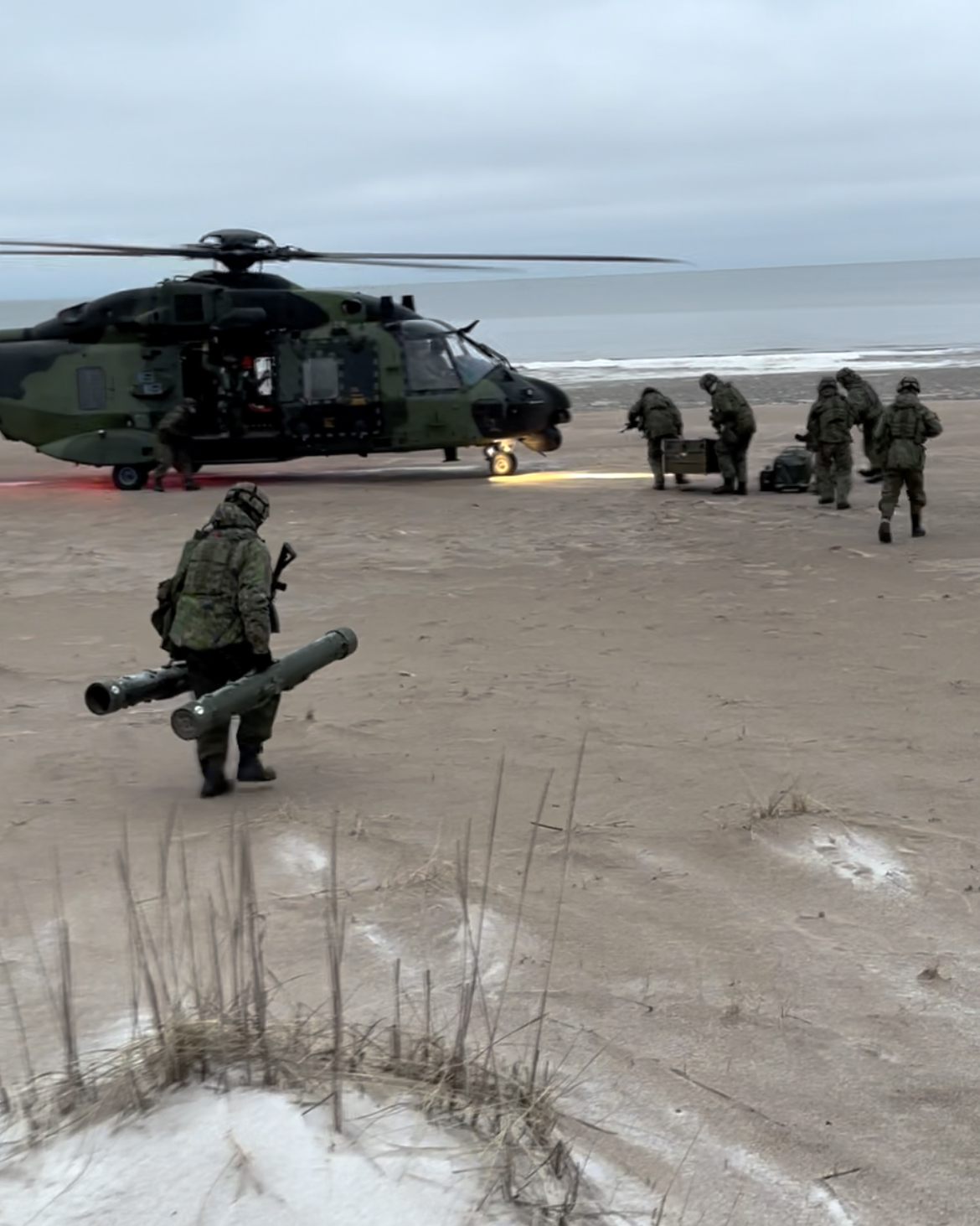
When it comes to missiles, the FIM-92E Stinger RMP Block I is the standard shoulder-fired missile. An interesting detail is that Finland has bought more Stingers in 2022, which are of the FIM-92K versions which sport a lock-on after launch capability and the ability to feed cooling and power from external sources. I’ll spare you the details (I wrote about them in a blog post back in 2022 when the order was made), but that is in essence a version optimised for vehicle-based launchers. Which brings us to the ASRAD-R as our other light missile system.
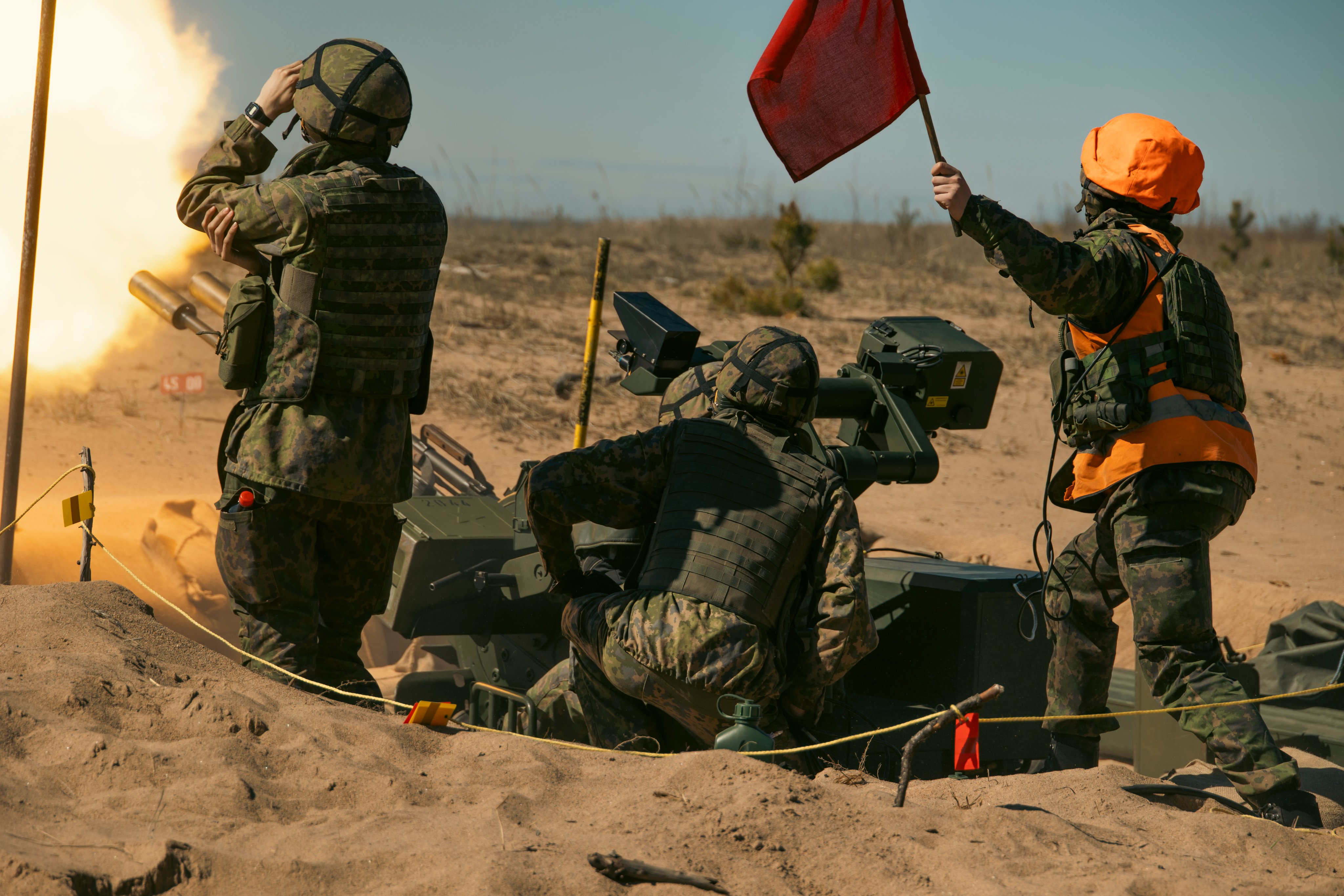
Finland has the Saab RBS 70 in a few versions. These include the simpler man-portable version and as part of the vehicle-mounted ASRAD-R. It is entirely possible the FIM-92K will also be integrated into the ASRAD-R, giving the choice of two different missiles. The RBS 70 has also seen some additional buys recently, including more missiles. My guess is the system will remain in service for the foreseeable future, and that we likely will see some major upgrades at some point down the line. E.g. Saab’s MSHORAD solution looks interesting as it provides a highly mobile setup for the protection of units or locations that are under threat from drones or manned systems.
One system that won’t serve on for much longer is the ITO90M Crotale on a Sisu PASI-chassis. The last wartime conscript unit has been trained in 2024, meaning you can expect an out-of-service date somewhere in the 2030’s. You would be excused for thinking an armoured TELAR with acceptable off-road capability is for the protection of the manoeuvre units of the Army, but the FDF in fact uses the Crotale as a point-defence system for critical facilities such as air bases. Or, at least that was the reasoning when it was bought, who knows how doctrine might have changed and whether the FDF would have told anyone on the outside if it did (“protection of important locations and units” is the official description on the FDF homepage, which to be honest is the literal definition of what air defences are supposed to do). It does however mean that it will be really interesting to see what system(s) replaces it, as it’s not necessarily a one-to-one capability wise but rather could be e.g. a mix of lighter systems such as Loke or SkyGuard coupled with a missile system in the CAMM Land Ceptor or Iris-T SLM/SLX-class.
Currently, the most advanced system is the NASAMS which is acquired for the defence of the capital region – home to not only the political leadership, but also a number of key facilities, societal functions, and a fifth of the population. It is a very popular system thanks to its modularity, networkability, and being able to share munitions with the F/A-18C Hornets (although as usual with systems using air-to-air missiles from the ground, that comes at a cost with regards to performance). Again, I wouldn’t be surprised to see some kind of upgrade program and/or additional buys. The biggest downside is the lack of vertical reach, though the Finnish air defence doctrine has for decades assigned the higher parts of the sky to the fighters of the Air Force, which additionally has the ability to quickly regroup and shift the geographical focus from one part of the country to another.
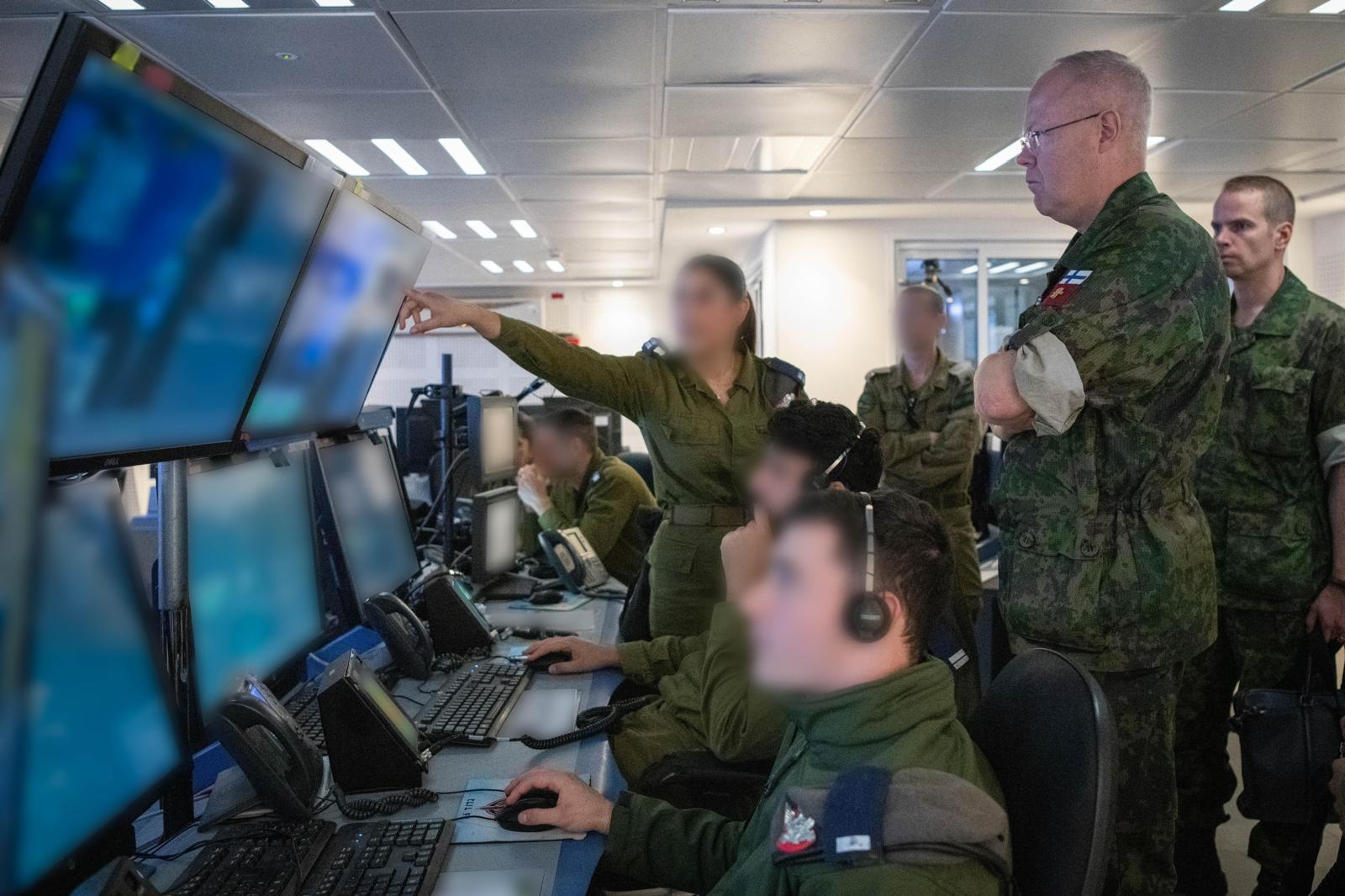
On top of this the David’s Sling is incoming (and I really, really, hope they will go with “Taavetin linko” as the official Finnish name – it just fits). It will provide a higher reach than the NASAMS, and also provide a true anti-ballistic missile capability. The system is somewhat controversial politically following Israel’s war in Gaza and the country’s lukewarm Ukraine-policy. At the same time, there’s little doubt in its capability, where reports are that it has performed beyond expectations in combat. Would SAMP/T and Aster have been a better buy, considering security of supply and the political angle? It’s up to debate, but to be fair the RFQ was sent out in 2020 at a time when few would have foreseen the full-scale invasion of Ukraine, Finland joining NATO, the October 7 terrorist attacks, the devastating Israeli response, and the sheer scale of global instability brought on by the second Trump administration, so I stand by my earlier arguments that – in particular given the earlier mentioned demonstrated capabilities in combat – it will probably turn out to have been a good choice.
So, where does that leave the future? Countering the drone threat is a must, and will probably see some kind of Sergei replacement program, an important factor of which could be more Trackfire ARES RWS with chain guns for different vehicles in addition to modernising dedicated air defence units currently equipped with the 23 mm cannon (although expect to see it remain in service with second line units as long as ammunition is available). The sole immediate big ticket item is the Crotale-replacement. As said, it remains to be seen if it is a single corresponding system (armoured TELAR), or whether we will see something else. It could even be something as straightforward as just getting more NASAMS-batteries. One system that does deserve mention here is Kongsberg’s NOMADS, a tracked TELAR which looks very much suited to the counter-UAS and point-defence role, as well as having the ability to follow mechanised or motorised units into combat if acquired for that role. Kongsberg also had a statement about “It is expected that especially NASAMS customers in the Nordic countries and other NATO nations will show interest in this highly mobile short-range air defence system,” at a time when the only NASAMS customer in the Nordics was Finland, which further underline that the company thinks that a NASAMS-NOMADS mix could be a very interesting one for the FDF. Time will tell.
 Corporal Frisk