
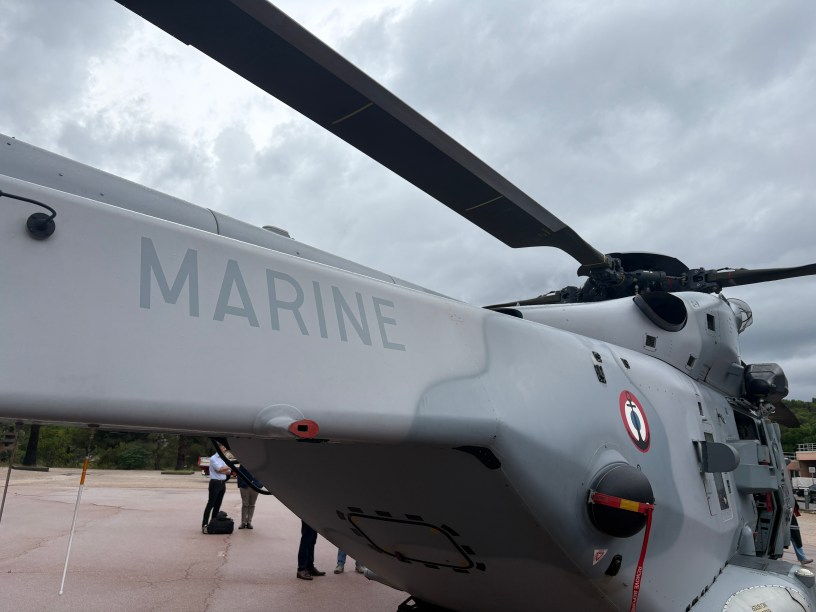
While there might not have been much happening over here at the blog lately, that does not mean it has been a quiet autumn for me. On the contrary, I’ve published quite a few texts in different formats, as well as having gotten to take part in some very interesting events. So here comes a brief overview in case you want to see what I’ve been up to and what is coming down the pipeline.
Military Mobility Northern Nordics
So if there was a war, what would that mean for the transport infrastructure in our part of the Nordics? That’s what three different border committees in Finland, Sweden, and Norway asked. As part of my work for Risk Intelligence A/S, I had the opportunity to lead the project to find an answer to the question. We started by looking into scenarios based on open sources for how many soldiers might appear in the Nordics in an Article 5-scenario (a lot), what kind of and how much equipment they might bring with them (quite heavy stuff), how the current infrastructure would hold up (quite well, but there are obvious weak spots and in particular key nodes that lack simple replacement solutions), and suggest actions that would improve the situation (several different things from investing more in maintenance to building a bridge over Kvarken).
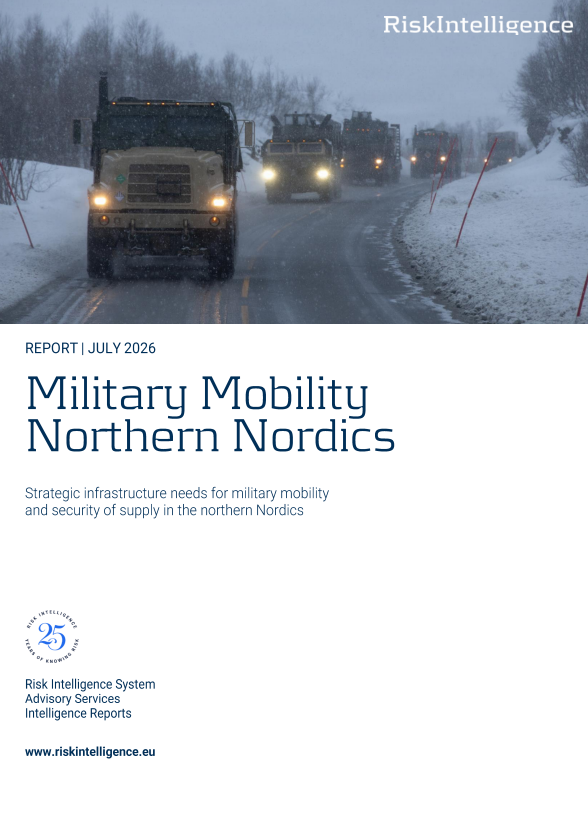
The work was extremely interesting, and included traveling throughout the Study Region (the Kvarken region including Central Finland, Jämtland, Härjedalen, Västernorrland, Västerbotten, Trøndelag, and Helgeland) to meet people and discuss the situation from a number of different angles. Everything is based on open sources, and regardless of whether you are interested in how a convoy system over the Baltic Sea might look, why the Inlandsbanan is perhaps the most resilient piece of railway in the Nordics, or how many soldiers would reinforce the Nordics in a crisis, I recommend flipping through the report. Chances are, if you are a reader of this blog, there is something in there that will interest you. The full report (140 pages) is found here, while the summary is found here.
Oh, and I strongly deny any suggestion that the incident which happened simultaneously with the release of the report where one of the key bridges in the area got damaged by a truck matching the weight of a main battle tank on a trailer driving over it – to the extent the bridge is still out of usage and forcing long detours on small gravel roads – was any kind of publicity stunt.
A US Drawdown in Europe: Challenges and Options for NATO
Last week I also had the opportunity to publish my first white paper for Risk Intelligence, where I look at the practical aspects of a US drawdown in Europe. I argue that the parts media often tend to focus on – individual systems, fighter aircraft, submarines, armoured brigades – are in many cases relatively straightforward to replace provided the European NATO-countries (and Canada) make the needed investment decisions as soon as possible. However, other more abstract factors might not be. Crucially, the role of the US as the first among equals has in many ways meant that it has been able to take a clear leadership role which helps when you need quick decisions among a group of countries with quite varying views on the world. It has also aided with creating de facto standards, something that is extremely useful both from a spares and munitions point of view, but also from a connectivity one.
However, perhaps most crucially, it is questionable how to ensure effective deterrence in a drawdown, as that is based upon the views of the adversary, and not on real capability. While the US has been adamant that any reduction in conventional capabilities does not equal a reduction in commitment when it comes to nuclear ones, it is difficult not to believe that Moscow won’t see it as a crack in the credibility of the US nuclear umbrella. Another key factor is that even for conventional deterrence, the Kremlin has repeatedly failed to show that they understand that small countries may have agency, and as such might believe that a truncated NATO would choose not to fight, and disregard the possibility that individual countries might take action alone or as part of an alliance of the willing in case of an attack. A smarter leadership might have learned that lesson in Ukraine, but authoritarians are often not particularly good at recognising their own blind spots, so the question of how to get Moscow to understand that, yes, even if all of NATO might not throw everything they have at a Russian armoured assault on a minor member, enough countries would do so to make it really hurt, is one that needs urgent work.
Oh, and we might have to seriously start discussing nuclear proliferation, despite the fact that it is really expensive and difficult on a number of levels.
EURONAVAL Export Press Tour
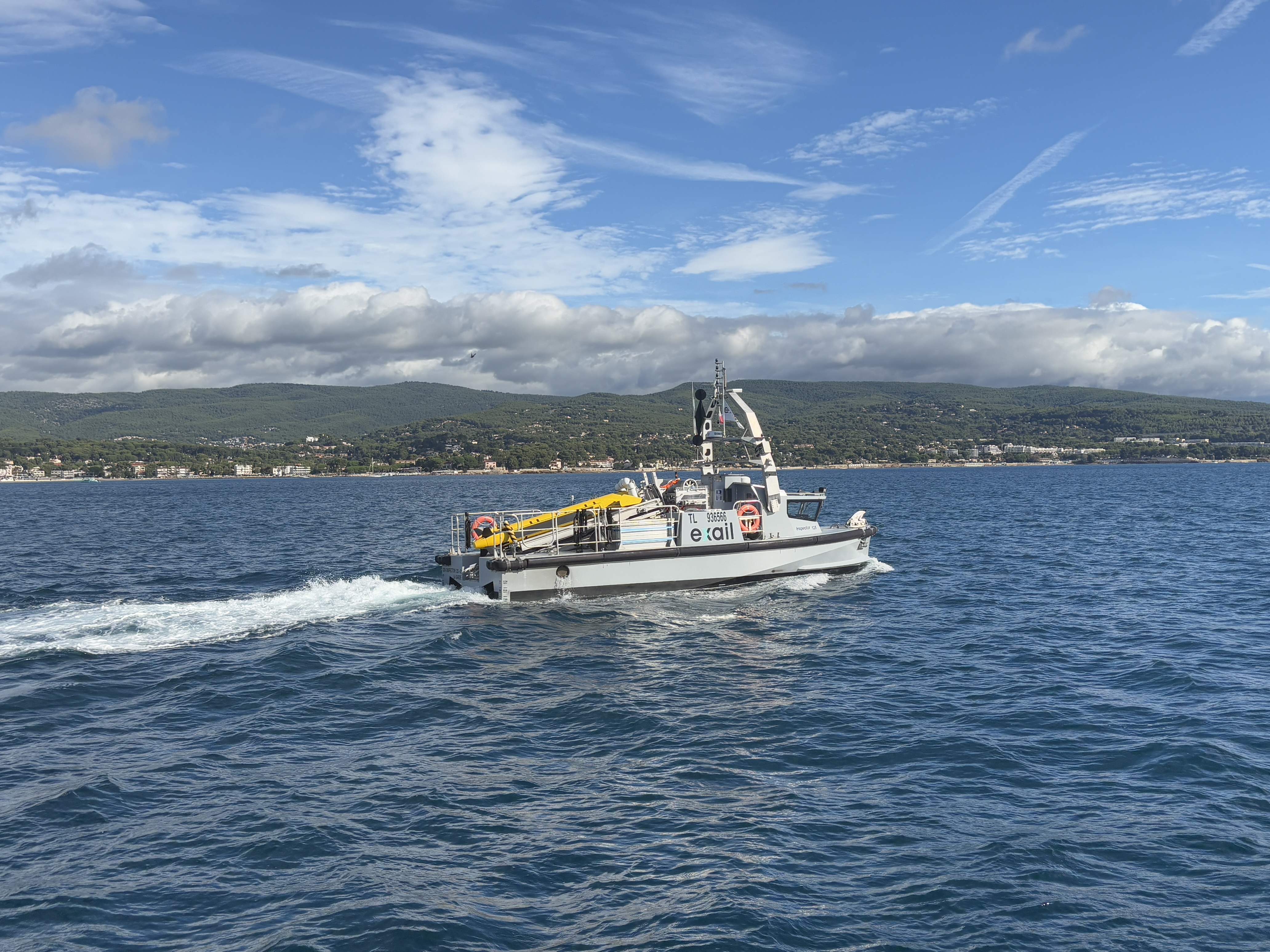
Speaking of countries which might not care if the US is onboard with something or not, I had the opportunity to go to France for a week at the invitation of and expense of EURONAVAL. The premier naval defence exhibition arranges a press tour in the month leading up to the event, where trade media get the opportunity to visit naval sites and factories and meet with stakeholders from both the Marine Nationale and the French industry. It was an extremely useful trip that mainly took place in the south of the country in the area surrounding Toulon, and will result in a number of blog posts down the line – many of the topics are of general interest, and as such I do not plan on a massive roll-out of seven posts in a week in the immediate future, but rather spread them out over a longer period. But if you are interested in mine warfare, missile production, nuclear attack submarines, or the cooling equipment for waste management aboard logistics ships, there will be some fun posts coming.
And for my Swedish readers, I can confirm that the Aftonbladet-article about the lack of an order for Aster B1NT and the need for a fast order process was a correct description of the facts as they were presented by the MBDA leadership at their Paris site, and that included answers they gave to follow-up questions and requests for clarification on the topic. MBDA’s Nordic representatives have since come out with a calming message, so it remains to be seen who is correct, but more on that later.
Wait and See or Act
To change the language, back on the Royal Swedish Academy of War Sciences’ blog I have written a short text (in Swedish) on the fact that with the Russian hybrid attacks stepping up in seriousness and frequency, just saying they are ‘Unacceptable’ doesn’t make them so. On the contrary, until we start to act, we are in fact accepting them.
I also argue that we do have more options than we pretend we have. We can in fact do what Western countries have tended to do in the face of state-sponsored terrorism before, and launch a limited air- and missile-strike using stand-off weapons. We can also seize Russian ships on the high seas, and dare them to try and stop us. Point is, there are options, and regardless of whether we have passed the threshold to use them or not, I do think it would be healthy to discuss where our threshold for answering violence with violence goes, because that is a crucial part of any policy discussion, and it serves to remind everyone of the fact that there indeed are cases where that is the right and appropriate response.
The Wargame
Finally, The Wargame took home the gold at British Podcast Awards in the News, Politics & Current Affairs category. I had the honour of playing a small role as the admiral of the Russian Navy, and am very happy for the team headed by Deborah Haynes of Sky News, Robert Johnson heading the Changing Character of War Centre at Oxford University, James Shield then at Tortoise, and last but not least our very own president – Keir Giles. It was a well deserved award, and huge congratulations to everyone! And if you haven’t had the chance to listen to it yet, now is the perfect time to catch up.

