
Few things have become as topical since the fighting in Ukraine kicked into high gear in 2022 as long-range strike and air defences, preferably of the kind that US-based billionaire can’t switch off at a whim. And few companies are better placed to meet those demands than MBDA. As such, the EURONAVAL press trip kicked off with a presentation by the company at their facilities in Le Plessis-Robinson outside of Paris focusing on their missile programmes.
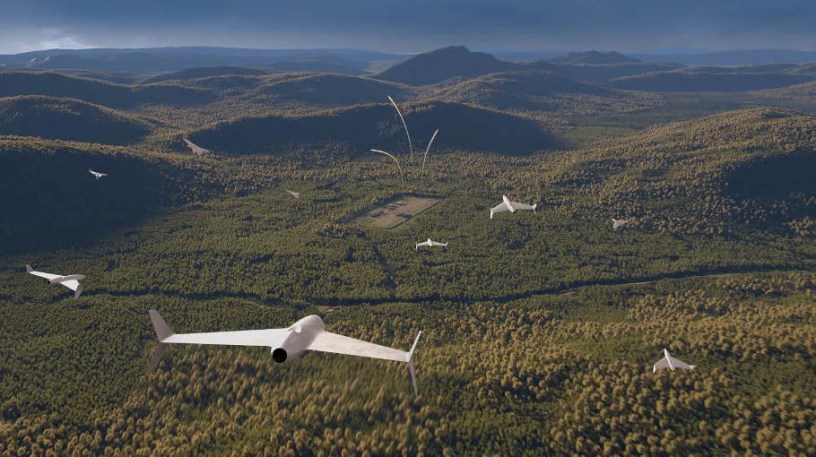
The portfolio of MBDA – the “only western non-US company to offer the full range of advanced weaponry” according to themselves – include quite the spectrum of missiles. If we first look at the long-range strike portfolio, it is perhaps more varied than generally recognised. Starting at the lower end, the Deluge might still be a step above some of the crude OWA-drones seen in Ukraine, but it is certainly much closer in philosophy to them compared to the SCALP/Storm Shadow cruise missile which might be the most recogniseable of the company’s strike missiles. The whole idea is to bring mass back to the conventional strike role, while still maintaining stand-off capability and not having to fly a manned platform over the target area to drop a load of small munitions. What is notable is that the development of the Deluge is operating on a significantly more agile track compared to what has usually been the case for Western munition development. MBDA describes the timeline as it taking “less than a year between the project’s announcement, the 1st test firing and the 1st contract signature.” DGA, the French defence materiel authority, is describing the current procurement processes as effectively being run according to two markedly different tracks. The first is the familiar one, where highly advanced programmes are being run according to traditional models, of which the DGA has long experience. The other track is for agile programmes which are needed to quickly answer operational needs, and here Deluge is a prime example of what they mean. Deluge will see deliveries from next year,
However, massed munitions in itself isn’t necessarily the answer to all long-range strike issues. This comes down to two distinct questions, namely that of strike package cost and that of target hardness. Strike package cost means that if your individual weapon of choice costs one-tenth of a traditional weapon, but the survivability and/or warhead effect is lower so you need a package of fifteen cheaper weapons instead of one traditional, your cost to take out a single target will still be higher. The other, and usually more relevant question, is whether your cheap effectors are able to take out the target you are aiming for? One of the reasons why the Ukrainian drone strike campaign against Russian targets has been so successful is that Russia has offered up a set of targets that are very appropriate to the weapons Ukraine has access to, in particular the oil and gas infrastructure that is a core component of the Russian war economy which relies on soft and highly flammable installations that are difficult to hide, such as the refineries. However, there is a reason why Ukraine is also asking for Taurus, more SCALP/Storm Shadow cruise missiles, and is investing quite heavily both in heavier crude weapons such as the FP-5 Flamingo, but also in ballistic missiles including the Firepoint FP-9. A lot of interesting targets are simply too well protected – either by air defences or by concrete – that penetrating them require a large warhead, advanced penetrating features of that warhead (such as two-stage designs), high speed to give better penetration through walls and earthwork, or preferably some combination of these.
Now, as usually is the case with these kinds of things, the answer isn’t really which of these systems you want, but what kind of a mix. And this is where MBDA wants to market you the whole package, a “collaborative strike” including the Deluge, STRATUS, and the NCM/LCM, where different weapons collaborating in a coordinated package will allow for different targets to be taken out cost-effectively, while also allowing for the mass needed to overwhelm the defenders.
Of these, the NCM is the oldest member of the bunch, as it is a rebrand of the current MdCN naval cruise missile, a weapon which any French citizen is legally required to call “the French Tomahawk” whenever first brought up in a discussion. Jokes aside, the weapon in its current form can best be described as a navalised version of the SCALP/Storm Shadow, and has seen combat destroying chemical weapons storage bunkers in Syria when fired from French frigates. With the general mess the world is in and with the death of the INF (which never included European countries besides Russia, but which it still was adhered to in the name of trying to keep Russia from breaking it), interest in the weapon has spiked. As such, a new version is set to enter production, with the first versions of the NCM/LCM MK2 available to customers in 2030. Besides from presumably addressing obsolescence issues, the MK2 will offer better range, better lethality, better anti-electronic capability, and in general better survivability through both hardware and software upgrades. A 1,000+ km range and “metric accuracy” are also promised, as is the possibility of “new mission sets”. All of these means that not only is the weapon offering a European alternative to Tomahawk missiles, including from truck-based launchers, but it should also offer a solid ‘high’ alternative in a mixed high/lo-strike packages.
Another system which will enter (initial) operational service in 2030 is the STRATUS. If Deluge represented a new way of thinking about weapon and doing business, the STRATUS programme is exactly the kind of somewhat complex setup we are used to seeing from European defence primes. In essence STRATUS describes two very different missiles relying on synergies were possible, one being the weapon formerly known as FCAS-W which now is dubbed the STRATUS RS (Rapid Strike). This is a supersonic anti-ship missile emphasising high speed and manoeuvrability, while also offering “a lot more range” compared to Exocet (or most other western anti-ship missiles, for that matter), and being powered by a liquid-fueled ramjet. With a single multi-role warhead and an RF/AESA-seeker allowing for target identification and discrimination (this will by the way not be the originally planned Italian one, but will likely come out of Thales’ factories), it will also be an option to use in the SEAD/DEAD-role to take out enemy ground-based air defence systems. But perhaps the most interesting detail provided was that a secondary anti-HVT role was studied, i.e. looking at the ability of the weapon to go after high-value aircraft such as airborne early warning platforms, maritime patrol aircraft, intelligence and reconnaissance platforms, tankers, or transports on key missions. France is in the lead with the UK as the secondary partner. The other weapon in the family is the STRATUS LO (Low-observable), which is a stealthy design for the very-long range strike and anti-ship role. It will feature subsonic speed, being powered by a new turbofan developed by Rolls-Royce and Safran, a dual-mode passive sensor suite consisting of RF- and IIR-seekers, and a two-stage warhead. There will also be a datalink, something that is being looked into for STRATUS RS as well, though there the need is smaller due to the lower flight time. Both weapons will be more or less of the same size as SCALP/Storm Shadow, allowing for “easy” integration on current platforms using that weapon. For launch platforms, the weapons are to be integrated into both Mk 41 and Sylver NG VLS tubes, but also dedicated deck-mounted launchers, as well as being carried by the full range of aircraft you expect them to be: Typhoon, Rafale, GCAP, MPAs, and so forth. It will however not be submarine-launched.
Two missiles, four missions, is the official slogan in case you’re wondering. Like NCM/LCM MK2, STRATUS is decidedly also on the high-end of the spectrum, with range and speed which “can be assumed to be significantly better” compared to current offerings. Still, there are no plans for the STRATUS to replace any of the current weapons offered by MBDA, including the SCALP/Storm Shadow or the Exocet. On the contrary, both of these are also undergoing development, with the SCALP Mk 2 now a purely French project following UK withdrawing from it. Italy has so far not made a decision, but could easily switch from their current Storm Shadow to SCALP Mk 2 if they chose to, as the upgraded version will feature the same physical interface to ease integration.
But while killing the archer usually is the better idea, sometimes you just have to shoot down the arrow. And this is where MBDA’s wide offering of air defence missiles come in. We already mentioned the Mistral 3, but it deserves to be discussed how the missile is packaged. For a naval system, the SIMBAD turrets is the standard fit, with the RC2 holding two missiles and the RC4 four missiles ready to fire. This is a stabilised turret with an IR-camera, and a single operator can handle one or two turrets at any given time. The smaller turret comes in at 550 kg, while the RC4 tips the scale at 800 kg. Interestingly enough, the Mistral 3 also has a secondary surface-to-surface role.
A country which quite like the Mistral 3 is Denmark, which has stepped in and funded two distinct projects both featuring the weapon: the SPIMM and the CWSP. SPIMM is a containerised solution in a ten-foot module, sporting a SIMBAD RC4 turret with an added air surveillance radar, and inside the module you will find two operator stations for the SIMBAD operator as well as the radar operator, as well as eight reloads for the SIMBAD. The system can be integrated with a combat management system, and equipped with either a Terma-supplied radar or Saab’s Giraffe 1X, and offer a simple plug-and-play module to arm a merchant vessel or a naval auxiliary with a short-range air defence missile. For those thinking they’ve heard about this before, yes, SPIMM was launched a decade ago as a concept, but a lack of buyers meant it was dropped for a while. Now there is renewed interest, and the concept is back again.
The CWSP is a more complex idea, described as an “integrated turn-key solution controlling sensors, weapons, C2, and flotilla system management”, with a particular eye to the littorals. If this sounds familiar, this is the old Sea Ranger-concept which is to be rebranded with an as yet not confirmed name. This should be able to provide the framework for a light hybrid navy in a littoral context, though as is the case with the name, it does sound like we are still waiting for something of a re-launch of the concept to be provided with all the details. In any case, it sounds interesting and the slides we saw looked promising, but let us wait for something more concrete before we make any final verdicts. How exactly it ties in with the Danes is also an open question.
…and because everyone loves a standardised ISO-container, one can note that both MICA and CAMM/CAMM-ER are also found in 20-feet containers, with a weight of less than 10 tons, sporting six weapons ready to launch. But now on to the star of the catalogue.
Aster is without doubt the most talked about surface-to-air missile in MBDA’s product line. With literally everyone being interested in getting more and better ground-based air defences, and with the current US government doing their best to discourage anyone from buying US weapons, it is no surprise that the high-end operational European system is getting closer looks from many stakeholders.
The original Aster family consists of two versions, the unboosted Aster 15 and the standard Aster 30, and is on the whole seen as a rather successful missile. It is quick out of the go, allowing for generally more beneficial engagement angles, and has proven itself over approximately 150 combat firings – more or less evenly split between ground-based systems in Ukraine and ship-based systems in Middle Eastern waters – with a hit rate over 75 % (“direct hit impacts”, in the words of MBDA). So far so good, but according to all reports it is struggling against the Iskander, regardless of the successes scored against ballistic missiles in the Middle East. This is not exactly surprising, nor is it strange, as the weapons used by the Houthis are generally shorter-ranged and of a more limited capability, making them slower and easier targets. This is however an issue as Russia has shown that their war plans for the foreseeable future include significant bombardments with modern missiles including SRBMs and the occasional IRBM thrown in for good measure. And while the Aster-firing SAMP/T battery on paper has several benefits compared to the Patriot, it doesn’t help if at the same time it is unable to take down one of the key targets it is facing.
The answer to this is found in the form of the next generation of Aster missiles, where the Aster B1NT will introduce a number of changes, key among which will be a new Ka-band radar seeker specifically designed to improve performance in the anti-ballistic missile role. The B1NT will then be accompanied on the production lines with the next generation of the Aster 30, which will be referred to simply as Aster B1, with my understanding being both the Aster 15 and Aster 30 designations being withdrawn as the B1-standard replaces them on the production line. The first operational deliveries of the B1NT will take place next year, with MBDA confidently stating that the production rate is limited not by their capacity, but by how many seekers Thales can produce (I let it be left open whether this is a notion shared by Thales or not). By 2028 all Asters in production will be of the new standard, incorporating new hardware and software, differentiated by sporting either the traditional (Ku-band) seeker on the B1 or the new (Ka-band) seeker on the B1NT.
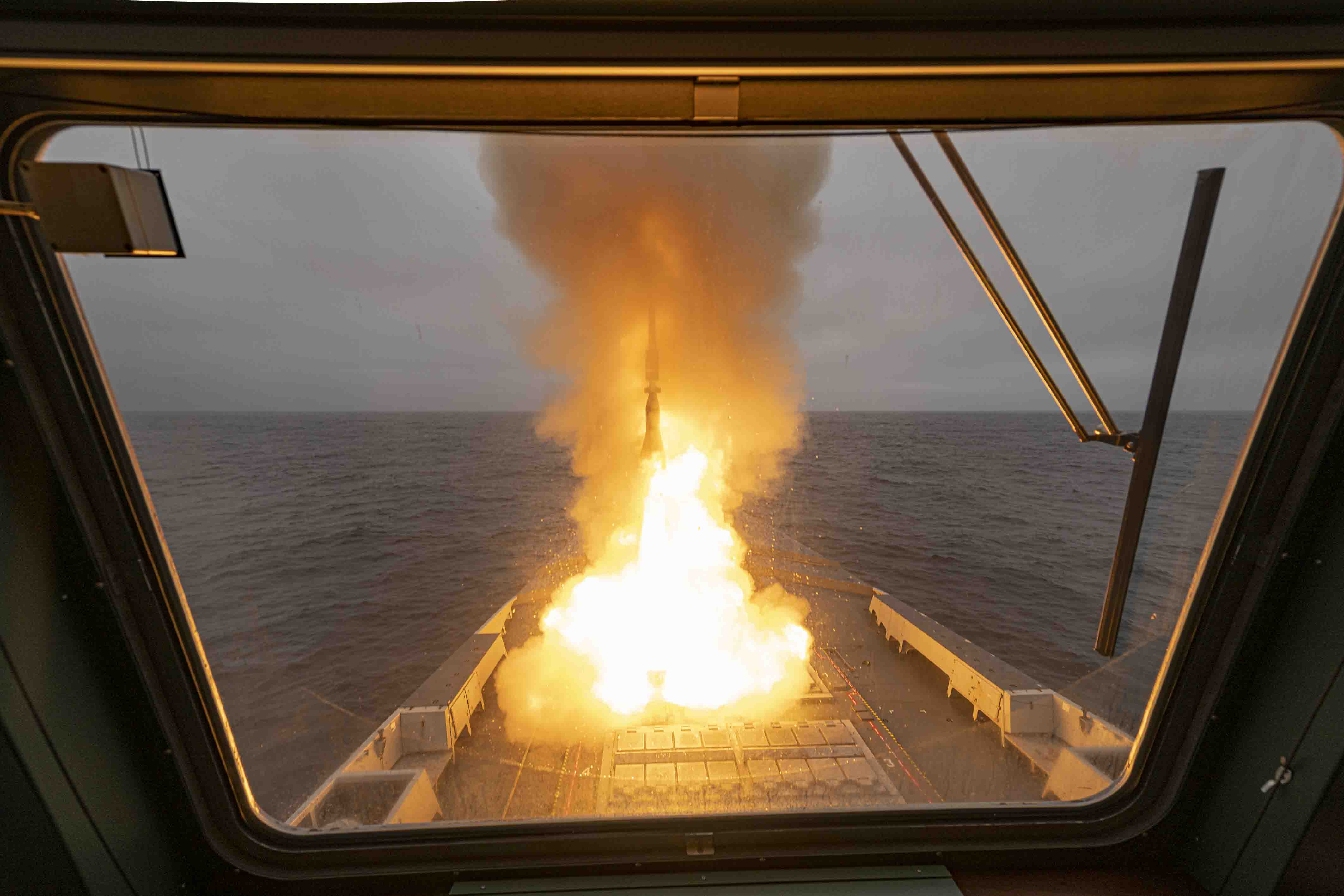
An obvious question is how many Asters are rolling off the production lines, as the manufacturing as originally set up largely was optimised from a political and regional economics point of view rather than from production efficiency, a decision that unfortunately made some sense then considering the very limited numbers of missiles bought by the countries involved in the programme. 2022 however showed the flaws of that approach even to the most stubborn peace dividend-loving politicians, and MBDA is currently ramping up missile production at speed – trying to balance the need of simplified production lines while still being able to leverage existing capabilities. For all of the company’s missiles, production doubled between 2023 and 2025, with the forecast being that 2026 will see 40 % more missiles of all kinds delivered compared to 2025. For Aster, production doubled between 2025 and 2026, and in total over 2,000 Aster missiles have been delivered since 2002 (with another 1,500 in the order book). None of these numbers however gives the current annual production rate. We can conclude that the annual average since 2002 has been 84 missiles per year on average, which together with the knowledge of the significantly higher pace in production now compared to during the early parts of the programme would indicate that we are in 200+ territory when it comes to Aster missile deliveries in 2026. I asked missile guru Fabian Hoffmann, who gave a “best guess” of an annual production rate currently in the range of “some 200-300 per year right now”, which depending on your point of view either is good or bad news. For comparison, the US production of PAC-3 MSE missiles for the Patriot stands at 600 missiles annually with extremely ambitious plans for scaling production during the next few years. The PAC-3 are the anti-ballistic missile missiles of the system, to which is added the PAC-2 production figures for the missile used against aircraft and cruise missiles, which ironically enough is produced in significant numbers under license by MBDA in Germany.
In any case, MBDA confirmed that Sweden was only interested in the B1NT for their upcoming Luleå-class frigates, as these will be complemented by the CAMM-ER in the anti-aircraft and anti-cruise missile role. MBDA then went on to note that Sweden has not yet signed a contract for the missiles (somewhat natural, as the contract for the ships themselves is not yet signed), and that considering B1NT production slots are sold on a strict “first come, first served”-basis, the production slots for 2030 (when the frigates are to arrive) are being sold now. This was then reported by Swedish paper Aftonbladet, and while I have had some opinions about how national security and defence have been covered at different times by Sweden’s “independently social-democrat”-aligned tabloid, I will say that the article in question was fully correct in its reporting about how MBDA described the situation, including when asked follow-up questions about the situation. This was however reported rather differently when MBDA’s local representative was asked about the situation in Dagens indsutri, where they reaffirmed that Sweden have production slots reserved and won’t lose them as long as the contract comes when expected. Added to this mess you can include the fact that Sweden currently lack a government which somewhat limits how the budgets and acquisition authorisations can be made, but on the whole it seems MBDA might have wanted to try and put pressure on Sweden to get a contract in the books before the end of the year, with their tactic then backfiring somewhat in media.
However, even B1NT isn’t designed to stop everything. When the thing you want to hit goes really far and fast, you need a dedicated interceptor, and that’s where HYDIS comes in. HYDIS is led by MBDA, and include a far-reaching consortium (“The widest team ever put together by MBDA”) of European companies (Finnish readers might note that Crosshill Ltd is found among these, while both Saab and FOI are represented on the Swedish side) to produce a “European Hypersonic Defence Interceptor System”. The project is co-funded by the European Union under the European Defence Fund, as well as by the four participating states of France, Germany, Italy, and the Netherlands (though Germany seems to be dropping out of the next phase, while in turn eleven more countries are planning on coming aboard). Following a “successful” first phase which has included modelling, simulations, and technology proof of concepts, a decision on moving to the next stage should come in November. The goal of this phase is to reach Technology Readiness Level 5 (“Technology validated in relevant environment”) in two years, with a first capability in service in 2034.
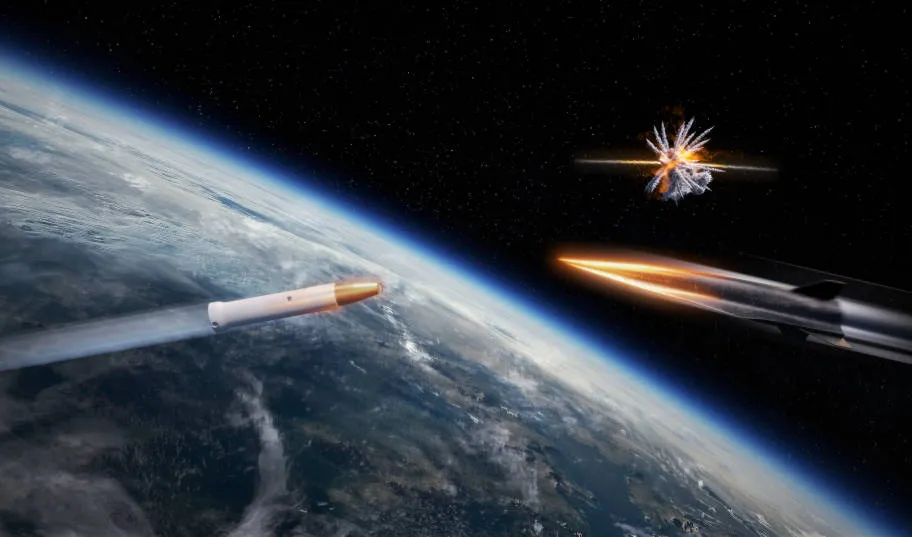
What then is HYDIS? The eventual interceptor will be a multi-stage weapon – two propulsion stages and a kill vehicle – fired from a Mk 41 or SYLVER VLS tube. This will then be able to intercept weapons in the SRBM and IRBM range, including not only ballistic missiles but also hypersonic glide vehicles, maneuverable reentry vehicles, air-launched ballistic missiles, as well as hypersonic cruise missiles. A focus is placed on the robustness of the design, to ensure that it is able to operate with a limited amount of sensors and network resources. MBDA is clear with the fact that they believe that “There is no equivalent capability today”, and I would have to agree with them. If HYDIS is able to achieve the highly ambitious goals, it would mark a significant achievement and possibly change the value proposition of systems like the Oreshnik (as well as having an impact on Russian nuclear deterrence abilities).
However, this also gets us back to one of the key questions throughout the missile discussion, namely production rates. Scaling production lines is significantly more difficult today compared to if you try and make Sten guns during WWII, and while MBDA as noted has made major increases to their production rates, we are still quite some way from even matching Russia’s Iskander production. Whether we ever will be is another question, but compared to the US way of ordering munitions, one things is always brought up when talking to European defence companies, and MBDA was no exception:
There need to be larger multi-year orders to ensure predictability in the planning of production rates, as that is the only way for companies to be able to make sensible investment decisions without the states themselves stepping in with direct funding.
This article is in large part based on information acquired during the EURONAVAL press trip, where the hosts funded travel arrangements (including food and hotels). No parts of the text has been shown to or discussed with any of the companies involved, nor with the organisations involved in EURONAVAL or the press trip.

